


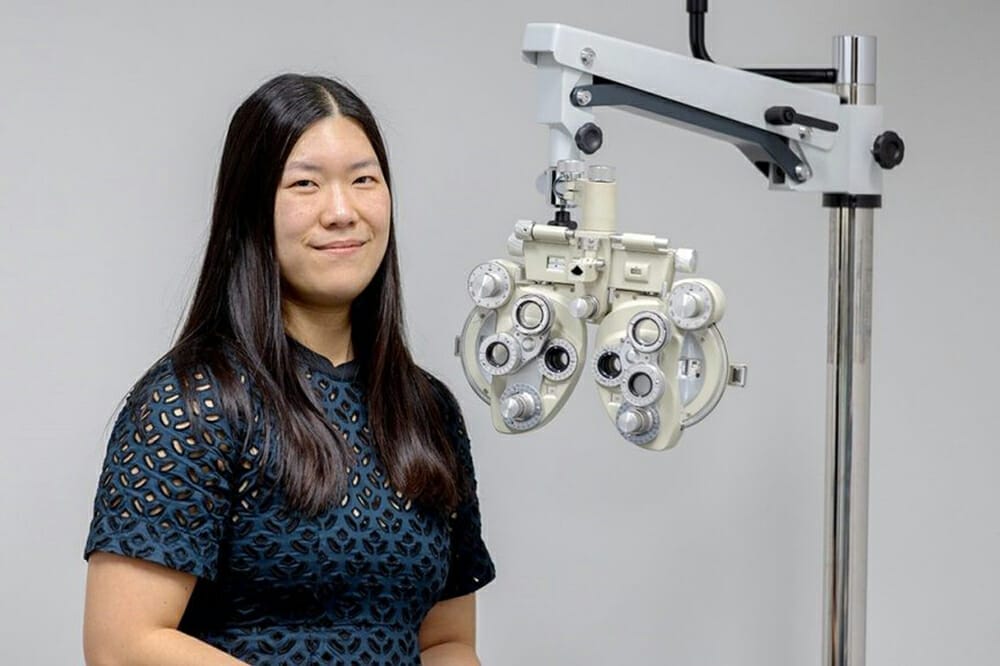
Dr Alyssa Lie
A study being conducted at Waipapa Taumata Rau, University of Auckland, aims to determine whether Vuity eye drops (AbbVie) are as effective at reducing the need for presbyopes to wear spectacles as claimed.
The US Food and Drug Administration (FDA) approved Vuity eye drops in late 2021 for prescription-only use for presbyopia – or age-related decline in near vision.
Dr Lie is more interested in seeing how the agent in Vuity drops, pilocarpine, affects the eye at a molecular level
“The Vuity drops work by constricting the pupil so that you get increased depth of focus and should theoretically be able to read up close without needing your reading glasses,” said Dr Alyssa Lie, a New Zealand trained optometrist and research fellow in physiology at Auckland University.
Dr Lie is recruiting people aged between 40 and 55 years old, the age-range approved to use the drug in the United States (US), to participate in the study.
If her study confirms the efficacy of Vuity, it could expedite approval for the eye drops being approved for use in New Zealand.
Seeking Molecular Change
However, as a physiology researcher, Dr Lie is more interested in seeing how the agent in Vuity drops, pilocarpine, affects the eye at a molecular level.
Participants in the study will start with a clinical eye exam to assess their natural state. The exam will be repeated after the drops have been inserted. Two further sessions will involve MRI scans with and without the drops, which is how Dr Lie hopes to identify molecular changes.
“Our laboratory here previously looked at the effect of pilocarpine on the lenses of mice and rats, showing it changes the physiology of the lens and therefore has the potential to also enhance its optical properties.
“So, I thought I’d look into whether this was also the case for the human lens using MRI scans.
“This could offer a biomarker for developing other drugs that are not so reliant on shrinking the pupils down. There are downsides to that, such as cautions on night driving.”
Pilocarpine is already used to treat glaucoma and is Medsafe approved.
Dr Lie expects to have findings by the end of 2023.


