


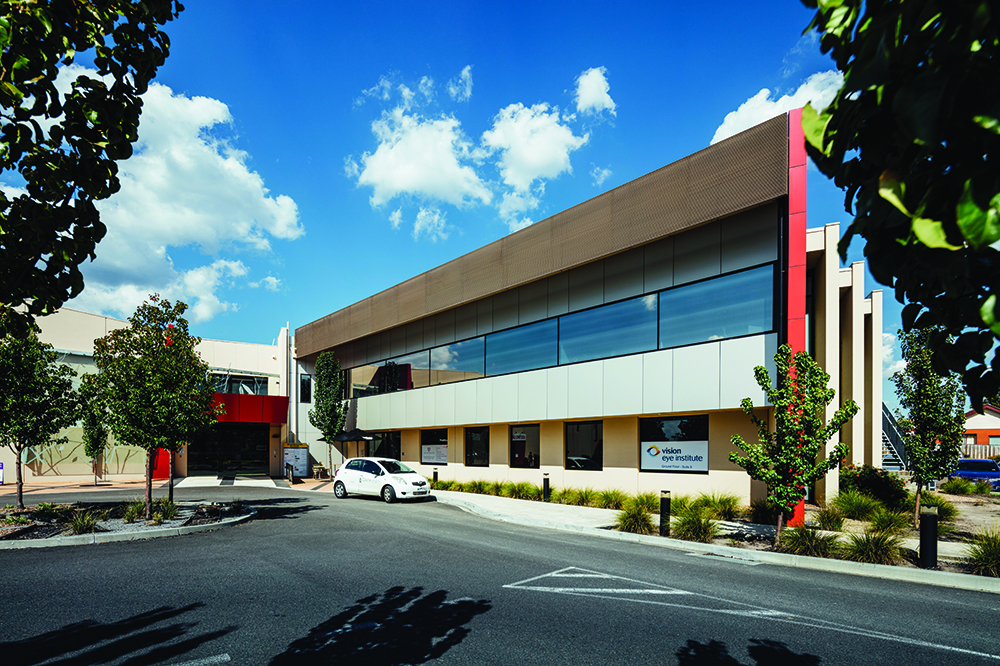
Vision Eye Institute’s Boronia Clinic
In Melbourne’s outer eastern suburb of Boronia, an ophthalmologist has created something remarkable – a clinic providing intravitreal injections (IVIs) at no out-of-pocket cost to patients with neovascular (wet) age-related macular degeneration (nAMD) and diabetic eye disease.
While other services might charge up to AU$550 per injection, patients at Vision Eye Institute’s Boronia Clinic pay only the PBS prescription fee. It’s one of a handful of clinics in Australia that operate on a no out-of-pocket basis.
With an estimated 50% of patients stopping treatment within two years due to cost and access barriers, this service is potentially saving thousands from vision loss.
Dr Devinder Chauhan, who established the Boronia Clinic in 2016, has performed between 60,000–70,000 intravitreal injections in his 19-year career. His background in the UK’s National Health Service (NHS) influenced his approach to healthcare delivery in Australia.

Dr Devinder Chauhan
“I literally would not have been born if it wasn’t for the NHS in England. Providing care to people in need is an underlying human responsibility”, Dr Chauhan said. “When I got here, it took me a while to realise that patients were having difficulty getting treatment, either because of the distance they travelled or the cost.”
Initially, Dr Chauhan organised transport for East Gippsland patients to reach his clinic in Melbourne for treatment. However, he soon recognised the cost of the treatment itself was an even greater barrier, with many patients reducing or ceasing treatment due to financial pressures.
“It was pretty clear that I could have said ‘low cost’ and charged a certain number. But it just struck me that I didn’t want that to get in the way. So, it was just easier to have zero cost, zero out-of-pocket,” he explained.
The zero out-of-pocket includes everything from the consultation and screening through to ongoing injections for as long as the patient needs.
The Macular Disease Foundation Australia reports that urban patients spend 12% (AU$3,621) of their pension income on injections.1* This rises to 20% for regional patients. For Dr Chauhan, this presents an ethical dilemma.
“The purpose of the injections is to improve quality of life, and then you reduce it by the cost of treatment.” he said. “It would be beyond my conscience to know that someone was losing vision because of my fees.”
A Streamlined Approach
Matthew Boulos, Practice Manager at Boronia Clinic, explained that a streamlined patient journey enables Dr Chauhan and his team to provide the no out-of-pocket injection treatment.

Matthew Boulos, Practice Manager at Boronia Clinic.
The clinic features free parking, ground floor access, and a cafe next door where carers and relatives can wait. During their visit, the patient is first examined by an orthoptist and undergoes a comprehensive screening process, with the results reviewed by the doctor prior to treatment. “With extra equipment and team members available at every step of the process”, Mr Boulos said the clinic can inject up to 120 patients in a single day. “We have three OCT machines – which is quite unique – and extra staff on injection clinic days.
To ensure a smooth, continuous flow, he said every staff member plays a significant role. “We have one member dedicated to drops, three orthoptists for scans and assessments, two administrators at reception, a pharmacist and administrator collecting the PBS drug fee and another orthoptist to assist with the injections and corresponding with referrers.” he added.
“We aim for the patient journey to remain under 45 minutes in total. Most patients are in and out within 30 minutes,” Mr Boulos said.
To date, the clinic has performed almost 55,000 no out-of-pocket IVI procedures for more than 6,300 patients.
Emergency Slots Every Day
For urgent cases, such as sudden vision loss or new onset distortion, the clinic maintains emergency slots each day, in an effort to achieve optimum vision outcomes for each patient.
“One of the best prognostic tools is the stage you commence treatment,” Mr Boulos explained.” The earlier the treatment is started, the better the prognosis”
Allcomers Welcome
Dr Chauhan said all nAMD and DMO patients are welcome to attend the Boronia Clinic for no out-of-cost IVI treatment, regardless of whether it is their first treatment, or whether they have come across from the public or private health system.
Understandably on that basis, since opening, the clinic has experienced significant growth. “There was one year where it grew by 40%,” Dr Chauhan said, “because of people coming from all over the place – from other private practices, public clinics, and through word of mouth.”
For optometrists wanting to refer patients, the process is straightforward. “We aim to make the referral process as simple as possible, as such we accept referrals through every means. We currently receive emails, post, Oculo referrals, phone calls from patients (with a referral to come), or phone calls from the referrer.
“We encourage the inclusion of any scans or photos with the referral as our dedicated triage team, comprising experienced orthoptists, regularly assesses referrals and offer appointments based on urgency and speciality needs.
“Our triage team communicates with the patient, so they know what to expect, including waiting times, cost, parking, address, and the need for someone to drive them home.”
Breaking Down Barriers
As new treatments for geographic atrophy become available, Dr Chauhan plans to continue the zero out-of-pocket model. “If it’s PBS listed, we’ll be injecting, but on selected patients,” he confirmed.
Dr Chauhan sees the main challenges ahead as “manpower, geography, and cost” – but his practice continues to break down barriers, one injection at a time.
* Calculation based on Services Australia information, the current total maximum fortnightly pension for a single person is: $1,144.40. Total annual pension: $1,144.40 X 26 = $29,754.40 and $3,621/$29,754.40 = 12%)] servicesaustralia.gov.au/how-much-age-pension-you-can-get?context=22526.
Reference
- Chapman, K. Macular disease: Advocating for accessible care. mivision. 2025(212). Available at: mivision.com.au/2025/05/macular-disease-advocating-for-accessible-care [accessed May 2025].


