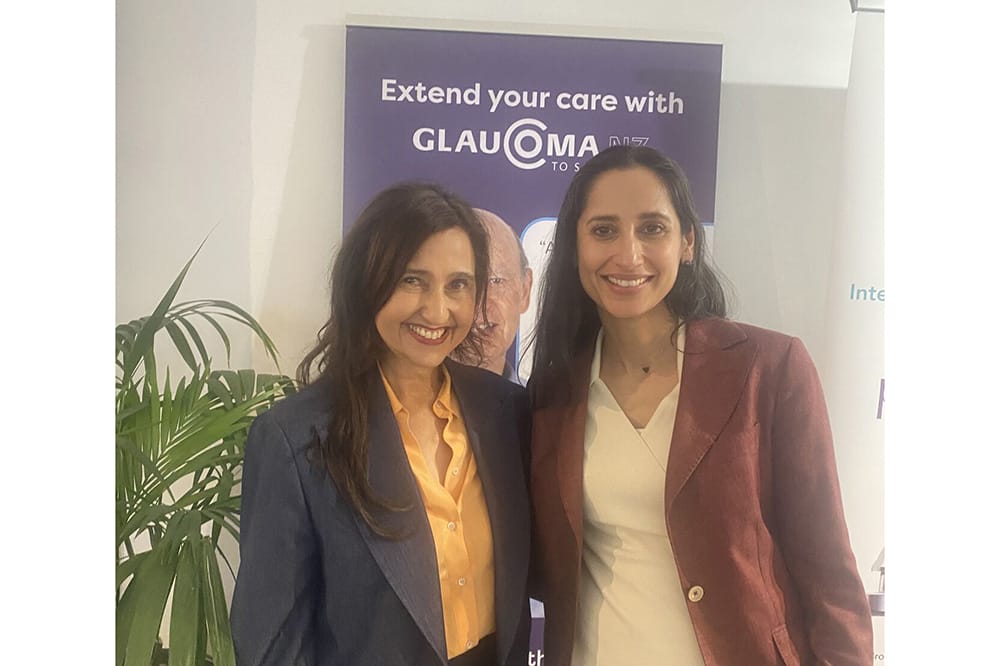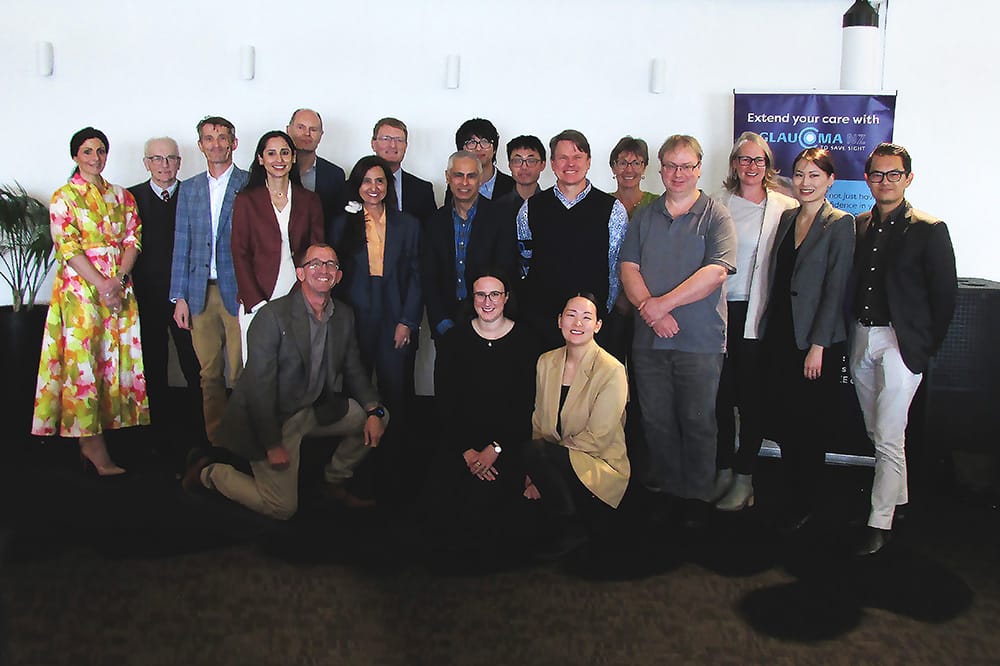
The ninth annual Glaucoma New Zealand Professional Education Symposium took place on Sunday 13 July, welcoming 80 in-person attendees and speakers and another 80 joining virtually, including 22 optometry students. Held at Auckland’s Maritime Room, this hybrid event struck the perfect balance, engaging optometrists and ophthalmologists in one of Glaucoma NZ’s most dynamic events yet.
Dr Aparna Raniga opened the day with a powerful keynote on interventional approaches to glaucoma care. With the event theme ‘The Role of Optometrists and Real-World Glaucoma’, she urged clinicians to rethink assumptions, take earlier action, and consider selective laser trabeculoplasty (SLT) as a first-line treatment. Her message: effective care must be practical, personalised, and patient-centred.
The programme shared insights to bring fresh clarity to the diagnostic challenges of glaucoma. Dr Aaron Wong reminded attendees that optic nerve damage can occur, even with normal intraocular pressure (IOP), while Dr Mia Zhang encouraged clinicians to take a holistic view of risk factors. Dr Keliopy Matheos discussed glaucoma mimics and urged optometrists to ensure that non-glaucomatous optic neuropathies are not missed when testing. Dr Divya Perumal provided a practical guide to gonioscopy, emphasising the importance of this core clinical skill.
From frank conversations about uncertain diagnoses to phrases that build trust without overpromising, the discussion included plenty of tips…
More technical tips were shared by Dr Graham Reeves and Dr Antony Suter, highlighting pattern recognition in visual fields, optical coherence tomography (OCT) pitfalls, and the importance of scan quality. Dr Hannah Kersten walked through factors influencing IOP measurement, encouraging clinicians to consider the wider clinical picture when interpreting these measurements.
Ensuring patients understand the importance of treatment adherence to slow the progression of glaucoma is one of the challenges faced by glaucoma practitioners, especially when the disease is asymptomatic. Drs Sonya Bennett and Ben Hoy looked at things from the patient’s perspective. They called attention to the psychological weight of a glaucoma diagnosis, encouraging gentle check-ins with patients. Dr Hoy’s talk was a powerful reminder that communication has to be clear, and that framing the patient’s diagnosis in a way that makes sense to each individual is key for treatment adherence.
Dr Raniga returned to advocate for early surgical referral when needed, especially in patients struggling with adherence, while Drs Hussain Patel and Michael Merriman offered a balanced take on SLT versus eye drops, and how to manage glaucoma suspects thoughtfully without over-treatment.
Interactive Case Panel
The afternoon session kicked off with Professor Helen Danesh-Meyer inviting the audience to participate in an interactive case-based discussion. Optometrists Claire McDonald, Hannah Kersten, Martina Kang, Ross Tayler, and Jason Xu each shared real cases from their practice, and highlighted learning points that have helped to enhance their glaucoma practice.
Panellists, including Drs Sam Kain, Mark Donaldson, Keliopy Matheos, and Ben Hoy responded with insights, debate, and examples of how they would approach the same case using role play to suggest how they’d communicate with patients. From frank conversations about uncertain diagnoses to phrases that build trust without overpromising, the discussion included plenty of tips, while also highlighting the art and science of glaucoma management.
Attendees appreciated the candour and clarity, and feedback called this segment a standout. It demonstrated not only clinical expertise but the value of peer dialogue and the need for a shared language when speaking with patients about complex, life-long conditions.
Audience questions revealed a strong focus on real-world application and patient access. Topics ranged from managing patients in rural clinics and older adults who struggle with visual field tests, to the role of optometrists in initiating treatment, choosing between SLT and drops, and interpreting the latest in tonometry technology. Delegates were keen to learn more about balancing clinical precision and practical efficiency.
Audience questions revealed a strong focus on real-world application and patient access
The day ended with a presentation by Glaucoma NZ’s Gordon Sanderson Scholar, David Choi, a fifth-year medical student from the University of Auckland. Mr Choi eloquently presented a retrospective multicentre study on the effectiveness of SLT in pseudoexfoliative glaucoma. His findings showed SLT is an effective treatment for patients with pseudoexfoliative glaucoma, particularly those with higher baseline pressures. The research highlighted the value of early intervention and the need for realistic expectations in managing this more aggressive form of glaucoma.
Looking Ahead
With 80% of early survey respondents rating the event 10 out of 10, the day was a clear success. Special thanks to Glaucoma NZ’s generous sponsors Glaukos, The Lion Foundation, Blue Sky Community Trust, Device Technologies, Ophthalmic Instrument Company (OIC), and media partner mivision. Glaucoma NZ also warmly thanks all speakers, volunteers, and attendees, especially those who joined from across the Tasman, for their energy, insights, and ongoing commitment to better glaucoma care.
Mark your calendar for July, 2026. Glaucoma NZ hopes to see you there for the 10th anniversary of their symposium.