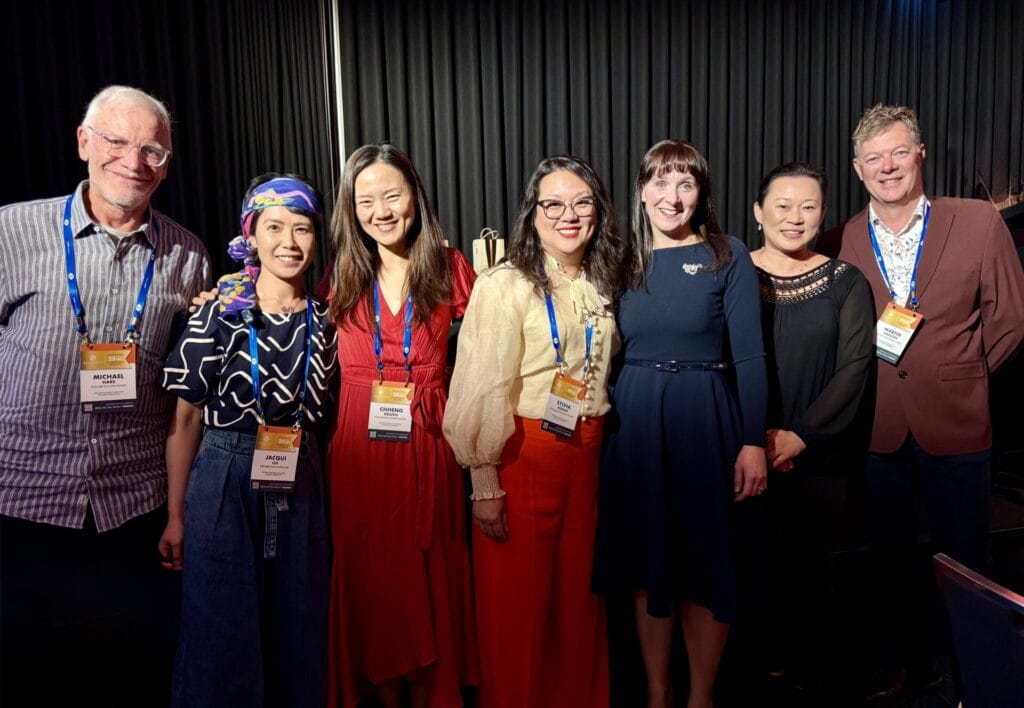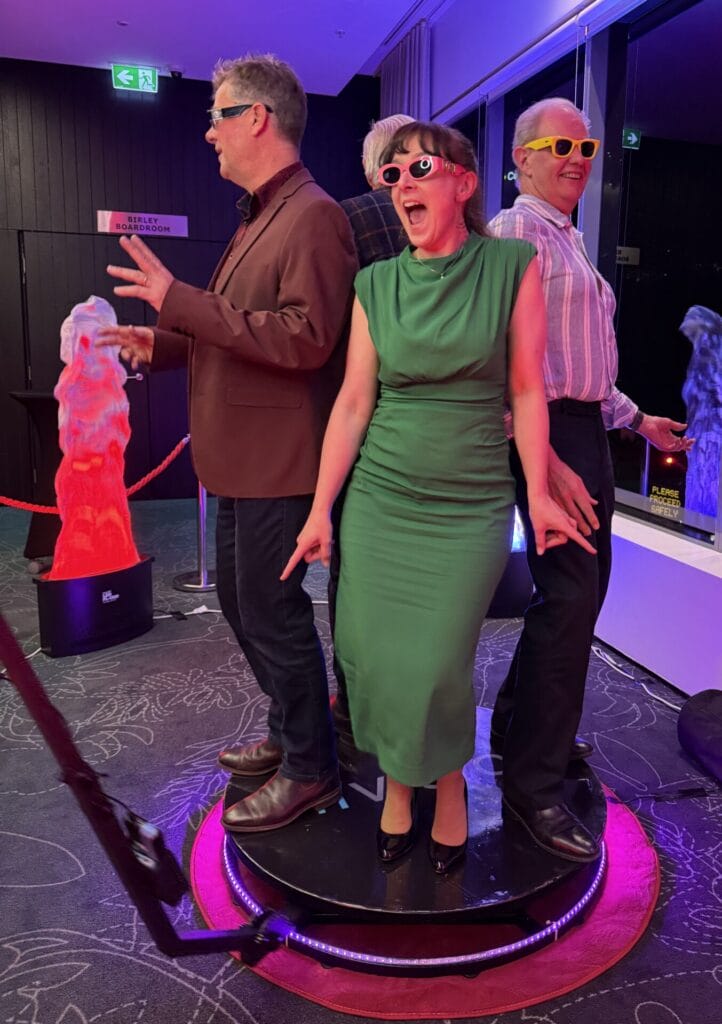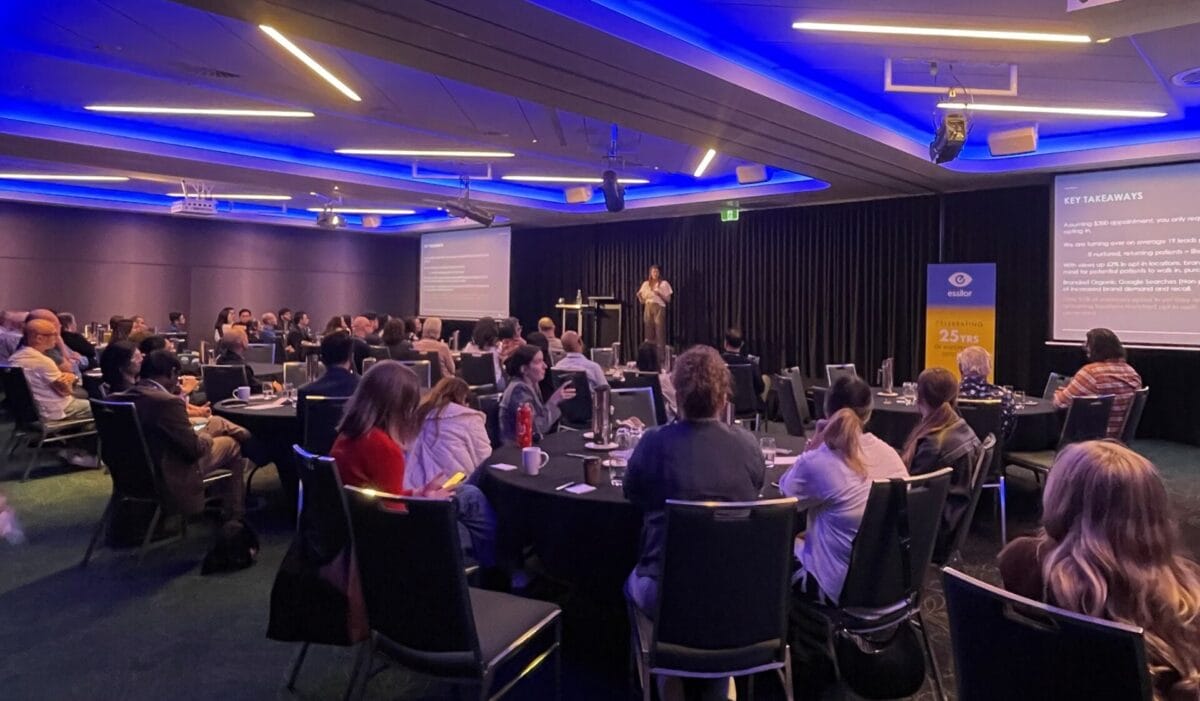
This year’s Eyecare Plus Boot Camp celebrated 25 years of championing independent optometry. Eyecare Plus is the largest branded independent optometry group in Australia, with a stated goal of supporting new and established branded and unbranded member practices to thrive through collaboration. About 120 people gathered at Darling Harbour to connect, learn and reflect, while looking ahead to the future.
Layne Beachley, seven-time world championship surf legend, kicked off the morning with a presentation on burnout. Seventy per cent of Australians identify as burnt out, and in the modern world of endless distraction and 24-hour news cycles, she encouraged everyone to take their mental health seriously; chronic stress can affect our focus, and our ability to solve problems, think critically, and retain information.
She shared her personal journey, contrasting two different approaches that shaped her career. One was a fear-driven approach – which she described as a binary, win-or-lose view where constant comparison led to a feeling of inadequacy, a decline in the quality of her relationships, health, and eventual burnout. The second, much healthier approach was her “love-based”, process-oriented approach, which focussed on the “little things” like rest, nutrition, hydration, recovery, and adopting a more positive mindset. She emphasised that the words we use to describe ourselves have a significant impact on our lives and behaviour.
Managing energy is vital to preventing burnout. Surrounding ourselves with supporting and encouraging people – a “dream team” – helps boost our energy, happiness and productivity. On the flipside, identifying and limiting time with “dream thieves” – or negative people – drains our energy. She also stated the importance of a “love to do” list to “invite fun, laughter and play” into our lives.
And why should we care? Because she said, “we want to be happy and healthy people, because when we’re happy, we’re thriving… your happiness actually makes you a more productive, purposeful, and successful human being”.
… decisions are first and foremost made based on emotion, rather than logic
Selling with Integrity
Sales may not come naturally to optometrists. But as experts who make a difference in the lives of their patients, Dr Emma Gillies, optometrist and founder of Purple Key Consulting, advised the audience to reframe their role as “professional mind makers”, rather than typical salespeople, recognising the value of the knowledge they provide to their patients.
She explained the psychology behind decision making – decisions are first and foremost made based on emotion, rather than logic. The catalyst for change, she explained, is often dissatisfaction with the current situation – noting that most people move away from pain or something negative towards something positive. As change is inherently uncomfortable, our focus should be on understanding the patient’s perspective, asking the right questions to strengthen the connection between the patient and optometrist – ask questions like “How does that impact you?” and “Why is that important?”.
Ultimately, selling with integrity is about putting the customer’s needs first, understanding their decision-making process, and guiding them towards the right solution through empathetic communication. Optometrists don’t sell products but facilitate change.
AI and Optometry
Inbal Rodnay, an artificial intelligence (AI) strategist, discussed the adoption of AI in business. She observed that while AI has been available for a few years now, most businesses are still only “dabbling” in AI. There is a lack of a structured approach, often due to confidentiality concerns.
AI can be harnessed for workflow automation, said Ms Rodnay, and is particularly useful for tasks such as stocktaking and data entry. AI medical scribes can transcribe consultations and then provide summaries, which may be useful for referrals, medical certificates, and review visits. AI agents can even perform tasks like sending emails, creating files, and making appointments autonomously.
She recommended a five-step AI roadmap for businesses:
- Get all leaders aligned on AI before taking it on board.
- Choose one secure, paid tool like Copilot, Gemini or ChatGPT. When choosing, it is particularly important to consider questions about data encryption, retention, and privacy.
- Create specific AI policies to define which tools are allowed, how to use them safely, which information is to be shared, and which is to be kept confidential.
- Implement ongoing training for both skills development and responsible AI usage. This includes staying updated on new capabilities.
- Regularly review AI tools to ensure you’re still using them optimally and taking advantage of new features that may have been released.
Ocular Anatomy, Pathology: Impacts on Dispensing
Chedy Kalach, from the Australian College of Optical Dispensing (ACOD), discussed the role of dispensers supporting patients with ocular conditions, bridging the gap between clinical care and daily comfort.
From acting as a triage for patients with red eyes and other serious symptoms, to helping with infection control in conjunctivitis, he highlighted the importance of knowing ocular conditions that dispensers may come across in day-to-day life,
Being aware of some practical solutions like lubricant drops, cleaning products or even ptosis bars not only enhance patient care but can help build the reputation of the practice by word of mouth.
Dispensing Atypical Prescriptions
Rayleen Tamblyn, from ACOD, led an interactive workshop discussing atypical prescriptions. Aphakia, aniseikonia, and high ametropia were discussed and attendees were asked to predict and then recommend tailored solutions.
Common problems included ring scotomas, aberrations, reflections, and distortion. The merits of single vision, bifocal, multifocal, and multiple pairs of glasses were discussed, as well as different lens coatings and thinning – all which impact patient care and comfort.
She noted that if patients return with problems, you should consider yourself lucky as many people simply never return, meaning you will have lost a patient for life.
Preventing Performance Problems
Kayley Riddle, a professional development coach, tackled a common but often overlooked reality – most practice owners are not experts in managing people, and yet people management is an essential part of running their business. Fortunately, you don’t need to be an expert to manage people, only “good enough” to lead without letting negative emotions cloud your judgement.
Unlike equipment or technology, people are unpredictable; emotions, change and life outside work can lead to periods of poor motivation, productivity, or trust. These elements are beyond a practice manager’s control, however Ms Riddle said it’s possible to prevent concerns from escalating by continually engaging with staff and building a culture of trust through active listening. If there is ever a problem, your staff should feel comfortable coming to you first. She also reminded attendees to not be afraid to ask for help themselves.
… it’s possible to prevent concerns from escalating by continually engaging with staff and building a culture of trust through active listening
The Customer Journey
Speaking on the customer experience, Essilor Sales Manager Belinda Hannan saidOften, we find that any lack of trust displayed by dissatisfied customers is not due to the product, but the quality of service they receive. It’s important to empathise, to validate the customer’s concerns, and rebuild trust before taking a collaborative approach to address their concerns.
Generational Marketing
In today’s fast-paced world, understanding your customer is essential. Business strategist Katrina McCarter explained that it’s easy to make wrong assumptions about your customer base and how to best market to them, but getting it wrong can lead to missed opportunities and decreased success.
She explained distinguishing behaviours of six different generations and their preferred marketing channels:
Generation ‘builders’. Consumers aged 80 and above are largely missing from marketing. While visible in less than 5% of advertisements, they are a growing segment of the population, due to increasing life expectancy. They respond positively to empowering, respectful, fact-based and non-patronising messaging. They often take longer to decide.
Baby boomers. Despite being a wealthy generation, Boomers are relatively conservative spenders. They lean into credibility and authority and research online before deciding. One in five online purchases in Australia is now made by a Boomer and they are heavily present online – particularly social media.
Generation X. They spend the most time online on social media and are particularly receptive to nostalgia, like “Throwback Thursdays”. Brand storytelling and authenticity are key to this generation and Ms McCarter advised the audience that “sharing… what drives you in your business is really important to them”.
Millennials. This is the largest cohort in Australia and they like instant gratification – with payment terms like Afterpay being popular. Forty-two per cent of millennials surveyed said they have a stronger relationship with businesses they perceive to have a positive impact on society. Organic social media posting is also important; Facebook and Instagram are the mediums they respond to best.
Generation Z. Positive impact is important – three in four consumers in this generation want to buy from businesses that align with their values, and they feel a responsibility to invest in the local community. Ninety-eight per cent of Gen Z still prefer to make their purchases in a physical store, due to concerns about data and privacy. Having seen the rise of TikTok in their youth, they respond best to short form video content.
… it’s easy to make wrong assumptions about your customer base and how to best market to them, but getting it wrong can lead to missed opportunities and decreased success
Eyecare Plus Insights
The audience heard from member optometrists Emma Slinger and Peter Mckay. Ms Slinger, the owner of Eyecare Plus Karalee in Queensland, discussed the success of Protection Plus at her store, an insurance guarantee that provides replacement for accidental damage and loss of glasses. She reported that this program has boosted patients’ confidence in products, leading to a higher conversion rate.
Mr McKay, the owner of Eyecare Plus Taree and Gloucester in New South Wales, discussed his experience with automating and systemising his patient communication, which has resulted in a smoother workflow and increased customer engagement.
The audience also heard from Eyecare Plus founders Tony Hanks and Nick Hansen, who reflected on the origins of Eyecare Plus, as well the landscape of independent optometry today.
Mr Hanks explained that the establishment of Eyecare Plus stemmed from a desire to create a network that avoided competing practices in the same location and provided equal ownership to all members. Mr Hansen, a longtime Eyecare Plus member and the owner of Hansen Optometrists in Orange NSW, shared how his family practice joined to ensure continuity for the future and to strengthen buying power and marketing.
Both Mr Hanks and Mr Hansen considered the impact of corporatisation and the impact that telehealth and AI will have, if used as profiteering tools. Despite these challenges, both men were optimistic about the future. “I actually think the most exciting thing is the new technology that’s coming through, and the new treatments that we’re doing,” Mr Hanks said. “And I honestly believe independent optometry is at the cutting edge of that.”
Eyecare Plus also acknowledged 25 years of collaborating with Essilor, a supplier that has supported the group from the beginning.
The event, held in September, wrapped up with a 25-year celebration dinner. The next Eyecare Plus Bootcamp will be held in 2026.