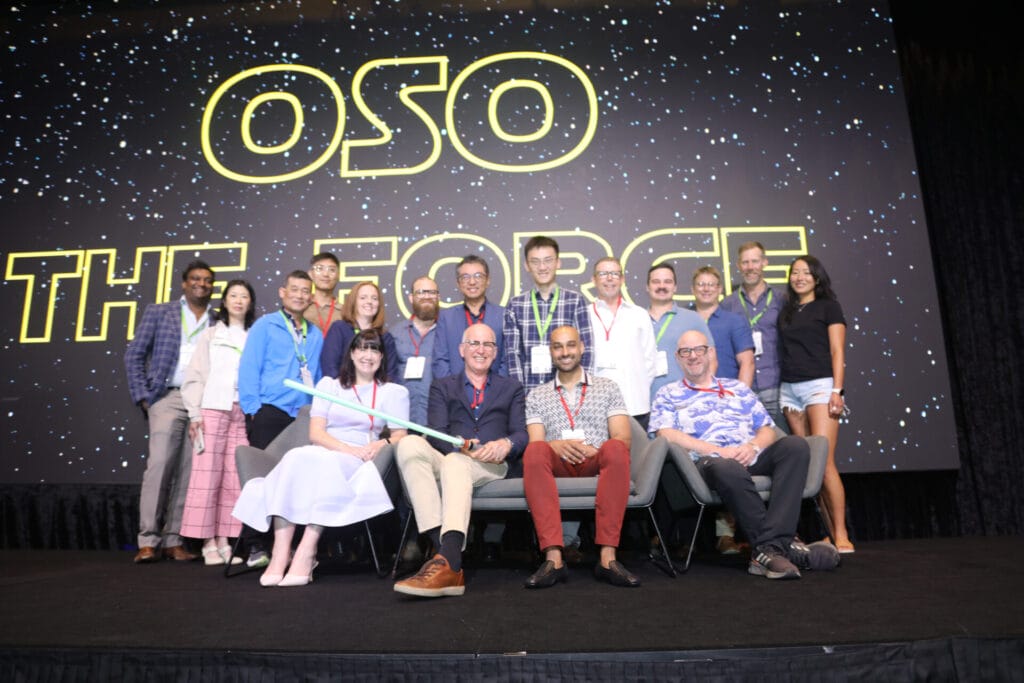
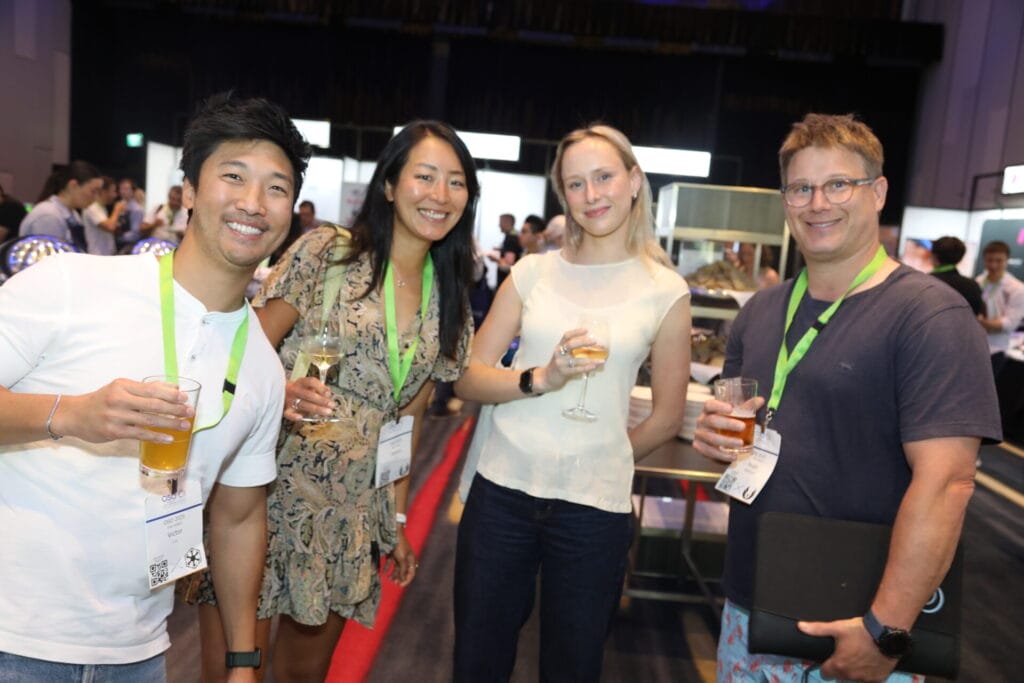
Fellows of the International Academy of Orthokeratology and Myopia Control.
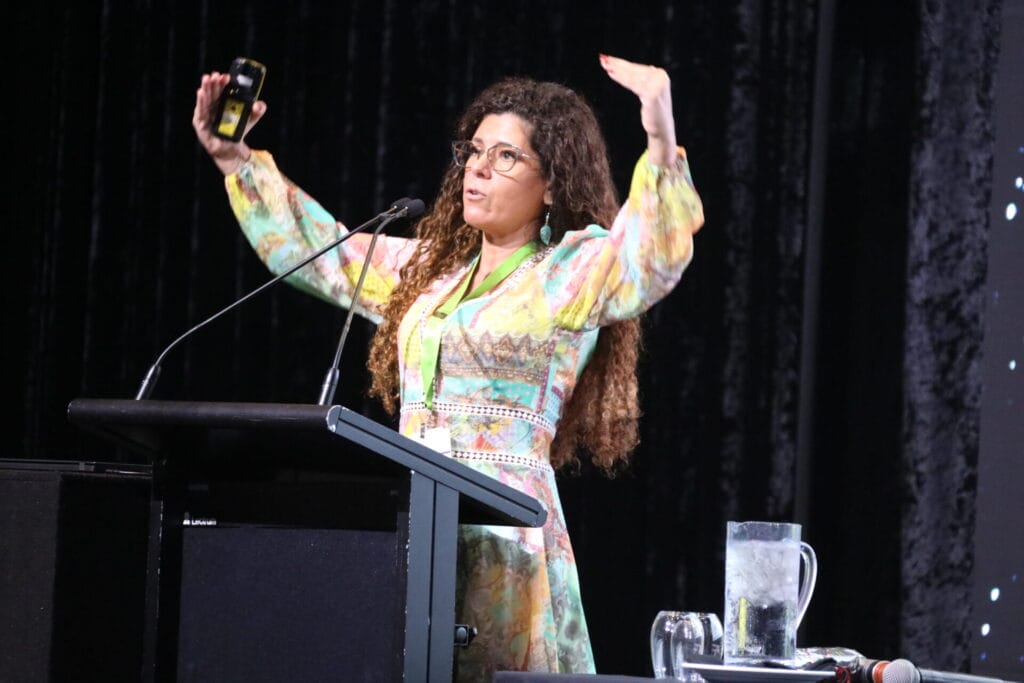
The 2025 Orthokeratology Society of Oceania (OSO) Conference, held from 10–12 October at the RACV Royal Pines Resort on the Gold Coast, delivered an outstanding weekend of clinical excellence, innovation, and camaraderie.
The OSO Conference has firmly established itself as a premier event for optometrists and contact lens practitioners passionate about orthokeratology (OK) and myopia control.
This year’s theme, ‘The Force’, embraced a Star Wars theme that perfectly captured both the enthusiasm of the growing orthokeratology community and the momentum driving advancements in myopia management and specialty contact lens practice.
Catering to both emerging and experienced clinicians, it offered a rich mix of lectures, workshops, and hands-on sessions designed to deepen clinical knowledge and confidence.
This year’s theme, ‘The Force’, embraced a Star Wars theme that perfectly captured both the enthusiasm of the growing orthokeratology community
Nearly 200 delegates from across Australia and New Zealand attended, reflecting both the expanding importance of OK and myopia control in modern eye care, and the strong sense of community that OSO continues to cultivate.
The conference opened fittingly with John Mountford (Queensland) – widely regarded as the godfather (or perhaps the Yoda) of orthokeratology in Australia – who detailed the intricate fluid forces that occur beneath OK lenses during overnight wear.
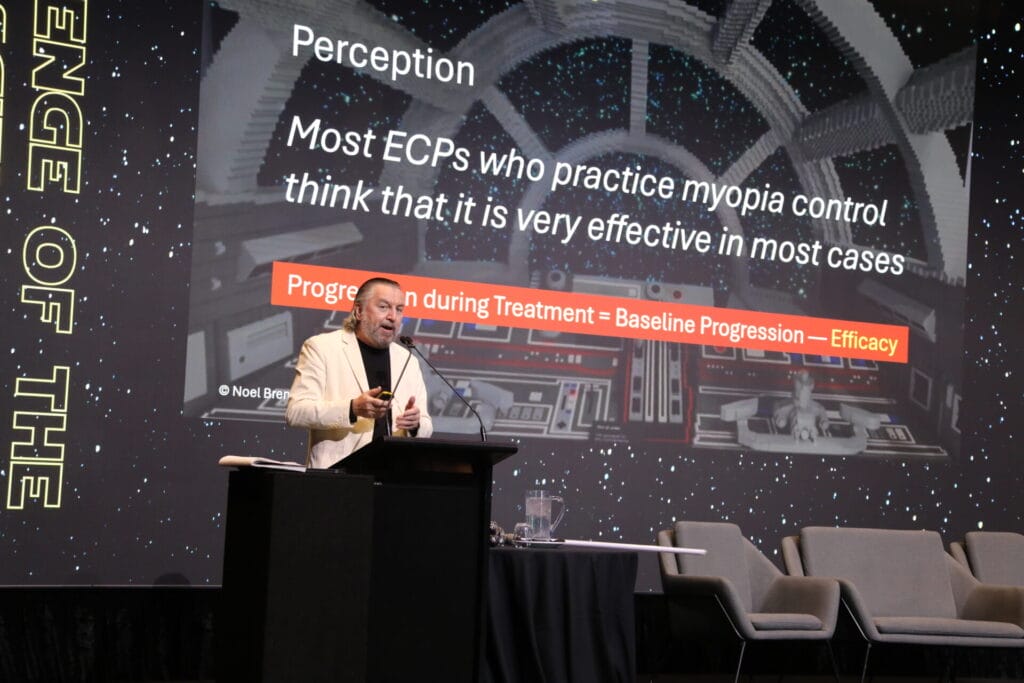
An impressive line-up of international and local experts followed, including other keynote speakers Dr Noel Brennan (Florida, United States), Associate Professor Daddi Fadel (Ontario, Canada), Dr Michael Lipson (Michigan, United States), and Dr Gareth Lingham (Western Australia).
Dr Lipson highlighted how OK not only serves as an excellent method of myopia control but also ranks highest in patient quality-of-life scores compared with other refractive correction methods.
A strong focus on myopia control permeated the program. Speakers explored the mechanisms of myopia progression, the role of optical defocus, and the long-term outcomes of current interventions. Presentations also discussed integrating OK into myopia management, combining optical, environmental, and lifestyle interventions for optimal outcomes.
Recent research continues to refine understanding of lens design parameters: smaller optic zones (≤5.5 mm), greater asphericity, and higher Jessen factors appear to enhance myopia control. Intriguingly, while lens decentration is undesirable from a visual standpoint, it may paradoxically improve myopia control efficacy.
Dr Brennan continued to challenge delegates to maintain scientific scepticism – reminding us to critically evaluate the ‘science’ presented in literature – and underscored the alarming escalation of the global myopia epidemic. He noted that pathologic myopia has become the leading cause of irreversible blindness in Taiwan, Japan, and China, whereas just two decades ago, myopia was not even listed as a separate cause of blindness.
Dr Lingham delved into the role of the choroid in regulating eye growth, explaining how choroidal thickening appears to be correlated with slowing axial elongation, while thinning accelerates it. Notably, short-term changes in choroidal thickness – at one week or one month – can predict long-term treatment efficacy, potentially guiding early treatment decisions, such as whether to increase dosage or change modalities.
He also shared data from the Raine Study,1 which found myopia prevalence increased from 25.8% to 33.2% between ages 20 and 28, i.e., approximately 14% of non-myopes became myopic in this time frame, and one-third of existing myopes continued to progress. Risk factors for onset or progression of myopia included reduced outdoor time, increased screen use, female sex, and family history of myopia.
Novel myopia control technologies are rapidly emerging. While spectacle designs, such as the HOYA MiyoSmart (DIMS) and Essilor Stellest (Highly Aspherical Lenslet Target) slow myopia via peripheral plus defocus, Cho and Vincent’s findings suggest that both plus and minus lenslets may yield comparable results.2 Daniel Tilia introduced new STOP (spatio-temporal optical phase) and ARREST (active rise in retinal encoding of spatio-temporal) technologies from nthalmic, which aim to stimulate retinal ganglion cell activity rather than rely on optical defocus.
Soojin Nam (NSW) cautioned clinicians that atropine can induce esotropia in some children – even at low concentrations – while Dr Craig Donaldson (NSW) addressed the risks associated with pathologic high myopia, including associations with Marfan and Stickler syndromes.
Workshops: From Padawans to Jedi Knights
Complementing the lectures, the workshops provided invaluable practical learning opportunities for all experience levels. The ‘Padawan Bootcamp’, designed for newcomers to OK, and the ‘Jedi Knight Bootcamp’, for advanced practitioners, ensured that the conference catered to all skill levels.
Assoc Prof Fadel and the Eyespace team led popular sessions on mastering software driven contact lens design with WAVE software and Eyespace software – offering troubleshooting insights and strategies for first-fit success. Practical pearls included the importance of over-refraction over OK lenses and the value of axial biometry measurements.
The Dry Eye Society, led by Jason Holland, Hugh Bradshaw, and Mark Hinds (all from Queensland), together with Dr Peter Pham (New South Wales), presented a great hands-on workshop featuring the Zest treatment and Dr Pham’s latest innovation, the Rinsada device – an ocular surface flushing system. As Mr Hinds aptly said: “Dilution is the solution”.
Celebrations, Battles, and Collegiality
This year also Dylan Bennett (South Australia) and Jue Wang (Victoria) awarded Fellowship of the International Academy of Orthokeratology and Myopia Control – a rigorous recognition of clinical excellence in the field, administered in Oceania by Shonit Jagmohan (Victoria). They join a growing community of those excelling in OK.
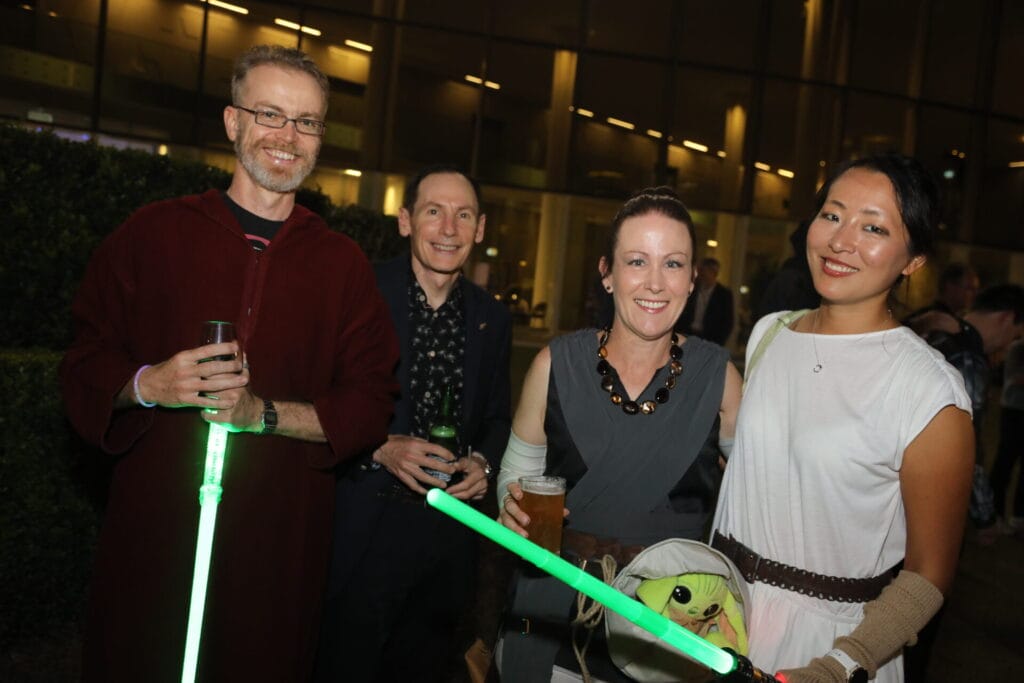
Of course, it wouldn’t be an OSO conference without its legendary gala dinner. This year’s Star Wars–themed event did not disappoint, with delegates embracing the theme with gusto. Charl Laas claimed best costume as a convincingly fearsome Darth Maul, while runners-up included Mr Jagmohan (C-3PO), Gavin Schwartz (NSW) and Hugh Bradshaw (Queensland) (both Wookiees), and Harold Gent (South Australia, X-wing pilot).
The night was filled with competition, with groups battling over games including beer pong, cornhole, tug-of-war, shooting hoops, and archery.
With its engaging program, world-class speakers, hands-on learning opportunities, incredible fun and collegiality, the 2025 OSO Conference once again demonstrated why it remains a highlight of the CPD calendar.
The OSO continues to lead the way in advancing specialty contact lens practice and myopia control. We look forward to seeing what’s in store for the next OSO Conference in 2027. Don’t miss it!
References
- Lee SS, Lingham G, Mackey DA, et al. Incidence and progression of myopia in early adulthood. JAMA Ophthalmol. 2022 Feb 1;140(2):162-169. doi: 10.1001/jamaophthalmol.2021.5067.
- Su B, Cho P, Vincent SJ, Jiang J, et al. Novel lenslet-array-integrated spectacle lenses for myopia control: A 1-year randomized, double-masked, controlled trial. Ophthalmology. 2024 Dec;131(12):1389-1397. doi: 10.1016/j.ophtha.2024.07.002.