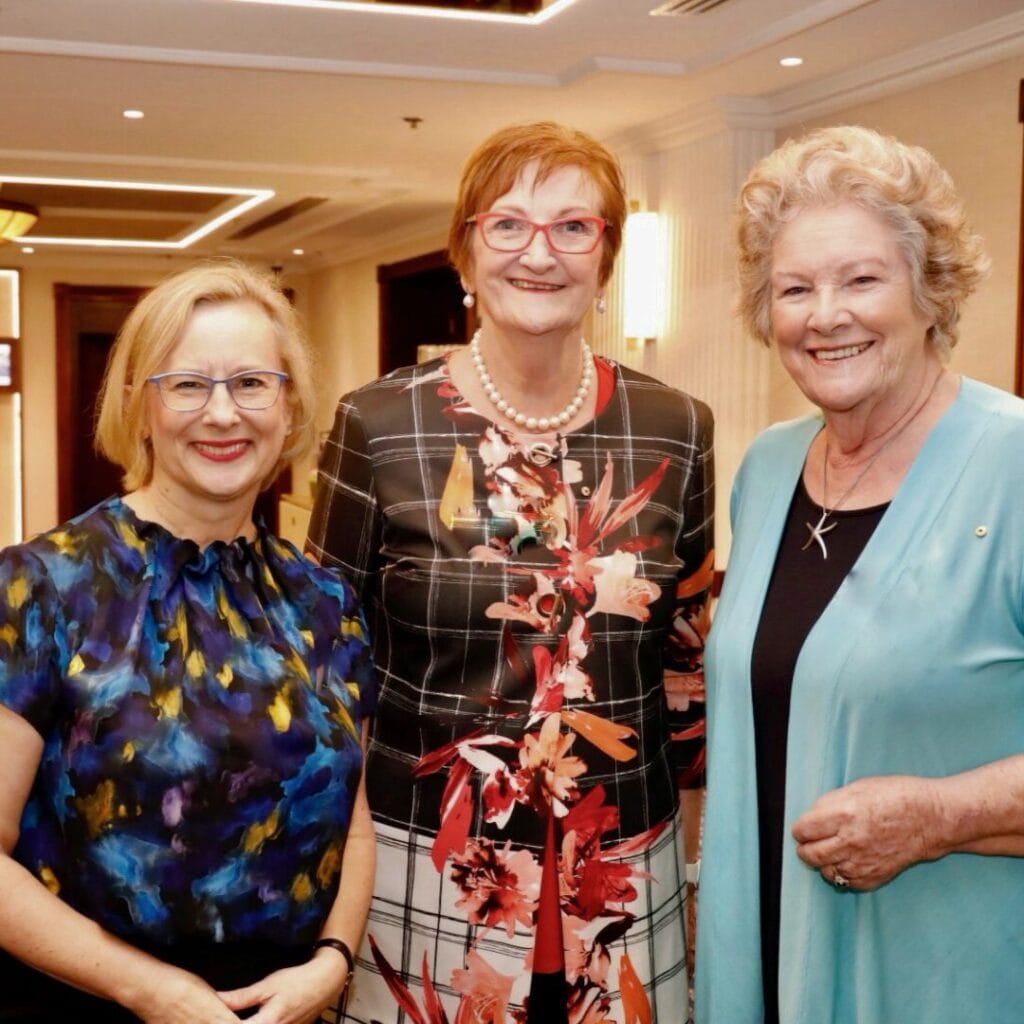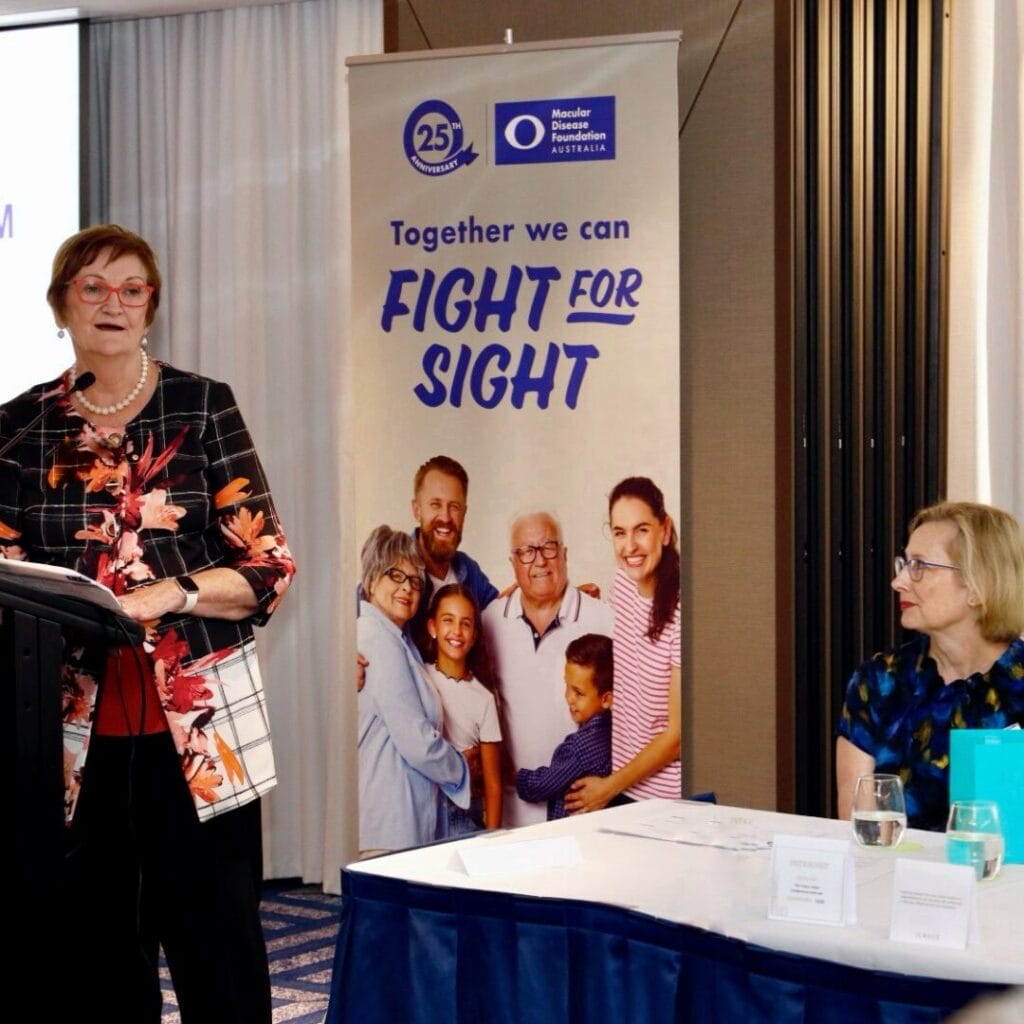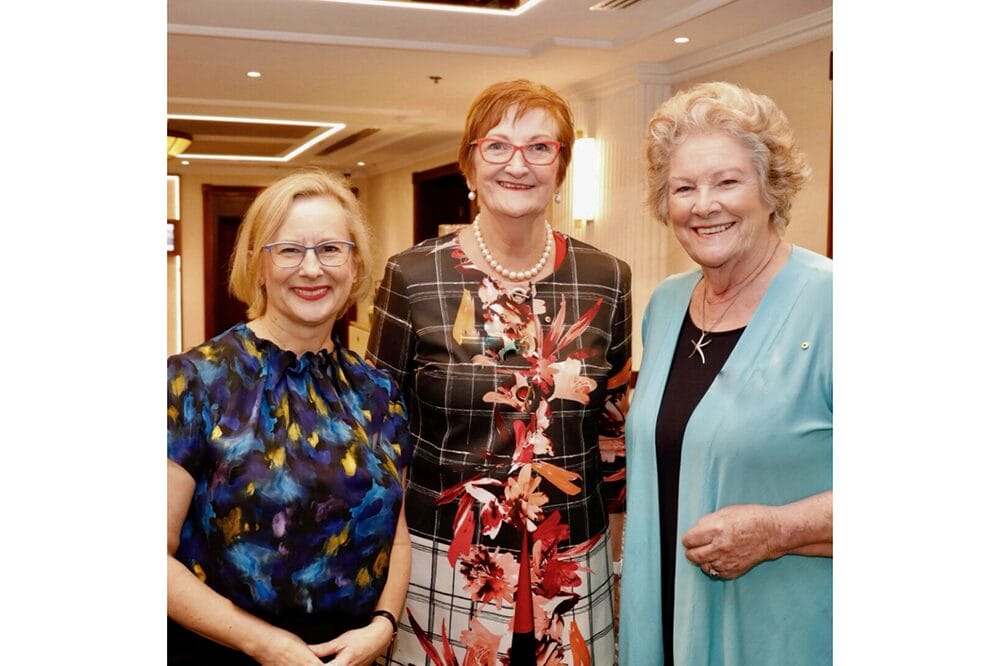
From left: Dr Kathy Chapman, Professor Sanchia Aranda AM, and MDFA ambassador The Hon. Jillian Skinner AM.
Macular Disease Foundation Australia (MDFA) has marked a milestone year with record-breaking research investment and expanded support services, as the organisation prepares to celebrate its 25th anniversary in 2026.
The Foundation’s annual celebratory event in Sydney brought together researchers, clinicians, community members and supporters to reflect on achievements and chart the future direction of macular disease care in Australia.
Chief Executive Officer Kathy Chapman told the audience that MDFA had invested more than AU$1 million into eight new groundbreaking research projects this year alone. This represents a significant commitment to advancing scientific understanding and treatment options for people affected by macular disease. The Foundation has now funded a total of $6.9 million across 42 research projects since launching its research programme in 2011.
“These research projects have huge potential to help change lives,” Ms Chapman said. “We’ve funded studies into prediction and prevention of AMD (age-related macular disease) progression, new retinal imaging software, and gene therapy for inherited retinal diseases.”
The Foundation also announced two additional awards: the Elisabeth McDonald Memorial Award ($100,000) for rural and regional vision health research, and the MDFA 25th Anniversary Award ($200,000) for geographic atrophy research.
MDFA’s support services have expanded significantly, with more than 700 people enrolled in the Eye Connect service, 6,000 received by the national helpline, and 1,600 volunteer hours contributed. The program has recently expanded to include diabetes-related eye conditions through partnership with Diabetes Australia.
Evaluation results showed 81% of Eye Connect participants better understood their condition, while 95% of those being treated with intravitreal injections maintained adherence – significantly improving on the typical 20% first-year dropout rate.
I’ve been motivated by equity of access to health services throughout my career. There’s a lot more to do
Tracking Real-World Treatment Outcomes
Professor Mark Gillies from the Save Sight Institute presented findings from the Fight Retinal Blindness! Registry, established in 2007 to track real-world AMD treatment outcomes across 22 countries.
“Clinical trials often exclude many patients we see in real-world practice,” Professor Gillies explained. “We wanted to see whether real-world results matched trial outcomes.” The registry now tracks approximately 6,000 AMD patients globally.
His research demonstrates that second-generation VEGF inhibitors provide “significantly better outcomes – they’re stronger and give longer treatment intervals”. However, long-term data revealed concerning trends with patients’ average vision worse than baseline after 14 years, mainly due to long-term complications such as geographic atrophy and subretinal fibrosis.
MDFA has funded Prof Gillies’ research, which aims to identify the intravitreal treatments that minimise long-term complications for different patient groups.
Living with AMD: A Personal Perspective
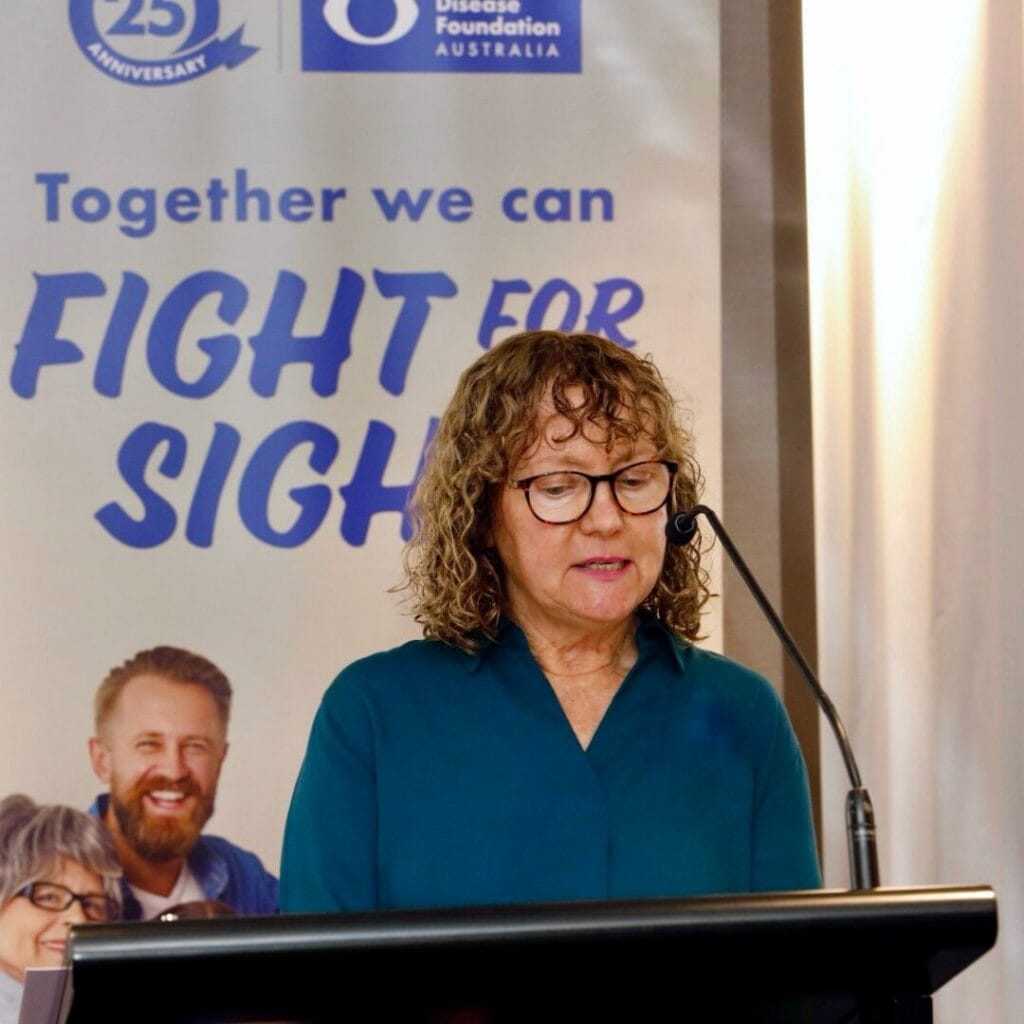
Susan Anderson, an Eye Connect program participant, shared her personal story of living with intermediate dry AMD. Following a strong family history – both her parents were affected by neovascular AMD – Ms Anderson was diagnosed at age 62 despite adhering to an eye-healthy lifestyle, including regular exercise and never smoking. Her presentation offered a deeply personal perspective on the emotional challenges of living with progressive macular disease and the critical importance of ongoing support. Ms Anderson described the shock of diagnosis and subsequent disease progression, including recent news that her drusen had increased from 325 to 570 microns. She told the audience about how the Foundation’s resources – from the national helpline to monthly Eye Connect calls and peer support groups – have been invaluable at each step of her journey. She called for continued research funding and expanded support services to meet the growing needs of the AMD community, while expressing hope that new treatments will be available as her condition progresses.
Leadership Transition
The event marked a significant leadership transition, with patron Ita Buttrose AC OBE announcing Professor Sanchia Aranda AM as new Chair, succeeding Graham Head AO, who has become CEO of the National Disability Insurance Agency.
Acknowledging Mr Head’s contribution, Ms Buttrose said, “Graham has supported the Foundation through post-pandemic uncertainty, challenging us to be more ambitious whilst never forgetting that community members are why we’re here. What I’ve always admired about him is his integrity.”
Professor Aranda brings extensive health sector experience and a personal connection – both parents had macular degeneration with vastly different outcomes.
“My dad lost his licence in his early sixties with dry macular degeneration. There were no supports in rural New Zealand,” Professor Aranda said. “In contrast, my mother had wet AMD and was still driving at 92. The differences in quality of life between my parents should motivate us highly. I’ve been motivated by equity of access to health services throughout my career. There’s a lot more to do.”
Ms Buttrose welcomed the Foundation’s new Chair. “Professor Aranda has led organisational transformation, championed consumer involvement in cancer research, and brings valuable experience in public education campaigns.”
Concluding the event, Dr Chapman assured the audience that as MDFA celebrates its 25th anniversary in 2026, work would continue to improve the quality of life for people affected by macular disease through further research, education, advocacy, and support services.