


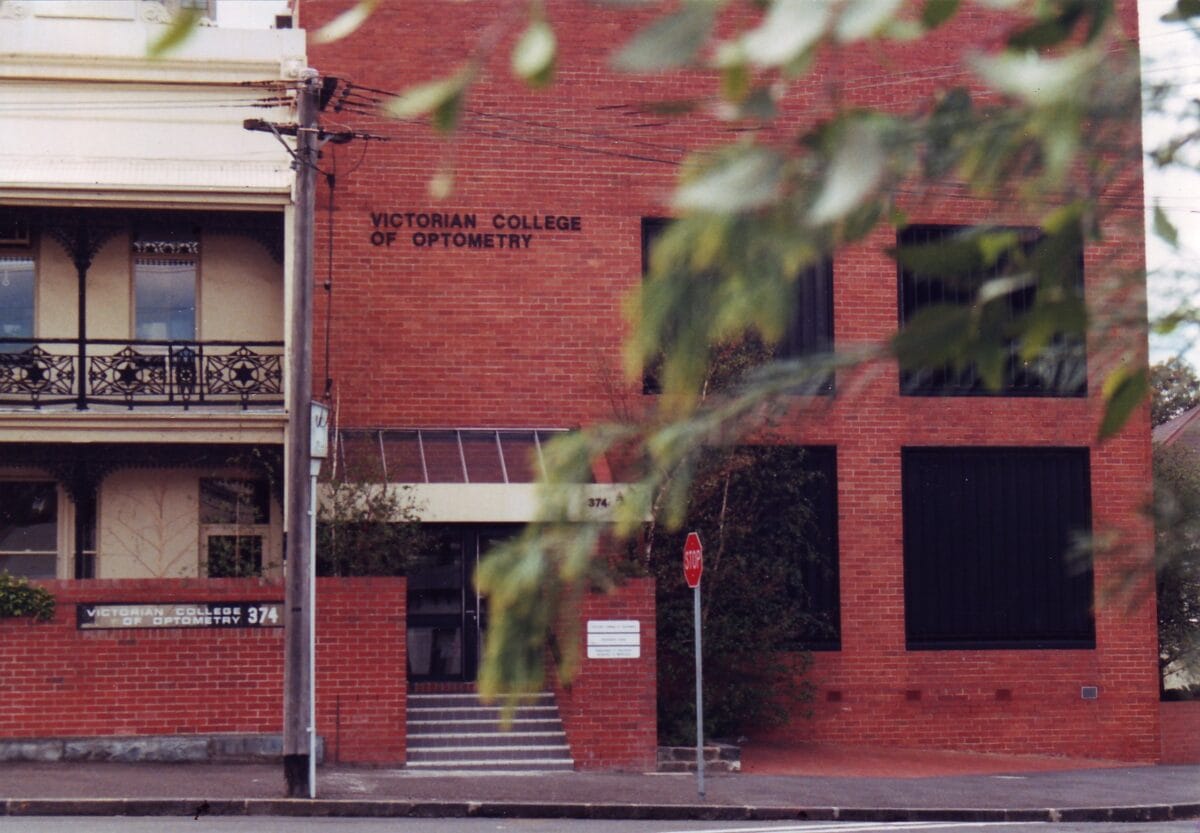
The Australian College of Optometry in 1980
The Australian College of Optometry (ACO) will sell its ageing headquarters in Carlton, Melbourne and relocate to be closer to the patients it cares for and its partners.
The ACO said funds will be reinvested in a more suitable and fit-for-purpose premises within Melbourne’s city fringe, enabling the organisation to continue providing quality eye care to Melbourne’s most “vulnerable and complex patients”.
ACO CEO Pete Haydon said the decision to sell, which has been welcomed by ACO optometrists and stakeholders, followed many years of consideration and analysis.
“Over the past 20 years, our organisation has undergone a quiet but significant transformation, and the way we train, research, and deliver care to our patients has changed,” he said.
ACO began as a teaching clinic in 1940 and quickly developed a strong public health ethos. In the 1950s, the organisation received its first Government grant, helping extend optometry care to underserved communities in Victoria.
When full-time undergraduate education shifted from ACO to the University of Melbourne in 2005, the organisation’s focus turned to providing clinical placements for Australian optometry students, and targeted professional development.
In 2023, a strategic decision to shift the focus from neuroscience to clinical research was made to align with the ACO’s public health mission.
“After two decades of change, we now only need about one-third of the space we currently use in Carlton,” said Mr Haydon.
“We no longer need the extensive teaching, education, or laboratory spaces we once did, and these areas have proven difficult to repurpose, leaving many of them unused, deteriorating and very costly to maintain.
“Today, we stand as leaders in public health eye care, clinical research and education, but our headquarters has not kept pace. Moving our primary clinical and administrative headquarters will ensure our continued relevance and sustainability’.
Honouring the Past, Setting Up for the Future

The Australian College of Optometry in 1960
An independent Victorian Eyecare Service (VES) review conducted in 2024
clearly outlined where ACO patients were, the importance of locating close to them to deliver quality care, and the need to expand satellite clinic rooms and outreach services – initiatives the organisation was actively advancing.
“There are significantly fewer ACO patients who live in and around Carlton now; most live well out of the CBD, or in country Victoria, and many find it a challenge to travel into the central clinic,” Mr Haydon explained. “So, it’s our job is to get the services to them and do whatever we can to reduce barriers to clinical care. To do this, we have grown our outreach clinics to more than 300 each year, are expanding our established network of satellite clinics around the outer suburban ring, and continue to partner with around 80 rural and regional practitioners.”
Mr Haydon said it is imperative that the ACO remains sustainable so that “we can continue to provide high quality eye care for these vulnerable patients in the community with complex needs”.
“Reinvesting in a modern premises is a practical step to secure our future – helping us deliver lasting impact, support our communities, and strengthen clinical care, research, and education for generations to come,” he said.
“We acknowledge the significance that our headquarters holds for many in the profession who began their careers at ACO when we were a full-time training facility. While this chapter remains an integral part of the ACO story, it concluded a long time ago.
“We will continue to honour where we’ve come from, while responding to the changing needs of our patients and the profession.
A two- to five‑year timeframe has been put on the building sale and relocation.


