WAVE – the clinical conference hosted by Optometry Western Australia – has become the annual launching pad for optometry’s continued professional development. Hosted in the historical village of Fremantle, this boutique event now attracts a loyal local crowd as well as clinicians from throughout Australia, New Zealand, and Malaysia.
This year 230 people filled the seats of the Esplanade Hotel and over 500 jumped online to catch the latest on glaucoma, vitreoretinal surgery, paediatric eye care, dry eye, the impact of cosmetics on the eye, and more at Optometry Western Australia’s annual conference, known as WAVE. This article reviews just some of the presentations.
Managing Cataract and Glaucoma
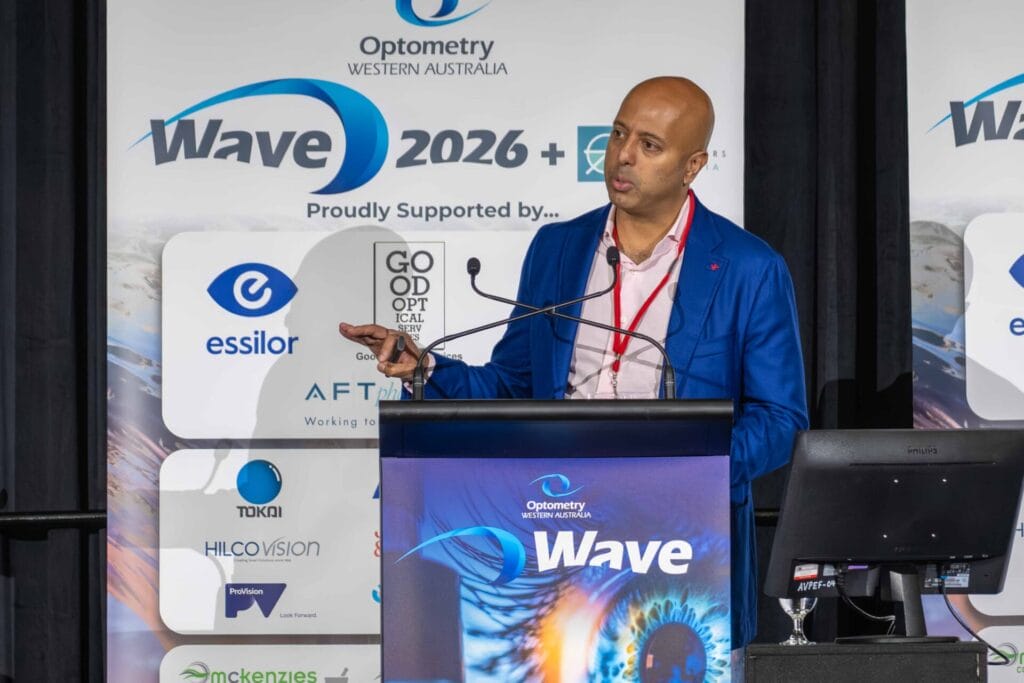
In the main hall, Dr Geoffrey Chan (University of Western Australia, Lions Eye Institute) delivered a presentation on cataract surgery in the glaucomatous eye.
Both cataract and glaucoma are age-related conditions, and up to one in five patients undergoing cataract surgery may have concurrent glaucoma or ocular hypertension (OHT). The bidirectional relationship was highlighted: glaucoma therapies can accelerate cataract formation, while cataract surgery itself may favourably influence the intraocular pressure (IOP) profile in glaucoma patients. The advantages of cataract extraction were emphasised, particularly in glaucomatous eyes- replacement of the cataract with an intraocular lens (IOL) creates additional space and improves angle morphology, thereby enhancing conventional aqueous outflow and lowering IOP. While the OHTS study1 demonstrated an average IOP reduction of approximately 4 mmHg following cataract surgery, he cautioned that around 5.2% of patients may experience a significant postoperative IOP spike
Minimally invasive glaucoma surgery (MIGS) is well suited to mild-to-moderate glaucoma and typically provides an additional IOP reduction of 1–2 mmHg. In responsive patients, this can translate to a reduction of approximately one topical medication in long-term management.
Trabecular stents are commonly associated with intraoperative bleeding due to reflux of blood from the collector channels, and patients should be counselled that visual recovery may take up to a few weeks. In more complex cases, there is also a risk of refractive surprise. Accordingly, managing patient expectations around surgical recovery is essential—generally, it is prudent to “under-promise and over-deliver.”
Given the reduction in contrast sensitivity inherent to glaucoma, Dr Chan noted that monovision IOLs are typically preferred. Extended depth-of-field and multifocal IOLs should be reserved for carefully selected cases, such as patients with early, stable, non-progressive glaucoma, due to the potential for further compromise of contrast sensitivity.
Acknowledging the complexity of combined glaucoma and cataract cases, Dr Chan encouraged optometrists to routinely assess IOP in the lead-up to surgery and promptly alert the surgeon to any elevations in the postoperative period.

Photo credit: Pete Gardner Photography

Photo credit: Pete Gardner Photography
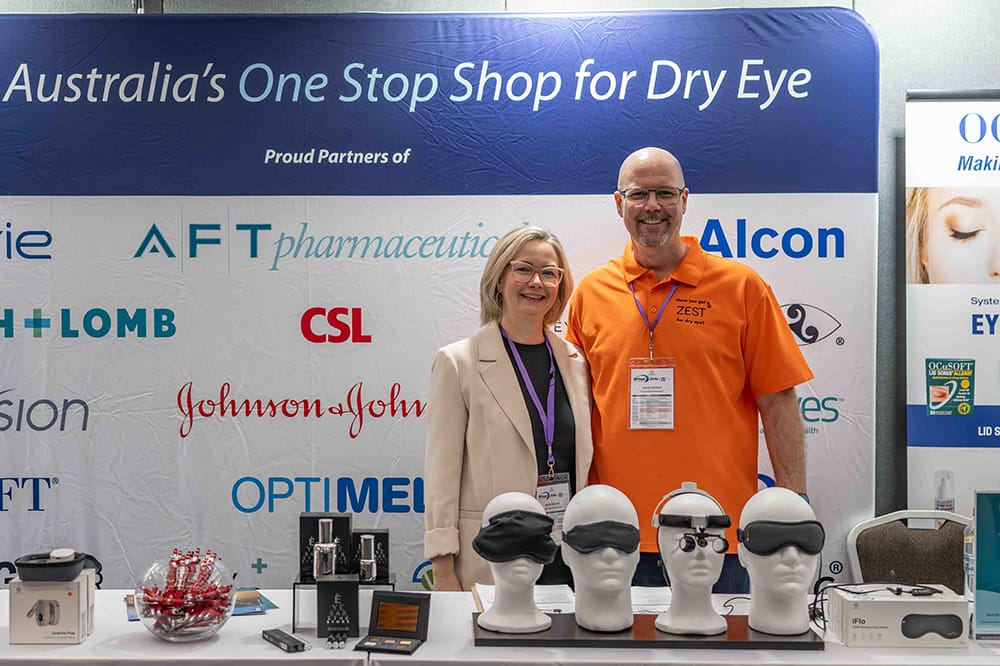
Photo credit: Pete Gardner Photography

Photo credit: Pete Gardner Photography

Photo credit: Pete Gardner Photography
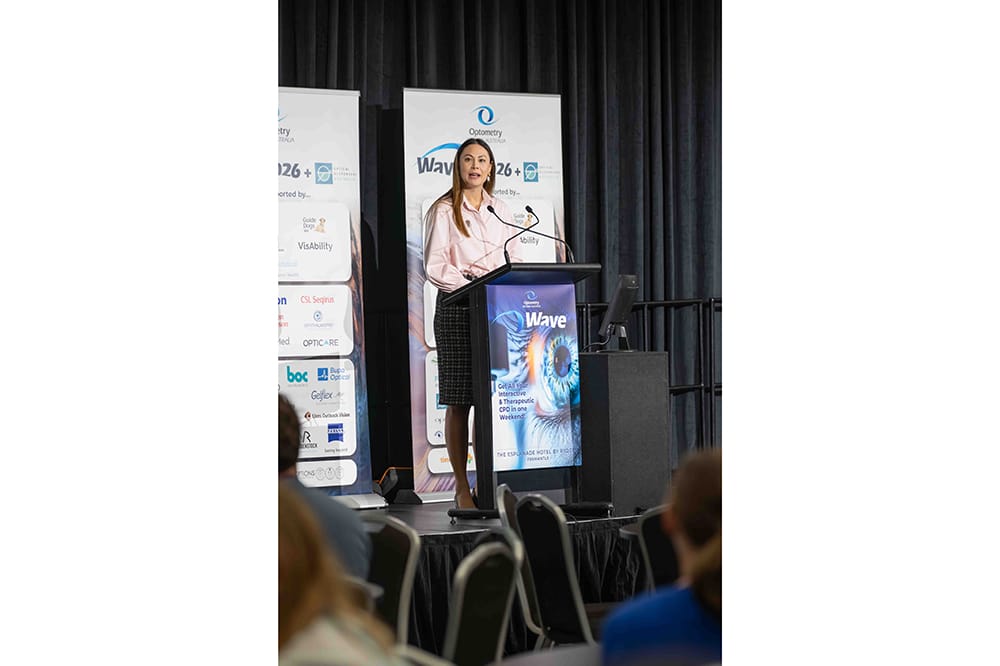
Photo credit: Pete Gardner Photography

Photo credit: Pete Gardner Photography

Photo credit: Pete Gardner Photography
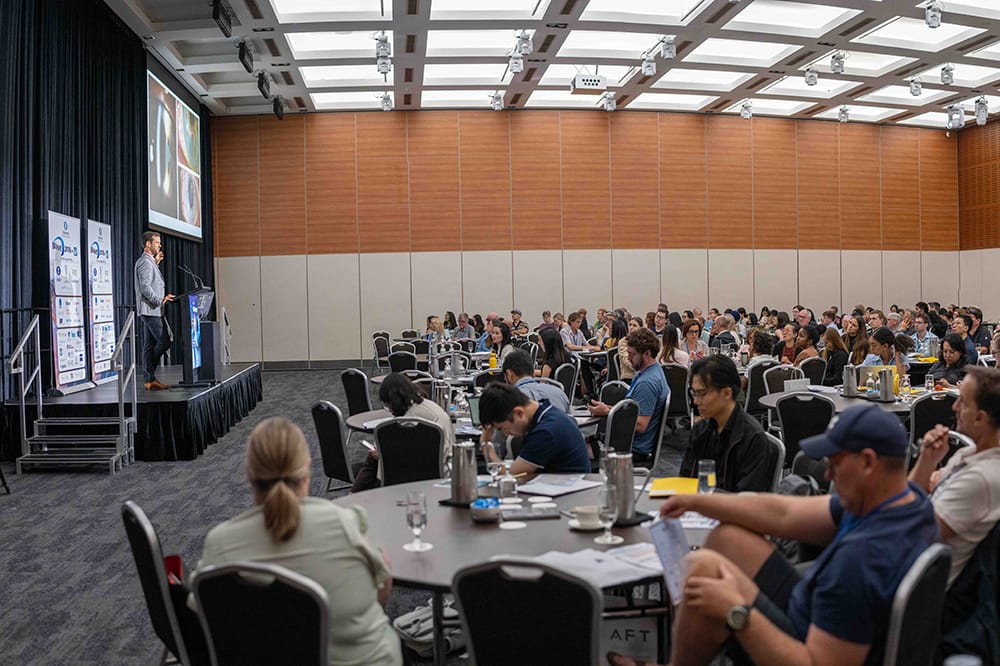
Photo credit: Pete Gardner Photography
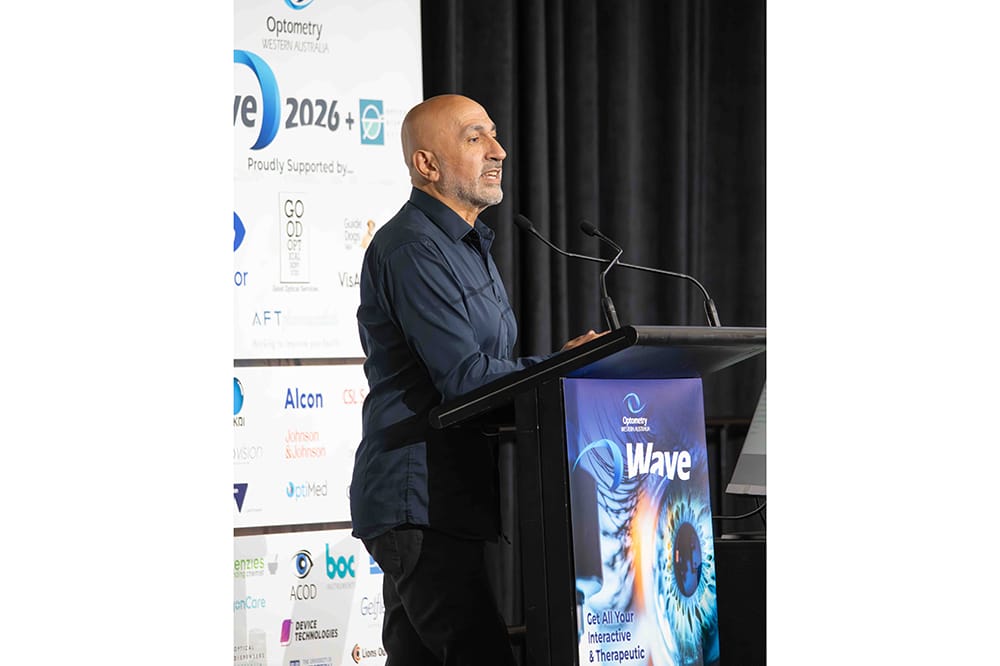
Photo credit: Pete Gardner Photography
Photo credit: Pete Gardner Photography

Photo credit: Pete Gardner Photography



Vitrectomy Surgery
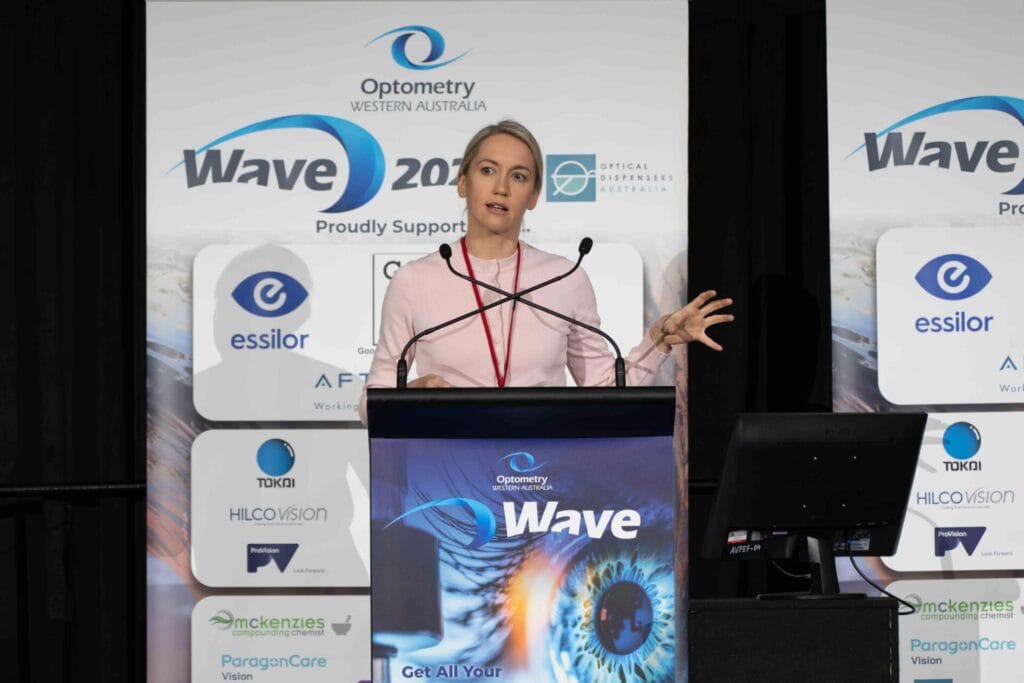
Professor Chandra Balaratnasingam (Lions Eye Institute, UWA) spoke on vitreoretinal and chorioretinal disease, noting that due to highly sophisticated techniques, “vitreoretinal surgery is very common in Australia now”.
Vitrectomy is the most common surgery for retinal detachment, and impressively, “in Australia, 90% of retinal detachments are fixed within one operation: we are the best in the world”.
Understanding that the vitreous anatomy changes with age is important.
At 20 years, a person’s vitreous is very firmly formed, however in their 40s, the proteins that connect the vitreous to the retina start changing. Known as vitreolysis, this translates to floaters, which precede vitreous detachment by around 10 years. At around 50 years, posterior vitreous detachments may occur, often over days, weeks, or even months. It is reassuring to know that if a patient has floaters that self-resolve after three months, they’re unlikely to have a retinal detachment in the future.
In vitrectomy surgery, the vitreous must be replaced with either balanced salt solution, gas, or silicone to allow the wound to heal. While gas is most commonly used, it is important that patients do not fly within two to eight weeks of the operation (depending on the gas used), as changes in cabin pressure will cause the gas to expand, causing intense pain and blindness. Prof Balaratnasingam asked optometrists to question vitrectomy patients about any plans they might have to travel after their surgery so that the most appropriate surgical plans can be made.
He cautioned that vitrectomy accelerates cataract development; most patients who have a vitrectomy will need cataract surgery within 18 months.
It can take 24 months to achieve complete anatomic and visual recovery after vitreoretinal surgery, which surprises many patients. “Tell them most of the recovery is in the first three months, but you will get incremental improvements for up to three to five years,” he said.
Noting the complexity of glaucoma cataract eyes… always check a patient’s IOP in the lead up to surgery and notify the surgeon if there is a spike
Glaucoma Progression and Management
During an afternoon session focused on glaucoma progression and advances in its management, Graham Lakkis (University of Melbourne) emphasised the importance of determining the rate of progression early, as some patients do not progress at all, others progress slowly, and some progress catastrophically, even on treatment. He advocated using the three domains of assessment – clinical examination including disc assessment and IOP; structural analysis (OCT); and functional testing (visual fields) – to determine firstly whether a patient is progressing, and secondly, how quickly. Setting a target IOP is important, but if the condition worsens at this pressure, the treatment plan should be more aggressive, reducing the target IOP until progression stabilises. Change in any of the three domains should be considered progression, as few patients progress in all three areas simultaneously.
With more than half of newly diagnosed glaucoma occurring at normal tensions, any disc haemorrhage in this group should be considered a sign of progressive disease, and the target IOP should be reduced further. Optical coherence tomography (OCT) is often better for detecting the change in early disease, whereas visual field changes are better for monitoring late disease due to reduced redundancy of the ganglion cells.
In his second lecture, Dr Lakkis explored glaucoma interventions such as laser peripheral iridotomy (LPI), selective laser trabeculoplasty (SLT), MIGS, and drug delivery devices.
Surgical Glaucoma Management
Dr Chan returned to explore the risks and potential complications of glaucoma surgery, with a focus on trabeculectomy and the anticipated postoperative recovery. It was noted that atropine is often administered to dilate the pupil and relax the ciliary muscle following surgery, helping to preserve ocular architecture and mitigate the effects of hypotony. Conjunctival injection or subconjunctival haemorrhage is common, reflecting the surgical manipulation within the conjunctival space.
As sutures remain in situ postoperatively, patients may report a foreign body sensation until their removal. Visual acuity may be reduced for several weeks, most commonly due to hyphaema; a degree of this is expected and typically resolves via the bleb. The target IOP following bleb-forming surgery is generally in the low-to-mid teens. Potential complications include hypotony and haemorrhage, the latter occasionally necessitating urgent surgical drainage of suprachoroidal fluid. Patients should also be counselled regarding ptosis, which he said occurs in approximately 10% of cases, and ocular motility disturbances in around 3% of tube procedures due to the tube’s position beneath the extraocular muscles.
Owing to the healing response after, glaucoma tube procedures fail in approximately one-third of cases over five years, with trabeculectomy demonstrating an even higher failure rate. However, Dr Chan said failure typically signifies a return to IOP-lowering medications rather than a poor clinical outcome; “indeed, around 80% of cases maintain satisfactory control, or ‘qualified’ success, with adjunctive topical therapy”.
Key red flags for optometrists were emphasised, including persistent visual blurring or redness in any patient following trabeculectomy, given the lifelong risk of bleb-related endophthalmitis. The communication between the anterior chamber and subconjunctival space creates a reduced barrier to infection, with an estimated incidence of one in 200 following filtering surgery. Notably, this may occur many years after the initial procedure, with a mean onset of 7.5 years. As Dr Chan stated, “For vulnerable patients… infection remains a lifelong risk.”
Geographic Atrophy Update
Associate Professor Zhichao Wu (Centre for Eye Research Australia, Melbourne) presented an update on clinical management of geographic atrophy (GA).
New intravitreal treatments have been met with varied reception by regulatory authorities. While they do slow GA anatomically, clinical measures such as visual acuity and reading speed do not show similar effects. In addition, post-market use found a small risk of the serious complication of retinal vasculities with Syfovre (pegetacoplan), which likely made some therapeutic agencies (e.g., Europe and Canada) wary.
While approved in Australia now, Syfovre and Izervay are only to be used in eyes with intact foveas and where central vision is threatened by GA growth.
As new treatments come on board, trials will seek to prospectively show the mapping of functional benefits to structural changes using microperimetry with retinal tracking. In the interim, patients with late age-related macular degeneration (AMD) should be reviewed every six months with colour fundus photography, OCT, and fundus autofluorescence (or referred to someone who is able to do this).
Artificial Intelligence
With increasing use of artificial intelligence (AI) in eye care, Assoc Prof Wu examined its use for detecting eye diseases and for ‘oculomics’ (the ability to assess and predict systemic health using retinal imaging). While potentially a powerful tool, difficulties can arise when the models cannot assess the clinical information effectively. For example, one recent real-world study showed that only 50% of OCTs were assessable by AI.2 He cautioned optometrists to look carefully at the papers underlying the quoted conclusions to check misleading claims. In particular, classifications of referrable patients should be examined in detail to check applicability against current clinical guidelines. For example, if an AI has only been trained to detect ‘referrable’ AMD that is defined by intermediate or late AMD, its conclusion on clinically significant late neovascular AMD may not be accurate. This is a developing space, and optometrists should be guided by the position statements on its use released by Optometry Australia in 2024.
all concussions are a form of mild traumatic brain injury… each incident builds on the previous one with gradual amplification of effect
Concussion Management
Behavioural optometrist Steve Leslie (Perth) discussed the important topic of concussion-related visual symptoms and dysfunctions. He emphasised that all concussions are a form of mild traumatic brain injury, and that each incident builds on the previous one with gradual amplification of effect and potential symptoms. Due to a brain neurometabolic cascade, concussions can cause symptoms at the time, or even with delayed onset (such as persistent headache, poor concentration, irritability, and intolerance to light and sound). This can also trigger anxiety and depression, sleep disturbance, and can result in up to a six times greater risk of another concussion within 12 months due to slowed reactions.
Mr Leslie highlighted that with increasing participation in women’s sport, female concussions were becoming more common, and that women tended to have more concussions and longer lasting symptoms in the same sport as men.
While acute symptoms usually resolve in two weeks for adults, and four weeks for children, symptoms that lasted beyond this time were more likely to persist into the future.
Symptoms of concussion include pattern glare sensitivity: sensitivity to fluorescent lights, nausea and headaches when reading lines of print, and sometimes palinopsia (a comet-like tail following objects moving rapidly in the visual field). A workup should include a thorough assessment of accommodation and determination of the impact of peripheral vision movement on visual comfort. Helpful solutions can include reducing screen brightness, altering font to white-on-black, and increasing font size and line spacing. He encouraged the audience to refer concussed patients to the 90+ optometrists with advanced accreditation in neuro-optometric rehabilitation care, who have additional experience and training in this complex area.
Myopia Control
Dr Rohan Hughes (Queensland University of Technology) explored how to identify children before they become myopic. While it is hypothesised that syndromic myopic occurs due to a failure of the emmetropisation process, ‘school myopia’ occurs when emmetropisation has begun but fails to maintain the appropriate axial length.
Identifying the rapid shift in refraction and axial length that occurs one to two years prior to myopia onset allows potential early intervention. Children who are most at risk are those under 12 who spend less than one hour per day outside and use short working distances (<30 cm) for continuous near tasks (>30 mins).
Cycloplegic refraction of <+0.75 for a six-year-old is the most reliable indicator of future myopia, although clinicians should be suspicious of any child progressing more than 0.15 mm in their axial length over three years, and an increasing accommodative convergence / accommodation (AC/A) ratio can also be a warning sign.
Given their rapid progression, intervention was recommended earlier for children of East Asian origin. Increasing outdoor time by as little as 40 mins may delay onset and reduce the rate of progression and incidence of myopia (ideally aiming for two hours per day), and atropine 0.05% nightly has also been shown to be effective in this group, although 0.01% has not.
There is emerging evidence for use of myopia controlling spectacles in this group, however compliance with the required 30 hours per week may be more difficult as the children already have good vision unaided.
In his second lecture, Dr Hughes discussed the changing views on treatment. Whereas previously clinicians may have waited to see if progression occurred, given that past progression rate is a poor predictor of future progression rate, it is now recommended that myopia management be prescribed to all myopic children without relying on previous progression data, especially for those under 12.
Using annualised axial length measurements and age-matched growth curves allows personalised treatment, with the aim to drop from the existing to a lower percentile curve where possible.
With a range of options now available, Dr Hughes argued that “the best treatment is the evidence-based intervention that the child is most likely to use”.
Of some 2,500 chemicals used in cosmetics, less than 20% have been reviewed for safety and may have cumulative effects over months or years
PBS and Cosmetic Load
Ophthalmologist Dr Charlotte McKnight (Perth) discussed changes to the Pharmaceutical Benefits Scheme (PBS) medicines listing, paying particular attention to the use of authority codes for claiming dry eye lubricants under the PBS. While the PBS restricts usage of lubricants to ‘severe dry eye syndrome’, this is poorly defined and often disregarded by practitioners.
The restrictions apply regardless of the prescriber’s occupation, so patients who do not meet the condition of ‘severe dry eye’ are not eligible for a PBS prescription for lubricants and should instead be prescribed this a private prescription.
Optometrists were reminded that clinical judgement ensures the patient receives the right treatment for their condition, and that a private prescription for the most appropriate drug is preferable to a PBS prescription for a suboptimal treatment.
For those that may have been feeling a bit sleepy after lunch, Dr McKnight’s second talk on cosmetics and eye health was certainly eye-opening (pun intended). Of some 2,500 chemicals used in cosmetics, less than 20% have been reviewed for safety and may have cumulative effects over months or years.
Optometrists often ask whether patients have changed face/eye treatments when acute symptoms present, however reactions can occur even when patients have used the same regime for years.
Benzalkonium chloride (BAK), cocamide DEA, phthalates, and retinoids were all identified as substances that can cause a range of issues from conjunctival irritation, toxicity to meibomian glands and potential carcinogen activity. In addition, there is a risk of infection from re-using applicators, so single-use applicators (or fingers) were recommended, and any ‘wet’ make up, such as mascara, should be kept for a maximum of six months. Botox injections are also often used cosmetically, and while safer overall than injectable filler, attendees were advised that there were no ways to undo the treatment, except to wait for the effect to wear off.
| Optical Dispensing Stream |
|---|
| Knowledge of myopia management is increasingly important for optical dispensers who need to reinforce key messages communicated by optometrists in consultation rooms.
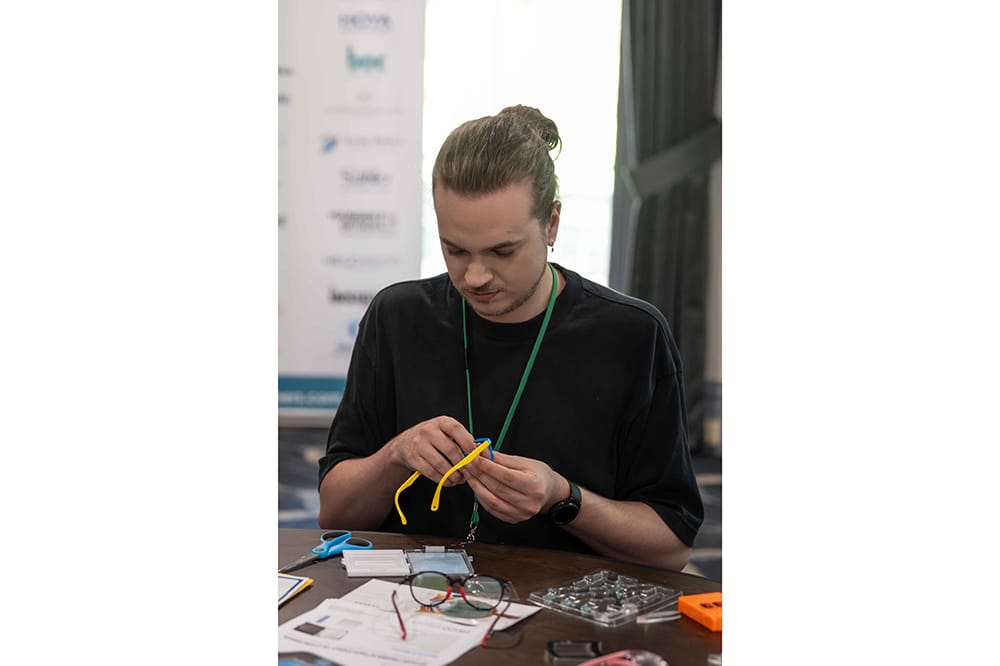
During the optical dispensers’ workshop, Damon Ezekiel, optometrist and son of Don\ Ezekiel AM, the founder of Gelflex, spoke to optical dispensers about myopia: the risk factors, its progression, and long-term consequences. He, and later Amy Pillay from EssilorLuxottica, provided delegates with strategies to help parents and children understand myopia and participate in shared decision making for treatment. Mr Ezekiel outlined the options for myopia control, detailing the pros and cons of spectacle lenses, contact lenses, orthokeratology (OK), atropine, and combination therapies. He said OK is particularly effective for active children as the myopia control takes place at night, enabling children to lead active lives, free of glasses or contact lens during the day. “Orthokeratology is a fantastic device for overnight corneal reshaping – the hard work is done overnight in a clean environment, it’s great for patients with dry eyes too,” he said. However, he said it is important to screen candidates to ensure they are suitable. “Orthokeratology has an accumulative effect: it takes time; the more nights of wear, the better the effect,” he said. “It’s important to set realistic expectations: under promise and over deliver”. “Comprehensive eye examinations and corneal mapping are essential. Patients need to understand that this is a therapy – the optometrist will need to see the patient regularly at first and then every six months once they are up and running.” Patients need to be monitored for visual acuity and prescription, corneal integrity and staining, lens fit and centration, topography changes, and compliance and hygiene. They need to be educated on the signs of infection (and when to seek immediate review), the risk of water exposure, the need to replace lenses as recommended, and given emergency contact instructions. Ms Pillay spoke about the responsibility to protect patients’ long-term vision. She highlighted that myopia is not just about needing glasses, but a progressive condition that can increase the risk of serious eye diseases later in life. She shared practical ways to explain myopia and its progression to parents, using simple analogies to address common concerns. Ms Pillay emphasised the importance of choosing proven, effective treatments to slow progression – helping improve a child’s quality of life while giving parents confidence they are protecting their child’s vision for the future. Ms Pillay went on to advise optical dispensers on suitable frames for myopia control and the importance of a secure fit that maximises the treatment zone. A balanced fit will ensure the child is comfortable and therefore more likely to wear their glasses for the necessary hours of each day to have a myopia control effect. “Children are not as vocal as we are, so they may take their frame off and not wear it, and then put it on when they see mum and dad. So, it’s important we get the fit right,” said Ms Pillay. The afternoon concluded with a lively, audience-driven panel discussion about the pros and cons of the currently available spectacle lenses for myopia control. The fully representative panel comprised Alex Rigby (Rodenstock), Dean Psarakis (ZEISS), Jessica Kingsley (Opticare), Ms Pillay, and Tuck Lim (HOYA). During WAVE, optical dispensing delegates also participated in a workshop where they improved their technical understanding of lenses, learning about different lens materials, prescriptions and designs, colours and tints, as well as prisms. They were also able to practice hand edging and fitting. |
Attribution
Elisse Higginbotham is a Lecturer at the School of Health and Clinical Sciences, Optometry and Vision Science, University of Western Australia. With decades of clinical experience, primarily in paediatric optometry, she co-chairs a Community of Practice with other optometry educators for paediatric optometry, and a cross-craft binocular vision discussion group.
Melanie Kell is the Editor of mivision.
Reference
- Mansberger SL, Gordon MO, et al, Ocular Hypertension Treatment Study Group. Reduction in intraocular pressure after cataract extraction: the Ocular Hypertension Treatment Study. Ophthalmology. 2012 Sep;119(9):1826-31. doi: 10.1016/j.ophtha.2012.02.050.
- Sharma A, Hussain R, Balaskas K, et al. Teleophthalmology versus standard of care for community optometry referrals of retinal disease (HERMES): a cluster randomised controlled trial with linked prospective diagnostic accuracy assessment of artificial intelligence support. The Lancet Primary Care, 2025; 1.