


A major international study led by Flinders University has identified a genetic contributor to juvenile glaucoma.
Published in JAMA Ophthalmology, the study marks another important step towards treating multiple forms of glaucoma with the support of genetic testing.1
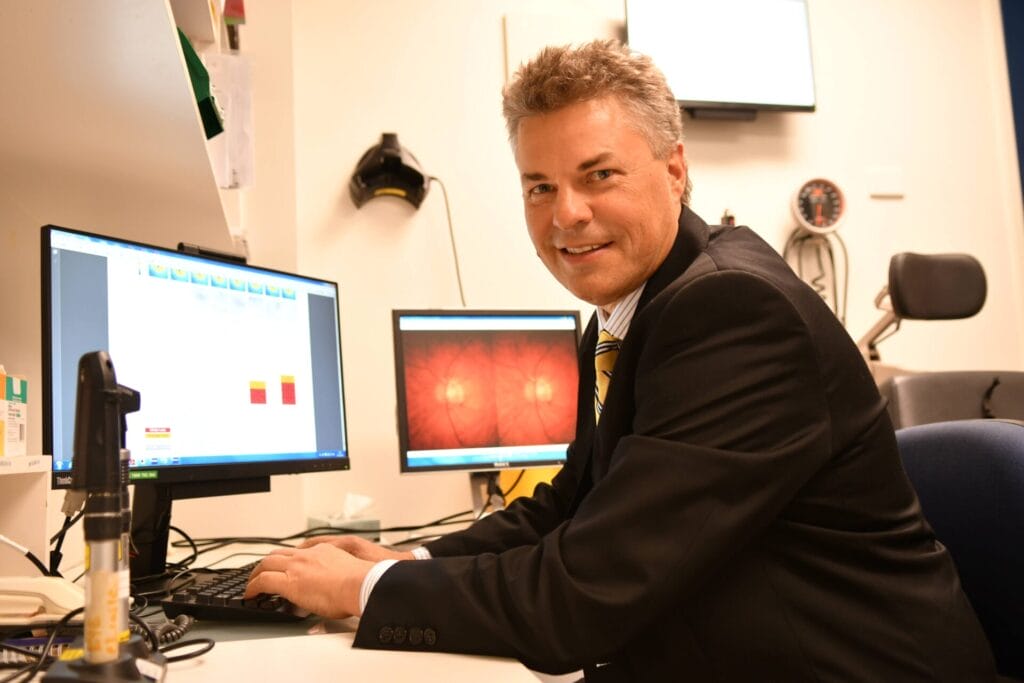
Ophthalmology experts at Flinders University, led by Professor Jamie Craig, Dr Emmanuelle Souzeau, and PhD candidate Giorgina Maxwell, said the latest findings add to a growing body of evidence on the causes of this leading cause of blindness worldwide.
“This study highlights the potential for routine testing of FOXC1 duplication as part of the genetic testing process, particularly in families with a history of this form of juvenile glaucoma,” said corresponding author Mrs Maxwell, a genetic counsellor at Flinders University’s Department of Ophthalmology in South Australia.
Across these two large databases, this specific genetic duplication appeared frequently, confirming its connection to this condition, which is often difficult to diagnose
“This is important information for family members too. If a person is found to have the extra copy of the gene known as FOXC1, their first-degree blood relatives (parents, siblings, and children) have up to a 50% chance of also having it.
“Identifying family members who are at risk allows earlier monitoring and treatment, helping to prevent vision loss from glaucoma.”
Juvenile open-angle glaucoma (JOAG) is a form of early-onset primary glaucoma affecting individuals before the age of 40 years old. It was previously linked to other genetic causes.
Before this latest study, the prevalence of FOXC1 duplication and its presentation had not been assessed among large cohorts of patients diagnosed with JOAG.
A total of 594 JOAG patients were tested from genetic databases in the United States (Massachusetts Eye and Ear) and Australia and New Zealand Registry of Advanced Glaucoma (ANZRAG), with 20 individuals from 10 families identified with this FOXC1 duplication.
Matthew Flinders Distinguished Professor Jamie Craig – co-director of the Flinders Health and Medical Research Institute (FHMRI) Eye and Vision group – said that across the two large databases, “this specific genetic duplication appeared frequently, confirming its connection to this condition, which is often difficult to diagnose,” he said.
Early Detection Vital
He said early detection of glaucoma risk, diagnosis and treatment is vital.
“Glaucoma is a serious disease with devastating consequence and no detectable early symptoms.”
“Fortunately, glaucoma is a treatable condition if discovered early. Eye drops, laser, and surgery are all effective interventions that can stabilise, slow or prevent disease progression.”
Dr Souzeau, who conducts screening for the ANZRAG database at Flinders University, said juvenile glaucoma is often underdiagnosed and yet “identifying the genetic cause in these families is critical for diagnosis and prevention”.
Historically, detecting early-stage glaucoma has been challenging, as is predicting which glaucoma patients will progress to severe vision loss. Some patients whose sight could have been saved are treated too late, while other patients who will never develop severe glaucoma are unnecessarily investigated, monitored, and treated.
Glaucoma affects an estimated 80 million people globally, including an estimated 300,000 Australians – many of whom may not be aware of it.2
Anyone may develop glaucoma, but the incidence increases with age. According to Glaucoma Australia, about one in 10,000 babies are born with glaucoma, by age 40 about one in 200 have glaucoma, rising to one in eight at age 80.

References
- Maxwell GE, Schmidt JM, Souzeau E. Association of FOXC1 duplications with juvenile open-angle glaucoma 2026. JAMA Ophthalmology (American Medical Association) doi: 10.1001/jamaophthalmol.2026.1183.
- Glaucoma Australia. Risk Factors for Glaucoma. Available at glaucoma.org.au/what-is-glaucoma/risk-factors-for-glaucoma [accessed May 2026].
Acknowledgement: Various researchers in this study are supported by National Institutes of Health funding, a NHMRC Program grant and the Snow Medical Research Foundation.


