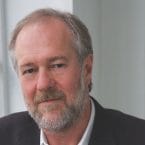
To say Emeritus Professor Graham Barrett AM has shaped modern cataract surgery is an understatement. As a global trailblazer in refractive cataract surgery, his pioneering innovations – most notably the Barrett formulas – serve as the global gold standard. Day in and day out, eye surgeons across the planet rely on his calculations to achieve the absolute best endpoints for intraocular lens (IOL) power selection.
Recently, Prof Barrett made the monumental decision to retire from clinical private practice. However, as Alan Saks discovered, ‘retirement’ for Graham Barrett doesn’t mean slowing down. It means finally having the deep-thinking time required to conquer new frontiers. From building a home observatory and diving into bird photography, to designing cutting-edge virtual communication hardware, his relentless curiosity remains entirely undiminished.
In this relaxed, wide-ranging discussion, Prof Barrett talks of the subconscious dreams that led him to ophthalmology, his fierce defence of optical purity over multifocal compromises, and his exciting new ventures.
The Subconscious Surgeon
Q. I thought we should start at the beginning. You studied medicine at the University of the Witwatersrand (Wits) in South Africa. Did you always know during medical school that you wanted to be an ophthalmologist?
I had no idea, Alan. Absolutely no idea. I come from a family with a medical background and knew I wanted to study medicine. By the time I reached the end of medical school, I knew I was going to be a surgeon of sorts – I just felt that drive. At Wits, which offered among the best medical education on the planet, ophthalmology was compressed into a bewildering week or two of strange terminology that didn’t seem to fit into anything else. It didn’t even cross my mind. When I migrated to Perth, I stayed on the general surgery stream and was leaning toward either general or plastic surgery.
Q. So how did the pivot to the eye happen?
It’s a true story, and it’s one of those things that only happens a couple of times in your life. I had an incredibly vivid dream – the kind where you think you’re wide awake, and it startles you when you open your eyes. I dreamed I was an ophthalmologist! At the time, I couldn’t even spell the word. I woke up, laughed about it with my wife Anne, and dismissed it because it wasn’t on my agenda at all.
But the subconscious is powerful. I was working as a surgical tutor and started looking into what ophthalmology actually offered. I realised it provided the perfect intersection of an academic career, a highly rewarding private practice, and incredibly refined, delicate microsurgery that even plastic surgery lacked. The only other option was neurosurgery, which I did for six months, but that was a different world entirely.
Q. Before medicine, did you have a leaning toward mathematics, physics, or engineering?
My hobby as a youngster was electronics. I loved building things. You know the pure joy of making your first acid-etched printed circuit board? I was building tube amplifiers and audio gear. I did well academically and got into medicine, so I chose to keep electronics as a hobby. In retrospect, that was the best thing I could have done. I still dabble today.
The Birth of the Barrett Formulas
Q. Let’s talk about the legendary Barrett formulas. Was the drive behind them a passion for pure mathematics, or simply a clinical obsession with wanting bloody good outcomes for your patients?
Everything I’ve developed, I initially did for myself to solve a clinical problem – and then found out it could be useful to others. In 1983, during my second year as a registrar, I put my first lens in. Because we were experimenting with new materials and shapes, there were simply no existing formulas to use. I knew I had to create a fundamental formula where I could input the radii and the refractive index to predict exactly what power to implant. We had ultrasound axial length back then, and that formed the bedrock.
I used my own formula privately for years until one of my fellows told me (about 15 years ago), “Look, it’s great that you’re happy with your outcomes, but what about the rest of us?” That’s when we put it online for free, which was quite innovative at the time.
Q. It’s completely transformed the field. Now, as you continue to refine your formulas, are you looking at incorporating artificial intelligence (AI)?
Look, I’ve analysed AI, and so far I don’t see the gain in this particular endeavour. One of my main reasons for retiring from clinical practice was to have the uninterrupted time required for deep thinking – not just hours or days, but deep, concentrated conceptualisation.
I’m finalising the next generation of the formula. I know it’s better than what I’ve done before, and I know it performs better than the top AI formulas currently out there.
Q. Why do you think a physical-optics approach beats an AI data-driven approach here?
An AI formula plugs in vast data sets to find statistical relationships. I’ve taken the opposite route: I look at the fundamental optics and physics, utilising every bit of information available, and then apply data refinement to that solid physical foundation.
My formula uses paraxial ray tracing, treating the cornea and the IOL as thick lenses. When you move into full, complex peripheral ray tracing, you introduce a massive amount of peripheral corneal data points, and you can actually make the prediction worse. Paraxial ray tracing keeps the focus on the crucial central 2 mm zone. The upcoming version optimises this even further based on specific lens models. At the 2025 European Society of Cataract and Refractive Surgeons (ESCRS) meeting, we compared it against the latest AI offerings, and our physical-optics approach still beat everything.
Monovision vs Multifocal
Q. You’ve always been beautifully iconoclastic on the podium when challenging the industry’s push toward multifocal IOLs (MF IOLs). What is your personal philosophy on ‘premium’ MF IOLs?
I’ve prescribed monovision and blended vision to thousands of my patients, and I absolutely love it. I prefer it over any multifocal solution. I don’t see a reason to choose a compromised optical solution when I know that with modest blended vision or monovision, you can achieve brilliant, robust results.
Q. I think we speak the same language! Some surgeons seem terrified of missing a perfect emmetropic target, so they default to extended depth of focus or multifocals to give a broader safety net.
It’s not the easy option. To make monovision work seamlessly, your endpoints have to be absolutely spot-on. You have to eliminate astigmatism completely and hit your target accurately. But when you do, the patient satisfaction is incredibly high and highly robust. If they occasionally need a pair of top-up spectacles to read a food label or drive at night, they aren’t unhappy. They have beautiful, uncompromised contrast sensitivity.
Q. If you needed cataract surgery yourself right now, what would you choose?
Because of my [interest in] astronomy, I am incredibly sensitive to light scatter and optical purity. I wouldn’t choose a multifocal lens. I would go for a non-diffractive, finely tuned optic designed to give an extended depth of focus without visual artefacts – something like the RayOne EMV, which I helped design – and utilise a blended vision approach.
An Astronomy Suite, Birding, and ‘The Folly’
Q. Speaking of astronomy, you have a serious observatory setup at home. Tell me about it.
[Laughs, pulling out his phone.] A picture says a thousand words. This is the observatory building in my garden at home. It has a fully automated roll-off roof. I don’t usually show it to people because it’s a bit over the top! It’s fully wood-panelled inside with custom tables.
The main instrument is an eight-inch refracting telescope. It’s a triplet, oil-spaced refractor – essentially as pristine as optics can get. I have it attached to a digital imaging system with automated tracking and a full suite of UV and infrared filters.
Q. Your images of deep space are absolutely stunning. The James Webb Space Telescope must blow your mind.
It completely does. But for me, it’s about being a ‘do it yourself’ person. I get my inspiration from the actual process of capturing the images, rather than just looking at what others have done.


Q. And I hear you’ve recently picked up another photography hobby?
Yes. I recently discovered bird photography. I’m absolutely loving it. I have a mirrorless setup with a 100–400 mm zoom lens. It’s compact enough to handhold, allowing me to capture birds in flight. It’s a brand-new passion, but it’s already consuming a lot of my creative energy, and I’m already on the upgrade path!
Q. Lastly, you’ve also jumped headfirst into consumer electronics hardware. Tell me about your pandemic project that turned into a production reality.
During the COVID lockdowns in Western Australia, when travel completely shut down, I was horrified by how detached online video communication felt. So, I installed a CNC [computer numerical control] router in my garage and built a prototype for a desktop communication device. Now, [known as iVi] it’s officially in production.
We call it ‘The Folly’ because entering the consumer electronics market using your own capital is probably a bit mad. It’s a premium desktop console where you dock your iPad or laptop. It features integrated studio lighting, a 4K camera, high-fidelity cardioid microphones, and speakers. The geometry is precisely engineered so that when you look at the screen, you are looking directly into the camera lens, creating perfect, natural eye contact. We actually won ‘Best of Show’ at InfoComm [a trade show] in the United States. It’s unique, uncompromising, and occupying that high-end space where we don’t have to compete with cheap mass-market alternatives [visit myivi.com for more information].
Q. Graham, it is deeply inspiring to see that your retirement from the clinic hasn’t slowed down your passion for innovation. If anything, you’ve just shifted gears into overdrive. Thank you so much for your time, it’s been a great honour to talk to you so openly.
It’s been an absolute pleasure, Alan.


Emeritus Professor Graham Barrett AM MBBCh FRANZCO has made extensive and varied contributions to ophthalmology, both nationally and internationally. Prof Barrett is currently a board member of the International Society of Refractive Surgery, a Past President of the International Intraocular Implant Club, Past President of the Asia Pacific Association of Cataract and Refractive Surgeons, Editor of the EyeWorld Asia Pacific publication and the Past and Founding President of the Australasian Society of Cataract and Refractive Surgeons.
He is the recipient of major international awards and is the first Australian ophthalmologist to win, in the same year, the prestigious Binkhorst, Ridley, Sushruta, and Choyce awards.
He has published extensively and developed innovative instruments aimed at improving outcomes for patients undergoing cataract surgery that are widely used by ophthalmic surgeons.