


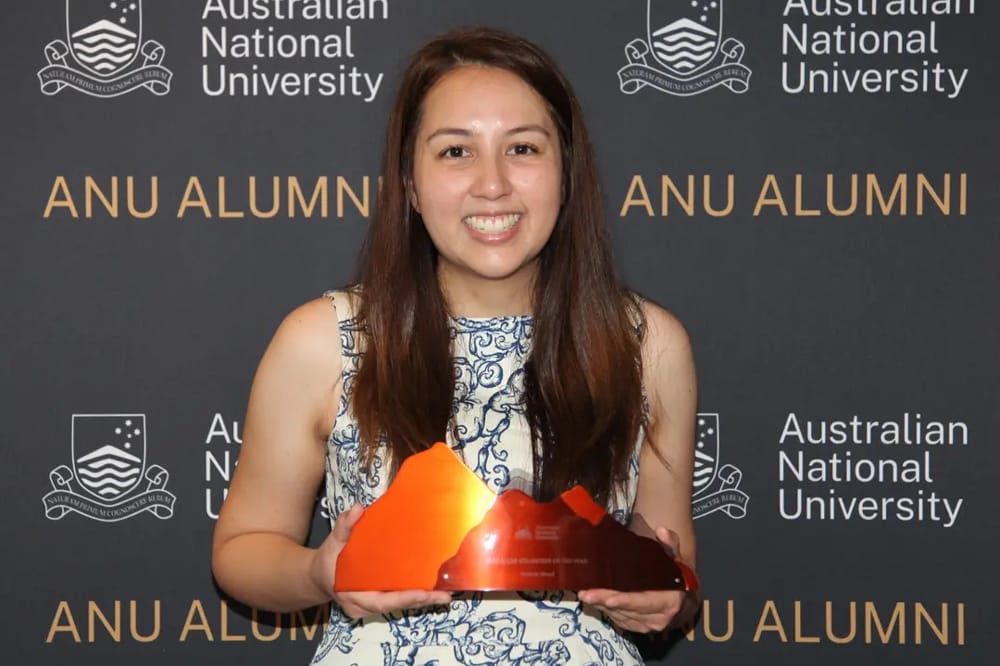
Dr Hannah Wood is on track to become Australia’s first female Indigenous ophthalmologist, the Australian National University (ANU) said, bringing a unique perspective to the field as she continues to champion culturally sensitive eye care.
Her exceptional commitment to community service and contributions to Indigenous ophthalmology have been recognised with ANU’s 2025 Alumni Volunteer of the Year award.
“I feel very privileged to have been nominated for this award, let alone receive it,” Dr Wood said. “I am so excited for the future of ophthalmology in this country.”
The Torres Strait Islander woman, who was raised on Ngunnawal and Ngambri lands, initially studied politics before switching to medicine. This career change was inspired by her work on a parliamentary project aimed at improving school outcomes for children in the Northern Territory.
“It showed me that often what’s lacking is opportunity,” Dr Wood explained. “These are really bright kids who have such a great future ahead of them that just need to be supported at the right time. And if there are things that were creating barriers for them, such as poor sight or poor hearing, it can really affect their trajectory.”
Cultural Understanding in Clinical Settings
Dr Wood understands the unique challenges Aboriginal and Torres Strait Islander people face when seeking healthcare, particularly for procedures like eye surgery. Her approach involves building trust through extended conversations before addressing medical issues and ensuring patients have supportive family members present during consultations.
“They often were feeling very vulnerable, but having a hand to squeeze – someone familiar – really put them more at ease,” she observed.
Her team at the Eye and Ear Hospital runs an outreach clinic through the Victorian Aboriginal Health Service, where care is supported by an Aboriginal Liaison Officer. This arrangement ensures treatment “can be facilitated in a more culturally safe and comfortable environment”.
Changing the System from Within
Dr Wood has actively advocated for changes to stereotypical views of Aboriginal and Torres Strait Islander patients within medical curricula.
“We should be shifting as practitioners to make people feel more comfortable and feel safe within our space,” she said. “And I’m really pleased to see that the way this manifests is that so many of my colleagues have a much more gentle and thoughtful approach to how we treat Aboriginal and Torres Strait Islander patients.”
Her experience volunteering with the Lions Outback Vision Van as a medical student reinforced the importance of providing approachable healthcare outside traditional clinical settings, which can sometimes feel unwelcoming.
A Legacy of Community Service
Dr Wood credits local Ngunnawal elders and Professor Anne Martin (Auntie Anne), Director of the Tjabal Centre at ANU, for shaping her community-focussed mindset.
“She found me when I was learning who I wanted to be in this world and gave me such an insight into how we can lift people up around us,” Dr Wood said of Prof Martin. “I would like to try and take that same attitude forward.”
This ethos was reinforced during recent time spent with elders in the Torres Strait Islands. “They echo the same sentiment as the Ngunnawal elders – that we have so much potential to help those around us.”
Her father, ANU Professor Asmi Wood, expressed pride in his daughter’s achievements: “I’m proud because of what she does and the fact that she uses skills, which I don’t even remotely possess, to do things for people – to improve the quality of people’s lives with things like eyesight.”
Looking toward the future, Dr Wood remains humble about her accomplishments and focussed on creating pathways for others.
“I’ve been really fortunate in my journey to have a lot of people who have supported me to get to this place,” she said. “I now see myself as a part of that process to try and encourage those who come after me.
“Seeing how programmes in Victoria are impacting our Aboriginal and Torres Strait Islander patients and providing healthcare that’s safer and more accessible is just an incredible thing to be a part of.”
Further reading
Dixon, H. A vision for more caring healthcare. Australian National University, available at: science.anu.edu.au/news-events/news/vision-more-caring-healthcare.
Rallah-Baker K, Mylne T, Chen L, Llavallol P. From the ground up: Building an Indigenous ophthalmology workforce, mivision 2023;194 available at: mivision.com.au/2023/10/from-the-ground-up-building-an-indigenous-ophthalmology-workforce

