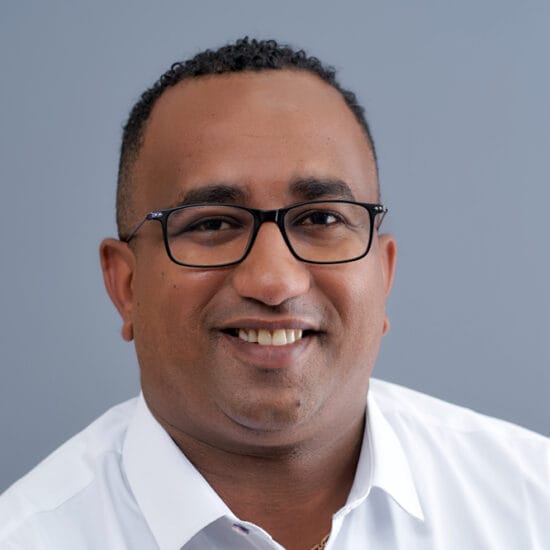
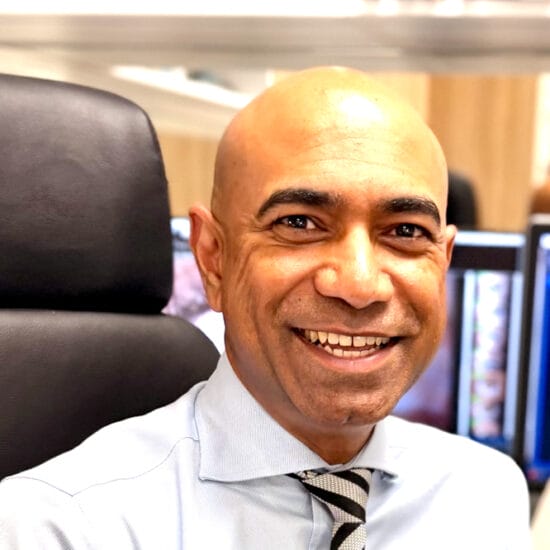
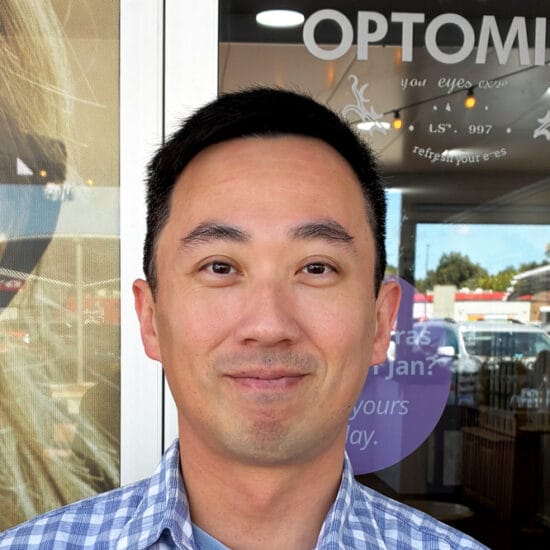
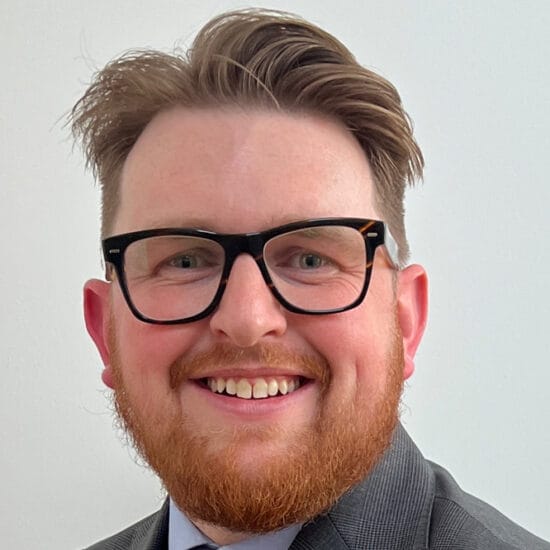
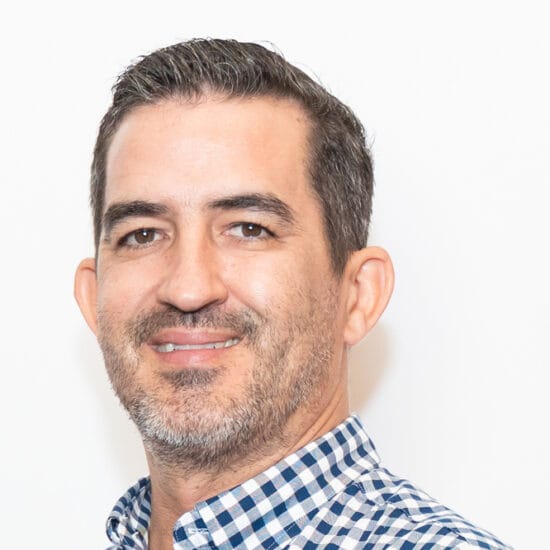
From left: Aaya Hamada (first-year optometry student), Mahmoud Hamada (Practice Manager), Rahaf Murad (Principal Optometrist), Noor Hamada (third-year student).
Rahaf Murad’s long held passion for eye care is shared by her husband and two daughters – all of whom are involved in the practice in Punchbowl, Sydney. mivision spoke to Ms Murad and her eldest daughter, Noor Hamada.
Rahaf Murad, Principal Optometrist
Q. Tell me about your entry into optometry: what sparked your interest and where (and when) did you study?
I aways wanted a career in science and biology, but it was just as important to me to work directly with people. Optometry was the perfect mix, blending clinical science with daily human connection. I trained and graduated from the University of Auckland back in 2002. After establishing my own practice, I completed my postgraduate training in ocular therapeutics in 2017. More recently, driven by my interest in ocular disease, I completed Optometry Australia’s postgraduate certificate in advanced glaucoma management.
Q. Tell me about your experience working in optometry?
Since graduating, my career has spanned a rich variety of clinical environments. I initially relocated to Sydney from New Zealand, gaining robust experience in corporate optometry with Laubman & Pank and working as a locum for OPSM across Sydney. Following a family relocation overseas, I spent two years at an advanced specialty eye hospital, focusing on pre-operative care for refractive laser correction patients. Upon returning to Sydney, I balanced family life by working part-time in independent practices. A pivotal moment came in 2012 when my husband and I took over an established independent practice. With him managing the business side, we poured our energy into expanding our clinical offerings, successfully building it into the thriving community practice it is today.
Q. What do you love about the profession?
I love the real-life impact we have on a patient’s quality of life; from correcting simple vision errors to managing complex eye conditions. Having an independent practice grants me the professional freedom to focus deeply on my clinical interests, such as diagnosing and managing ocular disease. A powerful reminder of this was a young woman in her 20s who came in for a routine exam before travelling overseas. She had perfect 6/6 vision and absolutely no symptoms, but since she was a new patient, I performed a thorough fundus assessment and discovered bilateral optic disc swelling. I arranged an urgent, same-day referral, and she was diagnosed with papilloedema caused by a serious brain tumour. Thankfully, it was caught in time and successfully treated. Ultimately, moments like this are why I love what I do; having the clinical freedom to look closer allows me to protect the people who trust us with their care.
Q. You have one daughter in her third year and one daughter in first-year optometry: how does it feel to have both following in your footsteps?
I am incredibly proud to see them both take this path. Optometry is a deeply rewarding profession and knowing firsthand how fulfilling and diverse this career can be makes me so excited for their futures. I can’t wait to watch them step into the clinic and make their own meaningful impact on people’s lives.
Q. When you look back on the profession you joined, what do you see that has changed?
Optometry has evolved immensely for the better over the past 20 years. Our expansion into specialised care has completely transformed our clinical reach, making the profession far more dynamic and impactful than the one I first entered. Because we have proven how vital our field is to primary care, I truly believe it will continue to evolve in unexpected, amazing ways for the next generation.
Q. What are you learning as you watch your daughters go through university?
Watching my daughters navigate university today is incredibly eye opening. The sheer volume of information they must absorb, and the rapid pace of technology they deal with, is completely different from my own student days. Seeing them adapt, study hard, and build that resilience is deeply rewarding. It’s a great daily reminder that you never really stop learning, no matter how long you’ve been in your career.
Q. What do you hope for them?
I want my daughters to find true fulfilment in their careers. Optometry is a rapidly changing field, so I encourage them to keep learning and embrace every opportunity to grow. Above all, I hope they always treat their patients with deep empathy and kindness. At the end of the day, genuine human connection and compassion are the things artificial intelligence can never replace.
Noor Hamada, third-year optometry student
Q. What was your first memory of optometry as a child?
Optometry has honestly been a constant in my life from very early on. I cannot pinpoint a particular moment where I was introduced to it, however I was always exploring the clinic, from trying on different frames with my sister for fun, to looking at (and sometimes playing with) all the complex equipment in my mother’s examination room during her breaks.
Another core memory is seeing patients recognise my mum in public and thanking her profusely, explaining how much the glasses she prescribed had helped in their day-to-day life. These interactions really solidified the essence of optometry in the community, and even from a young age, I knew my mum was involved in something bigger than just a nine to five.
Q. How has your mother’s career shaped your own professional aspirations?
It has been highly influential. Hearing her experience, growing from a new graduate in a corporate practice to eventually opening, and establishing her own private practice, has inspired me to seek a career that evolves through diverse experiences and opportunities, rather than following one fixed trajectory. She taught me about the value of gaining experience in many learning environments, and to take any opportunities as learning opportunities. I would say this has allowed me to broaden my future goals and be more open-minded; her impact has allowed me to see the benefits in practising in corporate and private practice, and even alongside ophthalmologists. One other thing that she influenced me greatly in, was inspiring me to always seek knowledge and personal development. Seeing her undertake a variety of post-graduate courses inspires me to explore potential opportunities for specialisation after graduation to improve and distinguish myself. I now see that learning is a lifelong pursuit that certainly does not end after university.
Q. What has she taught you about optometry that you haven’t learned at university?
Something my mother taught me about optometry, that stands out to me, was when I was sharing my anxiety with her about how big the field is. I was overthinking how I was going to master everything in the few years I have in university, especially considering that placements happen quite far into the degree, mostly in the Masters. She essentially taught me that university will give me the foundations and core principles, however the real learning will begin once I’m alone making decisions and practically applying my knowledge in the field. She emphasised that something new can be learned from each patient I see, and the first few years after graduation are fundamental in nurturing and then solidifying my skills in this learning journey.
On a more personal level, she has always emphasised applying the Islamic value of ‘Ihsaan’ in everything, especially optometry. This basically refers to the principle of excellence and striving to perform every task with integrity and to the best of one’s ability. She also explained that every patient that we see is an ‘amanah’, or a trust from God, and it is our responsibility to perform our duty to honour that trust by treating them with the utmost respect, trustworthiness, and competence.
Q. What are the challenges that come from working with and learning from your mother?
Working with, and learning from, my mother does come with challenges; the main one being that I notice myself stuck in my comfort zone at times. I recognise that to grow, it is vital to push myself and go beyond the ‘comfortable’ area as it may be compelling, at times, to use my relationship with my mum to avoid more confronting tasks. For example, I was reluctant when first practising with my mum, and learning dispensing, to take heights and interpupillary measurements, out of inexperience and nerves. However, being forced to face what I was nervous about was vital to get to the point of doing these tasks now, without a worry and with high accuracy. Obviously, a mother is always very nurturing and an extraordinarily special person in one’s life, however it is important to compartmentalise this at work, and when learning from her. I have made this a point of focus over the past few years.
Q. What has surprised you about your mother that you hadn’t realised before you worked with her?
Growing up around the clinic, I always saw my mother working; but I never paid too much attention. It was only once I started working alongside her that I realised how much it takes to really excel as an optometrist. I see her now in a different light; rather than just going to work and testing patients, I see how much she puts into this, especially as a business owner – there are so many sacrifices. And I have learnt that she truly does what she does from the heart. I have seen her give up her breaks and work overtime so many times, just to give patients the care they deserve. I see how multi-faceted she really is at work; where I once assumed she was only professional at work, I have now seen that some patients need more compassion, while others need sternness, among many other qualities.
Q. How do you negotiate differences of opinion?
Overall, I can comfortably say that we don’t have many disagreements or differences in opinion. I respect that she has so much more experience than I do, and she appreciates the insights I provide as a student with a fresh perspective.
Q. Sibling rivalry is a real thing; how has your relationship with your sister shifted since she started studying optometry as well?
Growing up quite close in age, sibling rivalry was definitely present, and it usually manifested in silly things like who had the nicest doll or who got to sit in the front passenger seat. However we’ve gotten past that for the most part; when it comes to our studies I truly wish her the best and want her to succeed. If there’s one thing I’m jealous of, it’s the fact that she has a 24/7 consultant to help her with any issues she’s dealing with – from her studies all the way down to trivial university struggles like class enrolments. Overall, I would say now that we both study optometry, we have definitely gotten closer, as we can relate much more on so many things: we study the same subjects, share the same professors, and have a very similar work-life balance. It’s hard to find anyone else that understands me on such a holistic level.