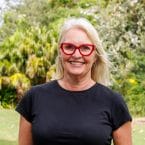
Dr Diana Conrad steps into the role of President of the Royal Australian and New Zealand College of Ophthalmologists (RANZCO) this month, only the second woman to ever do so.
As President, Dr Conrad said a focus will be on advocating for the College’s role as “the provider of the most excellent training program for the best ophthalmologists in the world”.
With the federal government currently investigating the role of medical colleges in professional education, Dr Conrad believes it’s RANZCO’s role “to show how we can partner with federal government in providing education for the next generation of ophthalmologists and in providing assistance with accreditation of overseas-trained doctors”.
Dr Conrad said there is no group better qualified to teach, train, and accredit the next generation of ophthalmologists and to assess overseas-trained doctors than RANZCO members, who do so on a voluntary basis. “We want to work with the federal government to provide that service and would like to continue to do it to the best of our ability, to provide the best possible eye healthcare for Australians.”
Jumping in the Deep End
Much has changed in the ophthalmology profession since Dr Conrad first interviewed for a traineeship in 1989. At the time, she was 39 weeks pregnant and described turning up for the interview in “a large red dress and red stilettos”.
“And I think those old white men looked at me and went, ‘You can’t be serious’. I think that’s why they offered me the job. I think they were just throwing down the gauntlet and saying, ‘You either take it now, or you never take it’.”
So, she did. She commenced her new role, becoming Queensland’s first female ophthalmology trainee in 10 years.
“When I started work, I had a 10-week-old baby that I had no idea what to do with. And I was working 60 hours a week in a job where I had no idea what to do.”
Working full-time, studying, and caring for a baby all at once was, she said, “one of the hardest things I have ever done”. Nevertheless, when Dr Conrad sat her final exam, she was rewarded for her achievements and resilience with the College medal. Her story of the medal presentation paints a picture of ophthalmology at the time, in stark contrast to where it is now: “The guy who presented me with the medal patted me on the head and said, ‘You are a clever little girl, aren’t you?’.”
Support provided by the other registrars through that period was invaluable and continues to influence her professional approach. “Sometimes jumping in the deep end is the way to go. And I’m still grateful for the other registrars who helped me through that first 12 months. They’re still great friends,” she said. “I think it is important for us to continue to support the next generation of trainees coming through. I’ve tried to do that throughout my practising life. I’ve done a lot of mentoring of trainees; I think it’s very important.”
“When I started work, I had a 10-week-old baby that I had no idea what to do with. And I was working 60 hours a week in a job where I had no idea what to do.”
Gender Diversity
Today, of course, things are very different in ophthalmology. In terms of gender diversity, “the program is pretty close to 50:50 applying and pretty close to 50:50 getting on the program,” Dr Conrad said. “RANZCO policy is that at meetings, a third of presenters have to be women, but we’re also aiming for 30% female on all of our committees. So, I think that’s great that we’re achieving that and that the College has been very proactive about including women in all the processes.”
When it comes to starting families, everyone is benefiting from a more progressive approach to work-life balance.
“Male doctors get six weeks’ paternity leave and I think that’s great. I think there should be more parental leave. It’s good for the fathers, it’s good for the mothers. Our trainees often take a year off, and they should, to bond with their babies. So, I think we’ve come a long way, and we just need to continue on that path.”
Indigenous Workforce
On supporting recruitment and training of Indigenous ophthalmologists, Dr Conrad, who is also the current chair of the Australian and New Zealand Eye Foundation (ANZEF) Philanthropy Advisory Group, said while RANZCO has been “very proactive”, there is more to do.
“ANZEF has been supporting Aboriginal medical students coming to our conferences and any Aboriginal medical graduate who applies for the eye training program will be guaranteed an interview. And so, I think we’re actually doing reasonably well there with increasing the numbers, but I think more work needs to be done. We certainly would try to increase the representation of Māori, Pasifika, and Aboriginal and Torres Strait Islanders.”
Collaborative Care
Speaking on the broader context of eye health delivery, Dr Conrad noted the value of increasing collaboration and shared care models between optometry and ophthalmology.
“I’ve been on the board of RANZCO for the last decade and we have done a lot of work with optometry, looking at collaborative care and shared care, and I think that’s been very positive for both.”
Dr Conrad said under her presidency, she expects this partnership to continue to evolve.
“Obviously, optometrists are major stakeholders in eye care… I think we’ll continue to work together, and listen to each other, and try to provide the best healthcare for the population using the talents of both groups.”
Time to Give Back
Having practised in London, San Francisco, and Australia, Dr Conrad believes Australian and New Zealand ophthalmologists are fortunate to “live where we do and be able to deliver the standard of care that we can”.
Practising ophthalmology, she said, is “an incredible privilege” and “the best specialty – because vision matters”.
“If you can take someone from having poor vision to restoring their vision, it’s fantastic. And people look us in the face every day of the week and say, ‘You’ve changed my life. Thank you’.
“Not everybody gets that and it’s an incredible privilege. I want to keep doing this fantastic work and help to train the next generation of privileged individuals who get to do this work. The work’s interesting. The surgery we do is incredibly clever. It’s highly evolved. We get to work in probably one of the best healthcare systems, I think, in the world.”
For Dr Conrad, becoming RANZCO’s second woman president feels like a natural progression.
“I was very thrilled for Heather [Dr Heather Mack] when she became the first female president because that was a big glass ceiling to break and… I think she did a great job… I think there’ve been lots of female members on the board taking on roles, vice president, treasurer, all the other board roles. So, I think this is just the natural next step and I’m grateful that fellows see that it’s a reasonable thing to have women in charge.”
And for Dr Conrad, with a grown-up family, this is the perfect time to take on a role that will allow her to give back.
“I’m very grateful to the profession and the incredible work life that’s given me… Something I always say to my kids is that doing something to help other people is a more fulfilling way to live your life.”