


The Australian Society of Ophthalmologists (ASO) is making a final call for community action as the public consultation period for Optometry Board of Australia’s (OBA) proposed expansion of scope for optometrists comes to a close on 24 December 2025,
The Australian Society of Ophthalmologists (ASO) is making a final call for community action as the public consultation period for Optometry Board of Australia’s (OBA) proposed expansion of scope for optometrists comes to a close on 24 December 2025,
The ASO launched a campaign against the OBA’s proposal last month, which proposed allowing optometrists to independently prescribe systemic medications, including antibiotics, antivirals, and anti-inflammatory drugs.
Unlike eye drops, systemic drugs act throughout the body and can trigger serious adverse events, including renal failure, liver injury, cardiac complications, and life-threatening allergic reactions.
Australia has a healthcare system worth protecting; one which ranks high for universal quality of outcomes and equity of healthcare
Risks “Higher Than The Benefits”
Mr Kerry Gallagher, ASO Vice Chair, said that should the OBA’s proposal go through, the risks would be higher than the benefits.
“While optometrists can learn pharmacology and therapeutics in the classroom, they do not receive the depth of clinical training that underpins safe decision making in acute eye disease,” he said.
“Oral medicines are usually prescribed in situations where patients are unwell, where the diagnosis may be uncertain, and where there may be wider medical implications.
“The ability to manage these situations is not gained from theoretical teaching alone. It develops through years of medical education, work in emergency departments, eye clinics, inpatient services and ICUs (intensive care units), and through close collaboration with physicians, surgeons and GPs.
“These environments build the clinical judgment needed to recognise red flags, understand systemic risks, and manage complications.
“A four-to-five-year Bachelor/Master’s program in optometry, even with therapeutic content, cannot provide this level of exposure or responsibility. The training pathways are quite different, and this is reflected in the roles each profession holds within the health system.
“Absolutely, this position should reflect that certain treatments require the full medical and acute care background that ophthalmologists receive. Keeping the use of oral therapeutics within medicine ensures patient safety and maintains the integrity of care for people with complex or acute eye conditions.”
“Stakes Could Not be Higher”
ASO Chief Executive Officer Katrina Ronne said the stakes could not be higher as the deadline approaches.
“This is a defining moment for patient safety in Australia,” Ms Ronne said.
“Once these changes are locked in, they cannot easily be undone. We are calling on every Australian who values safe, high-quality healthcare to make their voice heard before it’s too late.”
The ASO pointed to real-world cases where patients have suffered serious complications from oral medications used to treat eye conditions – complications that required urgent medical intervention to manage.
One ophthalmologist reported treating a patient who developed acute renal failure after being prescribed oral antivirals, an outcome that required specialist hospital care to resolve.
The peak body also questioned the Optometry Board’s own documentation, which includes an example of an optometrist “ruling out orbital cellulitis”; a potentially sight- and life-threatening infection that can only be definitively diagnosed through CT imaging, a test optometrists cannot order.
Argument to Follow NZ Rejected
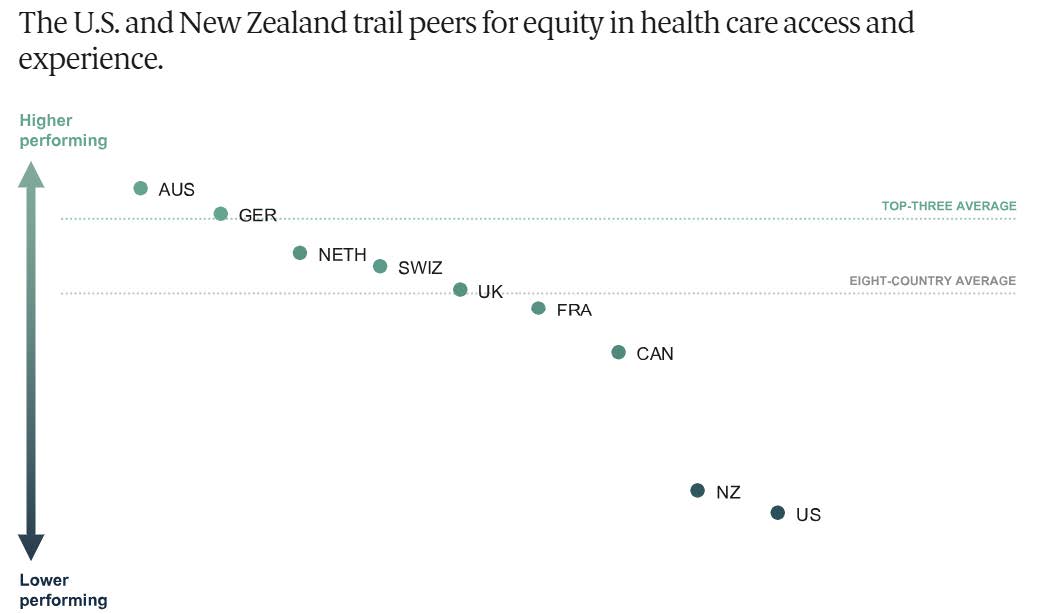
Figure 1
Ms Ronne rejected arguments that Australia should adopt prescribing models from New Zealand, the United States, or the United Kingdom. Reflecting on the 2024 Mirror Mirror Report1 which analyses health system performance in 10 high-income nations, she said the Australian system “leads on equity and health outcomes, and performs strongly on administrative efficiency – a framework that delivers quality care across the population regardless of income or location”.
The Mirror Mirror Report1 showed Australia and Germany ranked highest for equitable access to health care, while New Zealand and the United States ranked last. The latter had “the highest income-related differences in reported cost-related access issues and instances of unfair treatment or feelings that health concerns were not taken seriously by health care professionals because of their racial or ethnic background”.1
“Optometrists have argued their request to expand their scope of practice to include oral medicines is due to patients not being able to access GP or specialist healthcare in a timely way, due to difficulty making appointments, or hours of operation largely in regional areas,” Ms Ronne explained.
“The ASO refutes this claim, particularly with the rise of telemedicine. Collaboration between optometrists and ophthalmologists has never been stronger, particularly in times of patient emergencies.
“Australia has a healthcare system worth protecting; one which ranks high for universal quality of outcomes and equity of healthcare, and a top ranking for system performance compared to healthcare spending.
“Why jeopardise this?”
[subhead]
Consultation Responses Due 24 December
The ASO has called for enhanced collaboration between optometrists and ophthalmologists, protected referral pathways, and investment in team-based care models rather than expanded prescribing rights.
“Optometrists are valued colleagues who play a critical role in frontline eye care,” Ms Ronne said. “But there is a reason medical training takes more than a decade. Systemic medications require systemic medical knowledge.”
The public consultation closes 24 December 2025. Suggested responses and the link to the OBA’s submission page can be found at: asoeye.org/proposed-expansion-of-optometrist-prescribing.


