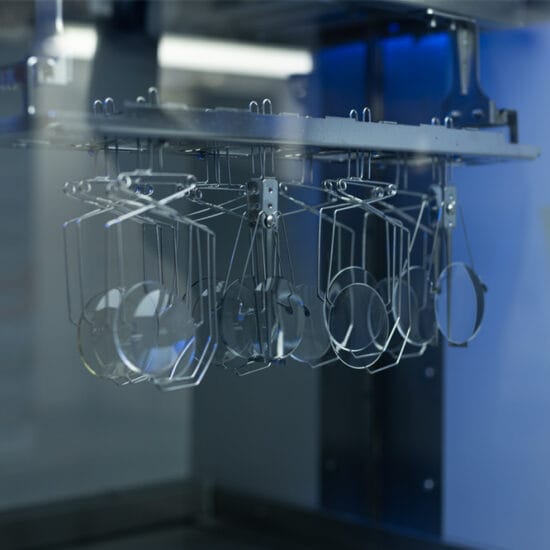
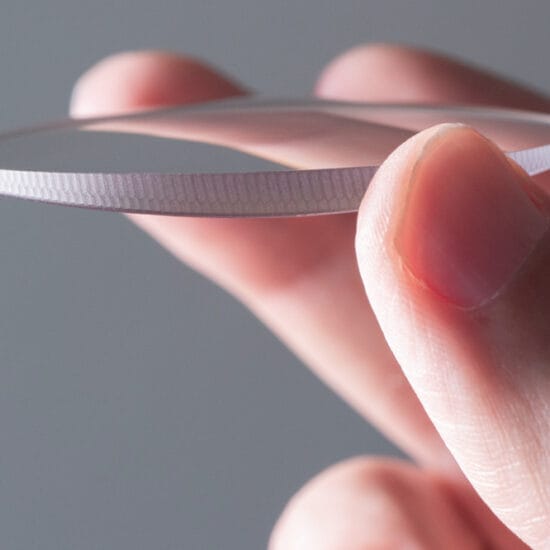
In an era of cheap online spectacles and contact lenses (CLs), optical dispensers must articulate why premium single vision lenses justify their price premium. The answer lies in measurably superior outcomes: reduced optical aberrations, enhanced digital comfort, improved aesthetics through aspheric design and thinner materials, greater visual clarity, and of course, durability.
For practices, premium single vision products offer higher margins, fewer returns, and a point of differentiation in a commoditised market. Success requires moving beyond basic measurements to a consultative approach that matches advanced lens technology to individual patient needs.
April Petrusma explores how innovations in measurements, materials, and coatings are reshaping single vision correction – and how practitioners can leverage these advances.
Single vision optical lenses have come a long way since their humble beginnings in the 13th century, when early spectacles were invented to aid reading by correcting presbyopia using simple convex lenses. By the 1600s, concave lenses had been developed to correct myopia, marking the true emergence of single vision correction for a broader range of refractive errors.
The Industrial Revolution brought about mass production, which made glasses more affordable and widely available. The 20th century introduced lighter plastic materials, anti-reflective coatings, and more precise prescription standards. Today, single vision lenses remain the most common form of vision correction, now enhanced by digital manufacturing, premium materials, and advanced lens coatings.
In 2025, eye care professionals across the country are seeing the benefits of these premium products in practice. As Jacobus Boshoff of Ultimate Eyecare explained, the latest single vision lenses represent a significant advancement in addressing complex prescriptions. “We use HOYA Nulux iDentity V+ for difficult and high prescriptions in our practice. It is a digitally corrected, aspheric lens that compensates for ‘as-worn’ frame measurements. We find that SVN and SVD (single vision near and single vision distance) prescriptions that have complicated spherical, cylindrical, or prismatic powers, have good patient outcomes, compared to older aspheric lens designs. The wide field of view has been mentioned by happy customers, and people who previously had spherical lenses find them better in just about every way.”
However, it’s important to note that positive outcomes like these aren’t guaranteed simply by dispensing a premium product. With the introduction of advanced, precision lenses, the entire dispensing process has evolved, and a basic pupillary distance (PD) measurement is no longer enough.
Today, optical dispensers play a critical role in ensuring visual success – carefully matching the lens design to the patient’s specific visual requirements, selecting the most suitable materials and coatings, and taking highly accurate measurements that account for frame fit, facial and eye anatomy, and wearing habits. This attention to detail is what transforms premium lenses from a product into a personalised visual solution.
Measurements
It is essential for eye care professionals to not only understand the features and benefits of the lenses they recommend, but also to have an in-depth knowledge of the specific fitting and ordering requirements each product demands. Some single vision lenses, like the B.I.G. Exact Sensitive from Rodenstock, offer groundbreaking levels of precision, and achieving their full potential relies on capturing a detailed set of measurements to deliver a truly individualised design.
As Gladys Mak of Rodenstock explained, “B.I.G. lenses are the first to incorporate both biometric eye measurements and an individual’s personal visual sensitivity level.”
She said a DNEye Scanner is used to collect personalised data and measurements to ensure maximum visual clarity is achieved for the wearer.
“The DNEye Scanner captures over 7,000 data points from each eye, including corneal curvature, corneal thickness, anterior chamber depth, pupil size, and axial length – to create an exact biometric eye model.”
Aesthetics
Premium single vision lenses are now as much about aesthetics as they are about clarity, and the continued advancement of lens indexes plays a crucial role in their design. While traditional materials, like CR-39 (1.498 index), have long been reliable general-purpose options, they fall short for patients with high ametropia. In such cases, thinner, higher-index materials are needed to combat thickness and reduce optical aberrations caused by higher lens powers.
Tokai Optical, for example, has pushed the boundaries of lens material innovation. According to its website, in pursuit of the thinnest and lightest lens possible, the Japanese lens manufacturer has successfully combined a 1.76 index lens material with an in-house aspheric design concept, driving this class of lenses to new and undiscovered heights.
Justin Chiang from Tokai Optical said the result is particularly advantageous for patients with complicated or higher prescriptions.
“High index solutions combined with a premium lens design, such as Tokai’s HR-W – a next-generation double-sided aspheric lens that is made-to-order and optimised to the power, curve, thickness, and size of the lens after an order is received – truly create a superior wearer experience,” he said.
Mr Chiang also highlighted the critical role of the dispenser – not only in recommending the right product, but in ensuring precise measurements are taken to unlock the full potential of premium lens designs.
“Tokai HR and HR-W incorporate technology used in progressive lenses to enhance the field of view and, as such, factors like frame wrap, pantoscopic tilt, and vertex distance are all incorporated into the final lens calculations.
“Taking individual measurements can further optimise the benefits of the lens design to improve visual performance,” Mr Chiang said.
Coatings
The marriage of digital precision and high-index materials is not complete without a sophisticated lens coating. Premium lens coatings are designed to enhance the overall visual performance of a lens and should be carefully selected to complement the lens design and meet the wearer’s needs.
And as eye care professionals, it is crucial to recognise that there is no one-size-fits-all solution when it comes to lens coatings.
This is why many manufacturers offer a range of options tailored to different visual demands and preferences.
CR Labs, for instance, has developed a comprehensive suite of premium coatings under its Satin+ range. Designed to evolve with the diverse visual and aesthetic needs of patients, the Satin+ suite includes specialised coatings such as Satin+ Night for enhanced low-light performance, Satin+ Blue for digital comfort, and Satin+ Vogue designed to elevate personal style.
Similarly, ZEISS offers a range of premium DuraVision AR coatings, with various options designed for situations that demand more than just a traditional anti-reflective coating.
Contact Lenses
Single vision lens wearers often make ideal contact lens candidates, so when you are presented with a glasses-wearing patient, you are also presented with an opportunity to introduce them to the benefits of modern contact lens technology.
Contact lenses have come a long way since their rigid beginnings in the late 19th century. Once limited to hard gas-permeable lenses that offered sharp vision but little comfort, the market now offers a wide array of advanced options.
Soft silicone hydrogel lenses, introduced in the 1990s, revolutionised contact lens wear with their enhanced oxygen permeability and improved moisture retention – dramatically reducing dryness and discomfort.
According to Alcon, its Total family of contact lenses are the first and only lenses with nearly 100% water at the surface, so nothing touches the eye but a gentle cushion of moisture. Available in both monthly and daily options, optometrist Jerry Mathias noted, “when fitting patients with these lenses, they always comment positively on the handling and feel, and once on the eye, they often say it’s more comfortable and feels like there’s nothing there”.
But comfort is just one piece of the puzzle. Recent innovations in contact lenses now go beyond basic vision correction, offering functional enhancements that support long-term eye health. Johnson and Johnson’s Acuvue family of contact lenses, for instance, incorporates UV protection across its entire product range, claiming to block at least 97% of UVB and 82% of UVA rays. The company has also developed lenses with Transitions Light Intelligent Technology, which are designed to reduce light sensitivity by adapting to changing lighting conditions. Acuvue Oasys with Transitions lenses help reduce exposure to bright indoor and outdoor light, offering a more comfortable visual experience throughout the day.
Looking ahead, the future of contact lenses is even more exciting. Smart contact lenses are already on the horizon, with cutting-edge prototypes currently in clinical trials. These next-generation lenses are being developed with built-in sensors, wireless connectivity, and micro-displays to deliver real-time data directly to the wearer. Innovations include glucose-monitoring lenses for diabetes management, intraocular pressure lenses to detect early signs of glaucoma, and augmented reality lenses capable of overlaying digital information onto the real world.
As contact lens technology continues to advance, patients can look forward to premium solutions that not only improve vision but also promote eye health, enhance daily comfort, and even integrate with digital life.
Summary
As the landscape of vision correction
continues to evolve, the focus on personalised, high-performance solutions has never been more important. From advanced measurements and design innovations to sophisticated coatings and contact lens technology, today’s options allow for tailored vision correction that truly meets the needs of each individual.
April Petrusma is the Co-founder and Chief Executive Officer of Optical Dispensers Australia. A qualified optical dispenser, she has a degree in visual communication design and a high level of expertise in optics, business management, and tertiary education. Ms Petrusma is a senior trainer and assessor at the Australasian College of Optical Dispensing, teaching across various states of Australia and New Zealand.
Seeing Sharper: Premium Single Vision Lenses
Eyezen

Eyezen
Every customer is unique: not only when it comes to their style, but also when it comes to their vision needs. Explore your patient’s lifestyle needs to identify which Eyezen lenses are the most suitable for them:
- Eyezen Start lenses are specifically designed for today’s connected lifestyle, improving visual acuity1 for both near and far vision.
- Eyezen Boost lenses are specifically designed for today’s connected lifestyle, improving visual acuity1 for both near and far vision. They also reduce visual fatigue,2 thanks to an extra power added to the bottom part of the lens.
Visit: ecp.essilor-pro.com/gb/essilor-lenses/single-vision
References
- Internal Essilor research and development simulations 2022, increase of low aberration area compared to regular single vision lenses.
- Compared with regular single vision lenses. Eyezen in-life consumer studies, third independent parties [Eyezen Boost Crizal Prevencia – 2015 – FR n=76 / Eyezen Boost Eye Protect System – 2016 – FR – n=51].
Australis Lenses

Australis Lenses
Australis single vision lenses by CR Labs deliver premium visual performance through advanced Australian manufacturing and high-definition digital surfacing. Designed for exceptional clarity across the entire lens, Australis single vision provides personalised optics tailored to each patient’s prescription and wearing position. With ultra-thin materials, and superior coatings, including Satin+ for durability and smudge resistance, Australis offers outstanding everyday comfort and long-lasting clarity. Backed by local support and fast turnaround, CR Labs continues to set the standard in independent lens innovation.
Contact: CR Labs (AUS) 03 8795 9111
ZEISS ClearView Lenses

ZEISS ClearView Lenses
ZEISS ClearView finished single vision (FSV) lenses set a new benchmark for stock lenses by integrating advanced freeform technology. With point-by-point optimisation across 700 free parameters, they provide a clarity zone up to three times larger than ZEISS aspherical FSV lenses. These lenses are up to 16% thinner and 49% flatter, delivering outstanding aesthetics without sacrificing optical performance. Equipped with UV Protect as standard, and available in various refractive indices, ZEISS ClearView FSV combines cutting-edge optics with sleek design. Offering impressive clarity and style, ZEISS ClearView FSV lenses redefine single vision stock lenses in both performance and appearance.
Contact: ZEISS Account Manager
Unity Relieve Lenses

Unity Relieve Lenses
From socialising to studying to streaming, your single-vision patients spend a ton of time in front of screens. And all that screen time puts serious strain on their eyes.
Unity Relieve enhanced single vision lenses combine unrestricted distance vision, a slight power boost in the near, and blue light defence is available to deliver comfort, clarity, and relief from digital eye strain symptoms.
Unity Relieve is available in two lens choices designed to accommodate different digital lifestyles and eye strain symptoms, while providing the same great results. Now available in hard coat and additional anti-reflective options.
Contact VSP Optics: (AUS) 1800 251 025 (NZ) 0800 141 444
On Eye Options: Premium Contact Lenses
Ultra One Day

Ultra One Day
Experience exceptional all-day comfort and clarity with Bausch and Lomb Ultra One Day contact lenses.
Designed with ComfortFeel technology, they release a unique combination of eye health ingredients to support and protect the ocular surface throughout the day. With 96% moisture retention after 16 hours of wear, these lenses deliver lasting hydration and comfort. Outstanding breathability helps keep eyes clear and healthy, while high-definition optics reduce haloes and glare for sharp, crisp vision – even in low light or at night.
Plus, broad-spectrum UV blocking^ helps shield eyes from harmful UV rays, supporting long-term ocular health.1-5
Contact: Bausch and Lomb (AUS) 1800 251 150 or (NZ) 09 969 0734
References
- Data on file. Sponsored by Bausch and Lomb. Rah, M. Ocular surface homeostasis and contact lens design. 2021.
- Papas EB. Cont Lens Anterior Eye. 2014. doi: 10.1016/j.clae.2014.07.012.
- Data on file. Sponsored by Bausch and Lomb. The Bausch and Lomb Ultra One Day experience – A complete system magazine supplement.
- Data on file. Sponsored by Bausch and Lomb. Study 893: Product performance evaluation of a novel silicone hydrogel contact lens: kalifilcon A patient comfort and vision outcomes for subset of patients who reported wearing their lenses for 16 or more hours per day (n=80). 2021.
- FDA 510K summary K200528; available at: accessdata.fda.gov/cdrh_docs/pdf20/K200528.pdf [accessed Aug 2023].
UOD.0077.AU.25
Alcon Toric Range

Alcon Toric Range
Transform your astigmatic patients’ lenses wearing experience with Alcon’s water surface lenses:*1-3 Dailies Total1 for Astigmatism, Precision1 for Astigmatism, and Total30 for Astigmatism. With Precision Balance 8|4 lens design, Alcon’s toric lenses have >95% first-lens fit success,†4-7 delivering outstanding comfort4,7,8 and stability† in less than 60 seconds.‡4-6 This innovative design helps to reduce chair time and improve patients’ lens wearing experience.
Together, Alcon’s toric lens range – offering both daily disposable and monthly replacement options – empowers eye care professionals to meet the diverse needs of astigmatic patients with innovative, science-driven solutions.
Contact: Alcon Laboratories
(AUS) 1800 224 153 or (NZ) 0800 101 106
*Water content approaches >80% at the lens outer surface.1-3
†Based on lens movement, centration and rotation at initial fitting.
‡ ≤5º of oscillation with each blink.
References
- Alcon data on file, 2019. Precision1 (DDT2) lens with smart surface study: p5 [REF-11538].
- Thekveli S et al. Structure-property relationship of delefilcon A lenses. Cont Lens Ant Eye. 2012. doi: 10.1016/j.clae.2012.08.044.
- Alcon data on file, 2021. In vitro analysis of lehfilcon A contact lenses outermost surface softness and correlation with water content: p4 [REF-11404].
- Alcon data on file, 2021. In a clinical trial to evaluate on-eye performance of Total30 for Astigmatism lenses where n=69, CLV201-C001: p4,7 [REF-15339].
- Alcon data on file, 2020. In a clinical trial to evaluate stability of axis orientation of Precision1 for Astigmatism contact lenses where n=78 eyes [REF-10364].
- Alcon data on file, 2020. In a clinical trial to evaluate stability of axis orientation of Dailies Total1 for Astigmatism lenses where n=47 [REF-09861].
- In a clinical trial to assess overall performance of Dailies Total1 for Astigmatism lenses where n=134 eyes in 67 subjects; Alcon data on file, 2021; CLO870-E004:3; [REF-13451].
- In a prospective, randomised, controlled, double-masked bilateral crossover clinical study; n=113; Alcon data on file, 2021; CLA306-P001: p5 [REF-14677].
ANZ-T3A-2500006
Acuvue Oasys Max

Acuvue Oasys Max
The Acuvue Oasys Max 1-Day family of contact lenses is Johnson and Johnson’s latest contact lens innovation with a unique combination of new technologies designed to provide ‘Max comfort, Max clarity’.*1,2 This family of lenses is built with TearStable technology to reduce evaporation and prolong tear film stability for exceptional all-day comfort,‡$2-4 and OptiBlue light filter with 60% blue-violet light filtering**¥ that helps reduce light scatter and increase visual clarity, day and night.#$1,4,5 Additionally, Acuvue Oasys Max 1-Day lenses block 99.9% of UVA rays and 100% UVB rays.*^5
Available in sphere and multifocal.
Contact: Johnson and Johnson Vision Care (AUS) 1800 736 912 or (NZ) 0800 466 173
**Filtering of high-energy visible light by contact lenses may reduce some unwanted visual artifacts (such as light scatter, haloe, and starbursts), speed photostress recovery time, as well as reduce glare discomfort. It has not been demonstrated to confer any systemic and/or ocular health benefit to the user.
¥Versus publicly available information for standard daily use contact lenses as of December 2023.
*Helps protect against transmission of harmful UV
radiation to the cornea and into the eye.
†Vs Acuvue Oasys 1-Day.
‡More wearers achieved a visual tear break up time ≥10 seconds vs Acuvue Oasys 1-Day.
$Descriptive summaries of T2B responses from separate studies where n ranged from 171 to 449.
References
- JJV data on file 2022. TearStable technology definition.
- JJV data on file, 2025: Subjective comparative and standalone claims for Acuvue Oasys Max 1-DAY contact lenses.
- JJV data on file 2022. Effect on tear film and evaluation of visual artifacts with Acuvue Oasys Max 1-Day Family.
- JJV data on file, 2025: Standalone claims for Acuvue Oasys Max 1-Day family of contact lenses
- JJV data on file 2022. Material properties: 1-Day Acuvue Moist, 1-Day ACUVUE Trueye, Acuvue Oasys 1-Day with HydraLuxe Technology and Acuvue Oasys Max 1-Day with TearStable technology brand contact lenses and other daily disposable contact lens brands.