As a country we are seeing the next generation emerging more health conscious than ever. This future orientated and proactive mindset also often translates into concern about the future of our planet; being more mindful about waste and recycling while also focusing on sustainability.
Sustainability is about meeting today’s needs without compromising the ability of future generations to meet their own needs by balancing environmental protection, social wellbeing, and economic prosperity. The health industry, as a whole, has a large impact on the environment. Annually, an estimated 748 million metric tonnes of greenhouse gasses are produced by the health sectors of the United States, Australia, England, and Canada.1 As active members of our industry, there are steps we can take to reduce this environmental impact.
When selecting business suppliers – whether it’s a construction company to create the fit out of your practice, the ophthalmic laboratory to supply your lenses, frame manufacturers, even the printing company to create your posters – there are ways that we can research their sustainability practices.
Green Flags Companies
A major green flag is a company with B-Corp certification. A B-Corp certification is a voluntary certification for businesses that meet high standards of social and environmental responsibility, as well as transparency and ethical governance. In Australia and New Zealand, it’s used to show that a business is committed to balancing profit with positive impact for people and the planet.
A recent list of the world’s most sustainable companies, created by Time magazine and data firm Statista, listed EssilorLuxottica in the top 300 (ranking 238th overall). Several fashion brands linked to eyewear groups also appeared in the list, including Burberry, Moncler, Ralph Lauren, and Brunello Cucinelli (EssilorLuxottica); Puma (Kering); Hugo Boss (Safilo); and Guess (Marcolin).2
Our customers are also conscious of the impacts that fast fashion has on the environment, and they may insist on reusing a spectacle frame that has seen better days rather that purchasing a new frame. Knowing your product range and the production process can be an advantage to getting this customer into a quality frame that meets both their personal and ethical needs. Bio-acetate frames have a reduced carbon footprint compared to recycled plastics, and are designed to break down naturally into harmless substances.
Eyes Right Optical has chosen to plant one tree for every frame purchase from its Project Green collection. Lisa Wymond from Eyes Right Optical shared how this project works: “We make significant pre-emptive donations to One Tree Planted (onetreeplanted.org) based on projected sales. So, practices can be assured that the donation to One Tree Planted has already taken place before the practice purchases the frame; it is not waiting.”
OTIS Eyewear has a double combination of eco frame materials with EcoAcetates that biodegrade at their end of life in landfill and EcoGrilamids, which are made from 50% renewable resources.3
Zeal is another brand with a focus on sustainability.4 The brand contributes 1% of the gross sales from its plano sunglasses to environmental causes. Additionally, most Zeal Optics frames are made from Z-Resin, a partially plant-based material derived from the fast-growing, perennial castor plant. Zeal’s proprietary Z-Resin material contains a minimum of 45% plant-based bio resin. Zeal’s See Grass collection combines 10% recycled plastic and 30% grass fibres in a closed-loop system powered by renewable energy.
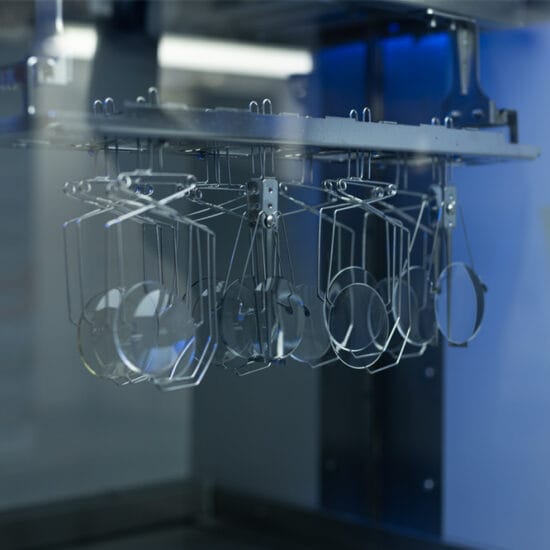
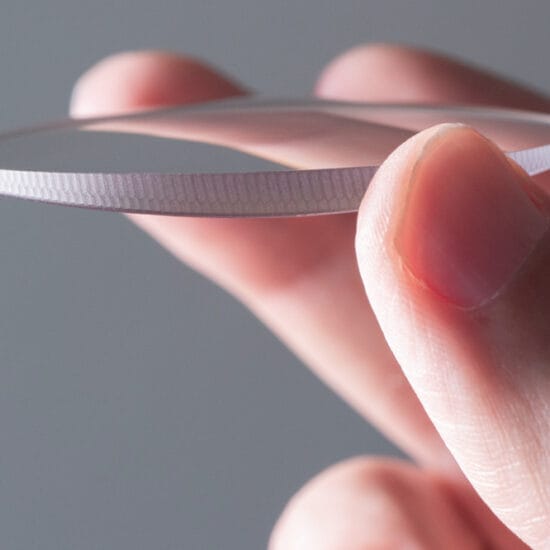
CR labs has developed Eco6, a lens material from renewable biomass materials that is available across all grind products, is tintable in various colours and densities, lightweight, and suitable for rimless and nylon/inline fitting – reducing any barriers for being able to select this product for your customers.5
ZEISS Sunlens, which produces plano sun lenses for the eyewear industry, offers sustainable materials produced using a certified mass balance approach, that processes bio-based and fossil-based raw materials together within the same manufacturing system.6 The sustainable polyamide replaces fossil-based raw materials with bio-based resources and incorporates renewable energy sources during production. ZEISS also has LightPro technology and polarised polyamide lenses, that include bio-based raw materials as a partial substitute for fossil-based resources.
Closing the Loop
You can also be on the lookout for closed loop programs. A closed loop program collects used materials, recycles them into new products, and returns them to use, minimising the need for virgin resources. People love the idea of donating their no longer needed prescription glasses to give them a second life. Glasses donation is perfect for frames that are in good condition, not showing signs of wear and tear, and that have similar spherical prescription lenses. If glasses are deteriorated or broken, charities cannot repurpose these glasses, however there are other ways they can be recycled.
Opticycle recycles eyeglasses, lenses, and disposable contact lens cases.7 It separates donations into plastic, metal, and lens groups to then begin the recycling process. The plastics and metal collected are turned into raw materials for new products. Disposable contact lens cases collected throughout the recycling process are separated into plastic and aluminium, then sent to end-users. HOYA provides its lens swarf to Opticycle, where it goes through its recycling process to be repurposed into benchtops or pavers.
CR Labs is committed to reducing waste and supporting a circular economy by transitioning to the use of 100% recycled materials for all packaging.4 This approach not only eliminates unnecessary waste but also ensures that packaging materials are repurposed, keeping them in the supply chain and minimising environmental impact.
In addition to sustainable packaging, CR Labs is adopting a paper-free ordering system as a key element of its environmental strategy. By encouraging optical practices to use the digital ordering platform, CR Labs is significantly reducing paper consumption. This digital shift also streamlines ordering processes, enhancing efficiency while supporting eco-friendly business operations.
HOYA has committed to using less material in its packaging and using recycled and eco-friendly alternatives where possible to reduce its footprint across its supply chain by 2030.8
CooperVision has taken a different approach, having partnered with Plastic Bank in 2021 and introduced the world’s first plastic neutral contact lens. This initiative has grown significantly through an international partnership that now covers its entire range of products sold and distributed in Australia and New Zealand.9 This includes the lens, blister, and secondary packaging. By offsetting plastic use through waste recovery and recycling programs, CooperVision is helping to reduce environmental impact.
So, whether it’s choosing to donate or recycle old spectacles, stocking an eco-frame range, or choosing a biomass lens material supplier, there are a multitude of ways that we can reduce environmental impact in optics. It is the actions of many that have a lasting impact.
I encourage you to consider how you can make a difference as you review the sustainable frame and lens products below.
Nicole Grasso is a trainer at the Australasian College of Optical Dispensing (ACOD) and has worked in the optical industry since 2015. She is also an optical dispenser at The Optical Co.
References
- Opticycle. The hidden costs of improper disposal (blog post) available at opticycle.com.au/news/hidden-costs-of-improper-disposal [accessed July 2026].
- Hu C. World’s most sustainable companies of 2026. Time. 23 June 2026. Available at: time.com/article/2026/06/23/worlds-most-sustainable-companies-2026 [accessed July 2026].
- Otis. Sustainability (web page). Available at au.otiseyewear.com/pages/sustainability [accessed July 2026]
- ZEAL. Polarised plant-based sunglasses (web page). Available at zealoptics.com/AU/en_GB/plant-based-sunglasses? [accessed Jul 2026].
- CR Labs, Eco6 (web page) available at: crlabs.au/range/eco6 [accessed July 2026].
- ZEISS, Sustainable sun lenses materials (web page). Available at: zeiss.com/sunlens/en/products-and-collections/sustainable-certified-materials.html [accessed July 2026].
- Opticycle, Disposable contact lens case recycling (web page). Available at: opticycle.com.au/our-solutions/disposable-contact-lens-recycling [accessed July 2026].
- HOYA Vision Care, One Vision (web page). Available at: hoyavision.com/siteassets/stories/one-vision-sustainability-progress-report—october-2025.pdf [accessed July 2026].
- CooperVision, Plastic neutral dashboard(website). Available at: coopervision.net.au/plasticneutral [accessed July 2026].
Look Good, Do Good
Sustainable Frame Choices
AM Eyewear

Founded in Australia in 2003, AM Eyewear combines premium craftsmanship with a considered approach to sustainability. Each collection is handcrafted in Italy and Japan using responsibly sourced materials, including Italian bio-based acetate and bio-based nylon lenses, reducing reliance on traditional petroleum-based alternatives without compromising quality or performance.
Designed to be worn for years rather than seasons, every frame reflects the brand’s commitment to longevity. Extending this philosophy, AM Eyewear’s buy-back initiative gives pre-owned sunglasses a second life by repurchasing and redistributing them to people and communities in need, helping reduce waste while creating a positive social impact.
Contact: AM Eyewear (AUS) 02 9357 4550 or visit ameyewear.com
Silhouette

Silhouette, an independent, standalone eyewear manufacturer, is redefining the optical industry’s approach to sustainability through its innovative practices and eco-conscious materials.
While the Austrian company’s production facilities already operate carbon-neutrally using 100% renewable energy, its most significant leap forward is the development of SPX Green+. This bio-circular material is crafted from organic residues, such as agricultural and forestry by-products, rather than newly grown feedstock. By using existing materials, Silhouette eliminates the need for fossil oils in the manufacturing process, effectively reducing carbon emissions by up to 60% compared to traditional plastics.
Debuting in its recent Clear Sky collection, SPX Green+ maintains the ultra-lightweight, flexible, and highly durable qualities the brand is famous for, proving that premium eyewear design and genuine environmental responsibility can go hand in hand.
Visit: vmd.com.au or vmd.co.nz
Project Green

Eyes Right Optical is proud to distribute Project Green, an environmentally focused eyewear collection that combines premium design with high quality sustainable materials. The range features Mazzucchelli biodegradable acetates, biodegradable demo lenses, reconstituted leather cases, and biodegradable packaging, delivering luxury eyewear without compromising quality, style, or comfort.
For every Project Green frame purchased by a practice, Project Green donates to One Tree Planted, a globally recognised charity that focuses on rejuvenating forests and environments around the world by planting trees.
Visit: eyesright.com.au or contact (AUS) 1800 637 654 or (NZ) 0800 447 272
Objekt Eyewear

Objekt Eyewear combines contemporary design with responsible Australian manufacturing. Frames are made using premium recycled acetate recovered through the SpexCycle eyewear recycling program, paired with precision-machined temples designed for durability and repairability.
Manufactured in small batches with a focus on timeless design, Objekt frames are made to be worn, maintained, and valued for years. When paired with SpexCycle in your practice, patients become part of a genuine circular economy, recycling their old eyewear while choosing frames that give those materials a new life.
Visit: objekteyewear.com or contact hello@spexcycle.com.au
OTIS Eyewear

OTIS Eyewear has created eyewear that lasts since the year 2000. Its collections feature premium eco-acetate frames made from renewable cotton and wood pulp, and lightweight eco-grilamid frames derived from castor oil.
Every pair from the OTIS Eyewear sunglass range is fitted with mineral glass lenses, naturally recyclable, free from BPA, and up to 12 times more scratch resistant than standard plastic lenses, helping extend product life and reduce replacement.
As a certified B Corporation, OTIS is committed to balancing purpose with profit, continually improving its environmental and social impact through responsible materials, thoughtful design, and products built to be worn for years, not seasons.
Visit: prooptics.com.au or contact (AUS) 02 8007 6041
Ugly Fish

Millions of discarded fishing nets are clogging up our oceans. These nets can pose a threat to wildlife for many decades by entangling or suffocating countless marine animals.
To help reduce plastic pollution in our waterways, Ugly Fish has launched the Green Series with five Rx-able frame options made from 100% recycled fishing net. These sustainable sunglasses are tough, lightweight, and built for active Aussies.
Ugly Fish frame and lens packages are available to order through lab partners Rodenstock, Essilor, HOYA, and OSA.
Contact: Piranha Eyewear sales@piranhaeyewear.com or (AUS) 1300 369 574
Safilo

Safilo has set ambitious environmental targets aimed at significantly reducing its environmental footprint by 2030. These include cutting its direct and energy-related greenhouse gas emissions by 70%, reducing emissions across its supply chain and distribution network by 25%, transitioning to 100% renewable electricity, and eliminating unnecessary single-use plastics while ensuring remaining plastics contain more than 50% recycled content.
The company has already made substantial progress towards these goals.
Beyond its own operations, Safilo is working closely with suppliers to reduce emissions throughout its value chain by encouraging the use of renewable energy, recycled and bio-based materials, and more efficient transport.
Visit: safilo.com.au or contact (AUS) 1800 252 016
Mondottica

Sustainability has become an increasingly important part of Mondottica’s product strategy, with the incorporation of more environmentally responsible materials across its eyewear collections over the past few years.
A key initiative is the use of Eastman Acetate Renew, a premium material made from sustainably sourced wood pulp and certified recycled plastic waste. The material offers the same quality, durability, and finish as traditional acetate while reducing reliance on virgin fossil-based plastics.
Beyond eyewear frames, Mondottica is also improving the sustainability of its accessories by introducing recycled materials into eyewear cases and reducing plastic in packaging.
Mondottica said it is responding to growing consumer demand for environmentally responsible products while demonstrating that sustainability and premium eyewear design can go hand in hand.
Contact: Mondottica (AUS) 02 8436 6666 or sales@mondottica.com.au
Nautica Eyewear

Nautica Eyewear strives to bring the inspiration of the sea to everyday style. Designed with a bluer world in mind, the sustainably crafted eyewear collection, Wavemaker, features an array of styles in modern classic shapes and colourways. Made distinctive by the N83 logo, these styles are made from Tenite Renew, a plant-based and recycled material, designed for environmentally conscious individuals who want to make a lasting impact on style, with a lower impact on the environment.
Contact: Marchon Eyewear (AUS) 1800 251 025 or (NZ) 0800 141 444
Greener Lenses
CR Labs

Eco6 is Australia’s first biomass lens material, reinforcing CR Labs’ commitment to more sustainable lens manufacturing. Produced in Melbourne using renewable plant-derived raw materials, Eco6 reduces reliance on conventional petroleum-based feedstocks while maintaining the optical performance expected by eye care professionals.
Available across the CR Labs grind range, Eco6 is lightweight, tintable in a wide range of colours and densities, and suitable for rimless and nylon/inline fittings. Eco6 is designed to reduce greenhouse gas emissions by up to 14% compared with conventional petroleum-based lens materials.
Visit: crlabs.com.au or contact (AUS) 03 8795 9111
HOYA Vision Care

HOYA Vision Care Australia and New Zealand is advancing sustainability in lens manufacturing through its partnership with Opticycle, recycling lens offcuts and swarf that would otherwise go to landfill.
Managing Director Craig Chick said the initiative has been simple, cost-effective, and impactful, helping reduce waste while supporting HOYA’s global environmental goals.
HOYA believes sustainability is both a business and industry responsibility, challenging others across the optical sector to adopt similar practices. With plans to expand recycling beyond manufacturing waste to include end-of-life eyewear, HOYA and Opticycle are helping drive a more circular and sustainable future for the industry.
Contact: HOYA Account Manager
Bausch + Lomb

Bausch + Lomb remains committed to innovation and responsible manufacturing in the eye care sector. Its contact lens technologies, such as Advanced MoistureSeal1 in Ultra One Day and HyperGel in Biotrue Oneday (pictured), deliver superior comfort and performance.1-4 Globally, Bausch + Lomb supports a broader sustainability strategy, which includes reducing energy usage, minimising water consumption, and improving waste management across manufacturing sites. Packaging improvements and supply chain efficiencies also contribute to reducing environmental impact. As it continues to innovate, Bausch + Lomb remains focused on balancing high-quality patient outcomes with responsible environmental stewardship in every stage of product development and delivery.5
Contact: Bausch + Lomb (AUS) 1800 251 150
BLNP.0004.AU.25
References
1 Data on file. Sponsored by Bausch & Lomb. Rah M. Ocular surface homeostasis and contact lens design. 2021.
2 Association of Contact Lens Manufacturers online. Available at: aclm.org.uk/online-access. 2024
3 Data on file. Sponsored by Bausch and& Lomb. Study #700: A study to evaluate the product performance of a daily-disposable soft contact lens. Final study report. Dec 2012.
4 Data on file. Sponsored by Bausch and Lomb. Sixteen hours clinical evaluation of Kalifilcon A compared to other Si-Hy daily lens dehydration report. 17 Jan 2020.
5. Bausch and Lomb. Clear Purpose. 2024 Sustainability Impact Report. Available at: bausch.com/siteassets/pdf/bauschandlomb-sustainability-impact-report-2024.pdf [accessed July 2025].
Menicon

Miru 1day UpSide and Miru 1day Flat Pack reflect Menicon’s commitment to innovation in daily disposable contact lenses. Both feature Smart Touch technology, which presents the lens inner-surface down to simplify handling, reduce front-back confusion, and help minimise finger contact. A University of New South Wales clinical study found approximately threefold lower back-surface bacterial contamination during lens removal,¹ with in vitro studies also showing significantly reduced microbial contamination versus conventional blister packs.²
Alongside Miru 1day UpSide’s resistance to lipid deposition³ and Flat Pack’s environmentally conscious design, Menicon continues to advance safer, smarter, and more sustainable lens wear.
Visit: menicon.com.au or contact (AUS) 08 8277 4545
References
- Tan J, et al. Factors affecting microbial contamination on the back surface of worn soft contact lenses. Optom Vis Sci. 2021. doi: 10.1097/OPX.0000000000001693.
- Nomachi M, et al. Eye Contact Lens. 2013 May;39(3):234-8. doi: 10.1097/ICL.0b013e31828c0abe.
- Menicon data on file 2017
Alcon

Alcon WaterInnovations lenses go beyond SiHy alone, with breakthrough, water-inspired innovations that deliver an outstanding lens-wearing experience.1-4
By focusing on where it matters most at the surface, Alcon’s lenses maintain up to two times longer lens surface moisture†‡5-11 than other leading brands.
Alcon WaterInnovations lenses are offered in daily disposable, weekly, or monthly replacement modalities in spherical, toric, or multifocal designs. They are designed to outsmart the challenges today’s patients face, like digital device dryness12-14 and achieve all-day comfort.1-3,15
Contact: Alcon Account Manager
ANZ-DT1-2600039
Footnotes
†Based on in vitro studies where Total1 was compared with Precision1, Infuse, Acuvue Oasys Max 1-Day, Acuvue Oasys 1-Day, BioTrue One Day, 1-Day Acuvue Moist, clariti 1-Day, MyDay (39, 30, 18, 16, 16, 12, 7, 6, and 5 seconds respectively) and Total30 was compared to Air Optix Plus HydraGlyde, Bausch and Lomb Ultra, Acuvue Vita, Acuvue Oasys, Biofinity (27, 19, 15, 14, 9, and 6 seconds respectively) wherein wettability was measured in seconds using the iDDrop System (p<0.05 for daily disposable lens; p<0.001 for reusable lens). All lenses were tested in an identical manner, soaked in a phosphate-buffered saline (PBS) solution for 16 hours +/- 2 hours.
‡Based on in vitro simulated wear for 16 hours a day, measured at end of seven days with new and advanced techniques using the Oculus Keratograph 5M. Compared to Acuvue Oasys 2- Week, Biofinity, and Bausch and Lomb Ultra. p<0.05.
References
- Fogt J, Patton K. Long day wear experience with water surface daily disposable contact lenses. Clin Optom 2022;14:93–99; [Ref-16888].
- Perez-Gomez I, Giles T. European survey of contact lens wearers and eye care professionals on satisfaction with a new water gradient daily disposable contact lens. Clin Optom 2014;6:7–23; [Ref-06253].
- Alcon data on file, 2021. In a clinical study wherein patients (n=66) use CLEAR CARE® solution for nightly cleaning, disinfecting, and storing; [Ref-11403].
- Clinical Study Summary – Clinical performance of two reusable silicone hydrogel contact lenses in a 2-week prospective clinical study in the US; n=181; Clear Care Cleaning & Disinfecting Solution used for cleaning and disinfection; Alcon data on file, 2023. [REF-21959].
- Alcon data on file, 2019. Based on an in vitro study on unworn Precision1 and Dailies Total1 and competitive sphere lenses (1-Day Acuvue Moist* , MyDay * and clariti 1 day* ) using average iDDrop water break up time (WBUT). [Ref-04628]
- Alcon data on file, 2019. Based on an in vitro study on unworn Acuvue Oasys 1-DAY* , and Acuvue TruEye* sphere lenses using average iDDrop water break up time (WBUT) [Ref-19035]
- Alcon data on file, 2020. Based on an in vitro study on unworn Infuse* sphere lenses testing average iDDrop water break up time (WBUT) and surface softness [Ref-10595].
- Alcon data on file, 2019. Based on an in vitro study on unworn BioTrue ONEday* sphere lenses using average iDDrop water break up time (WBUT) [Ref-04425]
- Alcon data on file, 2022. Based on an in vitro study on unworn Acuvue Oasys MAX 1-DAY* sphere lenses using average iDDrop water break up time (WBUT); [Ref-08298].
- Alcon data on file, 2021. Based on an in vitro study on unworn Total30 and competitive sphere lenses (Biofinity* , Ultra* , Acuvue Oasys* and Acuvue Vita* ) using average iDDrop water break up time (WBUT) [Ref-11408].
- Phan CM, Chan VWY, Drolle E, et al. Evaluating the in vitro wettability and coefficient of friction of a novel and contemporary reusable silicone hydrogel contact lens materials using an in vitro blink model. Cont Lens Anterior Eye. 2024. (p<0.05) Based on simulated 7-day daily wear. [Ref-22300].
- Michaud L, Forcier P. Comparing two different daily disposable lenses for improving discomfort related to contact lens wear. Cont Lens Anterior Eye. 2016;39(3):203-209.
- In a clinical study to evaluate the performance of Precision1 daily disposable contact lenses in a group of heavy digital device users; n=32; Alcon data on file, 2022; [REF-19516].
- Clinical study summary – Clinical performance of two reusable silicone hydrogel contact lenses In a 2-week prospective clinical study; n=181; p=0.0353; Alcon data on file, 2023. [REF-21959].
- Clinical study summary – Clinical performance of two reusable silicone hydrogel contact lenses in a 2-week prospective clinical study in the US; n=181; Clear Care cleaning and disinfecting solution used for cleaning and disinfection; Alcon data on file, 2023. [REF-21959]
Data on file references available at (AUS) 1800 224 153; (NZ) 0800 101 106.
ZEISS

ZEISS Sunlens, which produces plano sun lenses for the eyewear industry, offers sustainable materials that are produced using a certified mass balance approach, where bio-based and fossil-based raw materials are processed together within the same manufacturing system. The sustainable polyamide replaces fossil-based raw materials with bio-based resources and incorporates renewable energy sources during production.
Contact: ZEISS Account Manager