


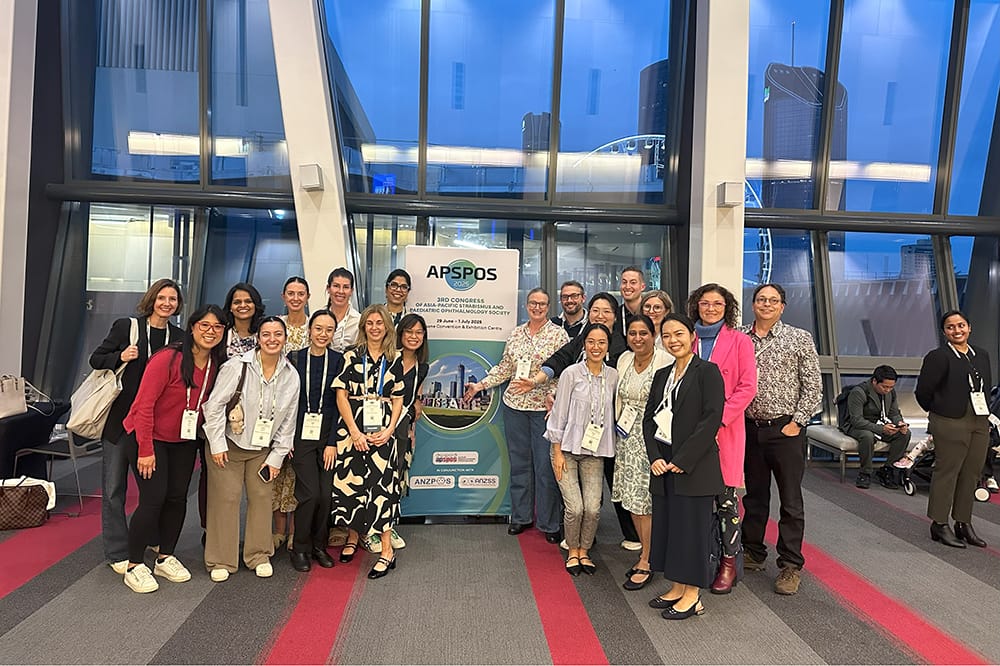
With 560 delegates representing 37 nations with diverse healthcare systems and cultural backgrounds, the Asia-Pacific Strabismus and Paediatric Ophthalmology Society (APSPOS) Congress, held in Brisbane, demonstrated that despite diverse healthcare systems and culture backgrounds, clinicians and researchers working in this field share a commitment to deliver evidence-based, compassionate, and contemporary care to children with visual disorders.
The Asia-Pacific Strabismus and Paediatric Ophthalmology Society (APSPOS) – established to advance paediatric ophthalmology across the Asia-Pacific region – has now grown into a vibrant platform for sharing knowledge, clinical expertise, and innovation in paediatric ophthalmology and strabismus.
APSPOS’ 3rd Congress, which ran from 29 June to 1 July, was hosted in conjunction with the Australia New Zealand Strabismus Society (ANZSS) and the Australia New Zealand Paediatric Ophthalmology Society (ANZOPS). With the theme of ‘Inspiring Collaboration’ the congress opened the floor to symposia led by a range of international associations including those from China, America, and the World Society of Paediatric Ophthalmology and Strabismus. This represented one of the largest collections of clinicians and researchers involved in strabismus and paediatric eye care in the Asia Pacific region.
Aunty Kathy of the Turrbal people, the traditional custodians of the land on which Brisbane now stands, warmly welcomed delegates to Country. In opening the conference, she reminded attendees that “no matter where you come from, we are all connected… [your life] has true meaning when you serve mankind”. In many ways, the spirit of the Congress echoed Aunty Kathy’s words – anchoring professional excellence in service to humanity.
State of Play in the Asia-Pacific
The children in our region face a range of ophthalmic challenges. Nowhere feels the pain of the myopia epidemic harder than Southeast Asia, where myopia has reached a prevalence of 80–90% in young adults. Australia and New Zealand have also followed global trends with rising rates of myopia among schoolchildren, driving an urgency for screening, management, and, ultimately, preventative strategies. Similarly, as maternity and neonatal care has developed over the past 40 years, extreme premature infant survival has markedly increased. The rising survival of extremely preterm infants has increased the demand for retinopathy of prematurity (ROP) screening and treatment, expanding the role of the paediatric ophthalmologist.
With the Australian Therapeutic Goods Administration (TGA) approval of Luxturna (voretigene neparvovec) in Australia in 2020, and more broadly throughout the Asia Pacific region over the past five years, people with inherited retinal diseases (IRD) have seen a treatment opportunity for the first time. Though variations on the RPE65 gene accounts for only a small proportion of IRD, the Luxturna experience presents an optimistic story for people with other IRDs. Investment in gene-therapy trials for other targets, including RPGR (one of the single largest genetic contributors to RP overall, and accounting for at least 70% of X-linked retinitis pigmentosa), presents a new urgency for early clinical diagnosis followed by timely genetic investigations for individuals with IRD.
Increasing attention has been brought upon the workforce shortages and maldistribution of paediatric ophthalmologists across Australia. The Royal Australian and New Zealand College of Ophthalmologists (RANZCO) describes this issue in strong terms, referencing the “impending critical shortage of paediatric ophthalmologists” in its report, Vision for Australia’s Eye Healthcare to 2030 and Beyond.1 This has, of course, been an issue that RANZCO has been advocating for over a decade, when, in 2012, a mere 20.5 full-time equivalent positions within paediatric ophthalmology existed nationwide. At the time, many of these practitioners were nearing retirement. Compounding this, a lack of interest in paediatric ophthalmology among trainees and new consultants is further broadening the gap between service needs, and patient care. Exacerbated by limited training opportunities and governmental disinterest, the workforce shortage is a complex but growing issue. It is heartening, though, to see the work of ANZOPS and APSPOS working to buoy interest in paediatric ophthalmology through such an excellent scientific and educational programme.
Prof Yam walked through the various options in contemporary myopia management with a view to the growing literature base for new therapies.
Managing the Myopia Epidemic
Having become an almost ubiquitous health concern, myopia was examined from many different perspectives. Considerations around pre-myopia for screening programmes were raised when discussing screening programme design; the pathophysiology of myopia was considered through the prism of strabismus; and myopia was commonly identified in people with inherited retinal diseases. A plenary myopia update lecture and EssilorLuxottica’s hosted breakfast session provided cutting edge updates on the progress in myopia care as well as pragmatic approaches to myopia management in clinical practice today. Free paper sessions expanded on myopia control with studies on defocus incorporated multiple segments (DIMS) lenses, axial length monitoring, and combination therapies. Other abstracts addressed refractive trends in high-risk groups, and regional differences in treatment uptake and parental awareness.
Professor Jason Yam (Hong Kong) delivered the conference’s myopia update lecture. Recognising that worldwide prevalence is rapidly approaching 50%, and that myopia is associated with many other ocular complications including retinal disorders, Prof Yam walked through the various options in contemporary myopia management with a view to the growing literature base for new therapies.
He began by outlining the contributions of Australia’s Professor Kathryn Rose, and subsequent investigators, who have now demonstrated that outdoor time and sunlight are essential tools in preventing myopia, both at the individual and population level. Increasing outdoor time by 40 minutes per day decreases incidence of myopia by 23%, an astoundingly important result.
Prof Yam then walked through the various methods used to treat myopia including the emerging lenslet ARray integrated (LARI) spectacle lens technology. Beyond optical methods, preliminary data from red light therapy suggest an almost 80% reduction in myopia progression. He noted that long term safety data are lacking. Finally, he returned us to the pharmacotherapies that his work is well known for, including important research around rebound risk, and premyopia management. Where atropine is used, cessation must be carefully planned, with an overall consideration for stopping at older age, and with a taper in dose for those on higher doses. At the other end of the story, the Low-Concentration Atropine for Myopia Progression (LAMP2) trial2 has demonstrated atropine’s efficacy in reducing myopia incidence in children with a hyperopic reserve below 0.75D.

Professor Jason Yam delivering the myopia update plenary lecture at APSPOS 2025.
The conference’s premier partner, EssilorLuxottica, hosted a breakfast symposium, bringing together ophthalmologists, optometrists, and researchers. Beginning with a question to the floor, Dr Loren Rose (Australia) elicited the huge variability in the initial approaches to management from the clinicians present. Dr Rose described her own approach, beginning with myopia control spectacles with full correction, and baseline lifestyle modification advice. Following this, she advocated for close follow-up and consideration of axial length monitoring, with initiation of low dose atropine (with a careful discussion on the side effects). Titration of atropine should follow progression of myopia. Dr Rose was joined by Dr Kate Gifford (Australia) who presented the emerging evidence and growing international consensus around myopia management. Her message was clear: communication is key, and parents need to understand that treatment is designed to slow, rather than to reverse or completely halt progression. Part of the myopia management process is setting parental expectations, she said. She further explained the current state of premyopia management and assessment of hyperopic reserves, reminding attendees that six-year-olds with hyperopic reserve less than 0.75D are the ones that need to be watched, and pre-myopic treatment might be considered.
Advances in Paediatric Cataract
Professor Chris Lloyd (United Kingdom) presented the paediatric cataract update lecture. Bilateral congenital cataract is the most common cause of potentially treatable blindness in infancy. Though a rare condition (with prevalence of five per 10,000 by age 15) it accounts for 9% of vision impairment among children in the UK. Prof Lloyd quoted a colleague who once remarked “if you have to have congenital cataracts, you need to pick your parents first” emphasising the importance of compliance to prescribed postoperative care and follow-up reviews.
Paediatric cataract, especially, is not a diagnosis but rather a sign. The likelihood of a causative genetic variant being identified is around 60% in bilateral cataracts, Prof Lloyd explained. Syndromic (extra-ocular) associations further increase genetic yield.
Timing the management of paediatric cataract is one area of considerable debate. Prof Lloyd advocated for intervention by week six of life (counted from birth, rather than corrected gestational age) for dense unilateral cataracts because of the amblyogenic potential of these. In children with dense bilateral cataracts, a surgeon has a couple more weeks before surgery should be performed. Counselling families around realistic expectations is paramount; with a median vision outcome of around 6/18, and the association of congenital cataract with foveal hypoplasia. Intraocular lens (IOL) usage at a young age remains a controversy. In his opinion, a contact lens on an aphakic eye is gold standard management but access to appropriate contact lenses remains a significant barrier for many jurisdictions. IOL implantation demonstrates an overall benefit after the age of two though the argument has been made for early infantile implantation. Per the literature, early infantile implantation appears to be associated with more reoperations, and no added protection against glaucoma. When implanting a lens, Prof Lloyd advocated for hydrophobic acrylic in all cases, and three-piece lenses in younger children. For children with Trisomy 21 or persistent fetal vasculature, the outcomes of IOLs are highly unpredictable.
In addition to the update lecture, several free paper presentations highlighted important nuances in cataract and aphakia management. Dr Leanie Leeson (Australia) presented outcomes on rigid gas-permeable contact lenses in paediatric aphakia, while Dr Amar Pujari (India) demonstrated the use of intraoperative optical coherence tomography (OCT) to enhance surgical precision. Dr Jaspreet Sukhija (India) shared his group’s experience with iris-claw intraocular lens implantation in children with ectopia lentis, broadening the discussion on IOL selection in complex cases.
Dr Savleen Kaur (India) presented on paediatric cataract as a sign of systemic illness. Complementing what had been presented by Prof Holmes, Dr Kaur presented on the TORCH infections that are far more common in her cohort than seen in more resourced nations. TORCH infections refer to a group of congenital infections that can be passed from a mother to her child during pregnancy or childbirth. The acronym TORCH stands for Toxoplasmosis, Others (including syphilis, HIV, etc.), Rubella, Cytomegalovirus (CMV), and Herpes simplex virus.
She also presented the links between cataract and genetic conditions, including some remarkable images of sutural cataracts she had seen in a child with Nance-Horan syndrome (an X-linked condition that can be associated with maternal lens opacities). Completing her discussion, she reminded delegates that iatrogenic cataracts may be a feature of systemic conditions managed with systemic corticosteroid therapy.
Using a stringent goal of more than three lines of logMAR improvement to define success, nearly one-third of children were successfully treated with glasses alone. Prof Holmes noted that these results surprised even him…
Innovations in Amblyopia Treatment
Professor Jonathan Holmes (United Kingdom) presented the amblyopia update lecture, focussing on two key controversies in amblyopia management. The question around beginning with glasses alone as opposed to combination patching and glasses (crescendo therapy vs decrescendo) remains unanswered. Crescendo therapy involves trialling refractive correction first, followed by patching only if needed, while decrescendo therapy begins with combination treatment from the outset. Prof Holmes presented data in children with mixed anisometropic amblyopia showing that amblyopia resolved in more than a quarter of patients with glasses alone. Prof Holmes also demonstrated that refractive correction achieved similar rates of improvement in strabismic amblyopia. Using a stringent goal of more than three lines of logMAR improvement to define success, nearly one-third of children were successfully treated with glasses alone. Prof Holmes noted that these results surprised even him, and the mechanism remains unclear.
The duration and intensity of patching remain open questions. Real-world data show a subset of ‘super responders’ whose amblyopia resolved with less than one hour of daily patching. These findings come from compliance-tracking studies, which also highlight significant adherence challenges in typical clinical populations. Compliance was a particular concern when evaluating crescendo therapy models. Referencing the Proudlock randomised controlled trial (RCT),3 comparing extended-glasses versus early combination therapy, Prof Holmes suggested that early subjective improvement in the glasses-first group may reduce motivation to comply with subsequent patching. Nonetheless, he indicated that he is comfortable using a crescendo model in clinical practice.
Prof Holmes then discussed the role of binocular therapies in the management of amblyopia. The earliest of these showed initial promise in case series but failed to outperform two hours of daily patching in trials. He used this as a cautionary tale against overinterpreting early uncontrolled data. More recent devices, including the Luminopia headset and CureSight, have demonstrated encouraging results in early RCTs. However, Prof Holmes reminded the audience that most trials to date have compared these platforms against continued glasses alone – a relatively low benchmark. He announced that the Paediatric Eye Disease Investigator Group (PEDIG) is now running RCTs comparing Luminopia directly with two hours of daily patching, with both acuity and stereoacuity as endpoints. This remains a developing area to watch.
Although momentum is building toward patch-free approaches, Prof Holmes emphasised the importance of individualised care. He recalled a young patient who asked their ophthalmologist, “Do I have to play that scary game again?” after being prescribed an early binocular therapy, highlighting that no option is universally acceptable. Patching might not be so irksome in the currently suggested lower dose formats. Ultimately, choosing between non-inferior options will depend on each child’s needs, the family’s circumstances, and cost considerations. Additional abstracts at the conference supported these themes, with early data on passive virtual reality approaches and recurrence risk after treatment cessation reinforcing the need for careful long-term planning.
Ocular Oncology and Retinoblastoma
Professor Francis Munier (Switzerland) presented the retinoblastoma (RB) update lecture. He outlined the evolution of conservative treatment strategies for RB, detailing the four intraocular seeding compartments and the metastatic pathways that can arise from each. Prof Munier explained how these anatomical considerations inform staging and guide the selection of local therapies.
Following widespread recognition of the harms associated with external beam radiotherapy around the turn of the millennium, systemic intravenous chemotherapy became the standard for non-disseminated RB. While this approach significantly improved outcomes, Prof Munier noted that more than 40% of eyes with Group D tumours still required enucleation when treated with intravenous (IV) chemotherapy alone. The field then moved toward intra-arterial chemotherapy, which reduced systemic toxicity by delivering treatment directly to the ophthalmic artery. However, this method did not achieve adequate concentrations in the vitreous, limiting its effectiveness against vitreous seeding. This limitation prompted the development of intravitreal chemotherapy for vitreous disease, followed by intracameral chemotherapy for anterior chamber involvement. Through the integration of these modalities, Prof Munier reported an overall eye survival rate of 84% in his primarily advanced-disease cohort, with survival exceeding 60%, even in eyes with Group E tumours, eclipsing the outcomes previously seen in Group D eyes treated with IV chemotherapy alone.
Several free paper presentations complemented Prof Munier’s plenary, offering both clinical insights and global perspectives. Dr Ashwin Reddy (United Kingdom) presented on visual outcomes in retinoblastoma, providing valuable data on patient prognoses. Dr Sandra Staffieri (Australia) discussed the management of RB in Australia and New Zealand, highlighting regional approaches and implementation challenges. Dr Ashwin Mallipatna (Canada) explored the role of magnetic resonance imaging (MRI) in identifying high-risk pathology prior to enucleation, underscoring the importance of imaging in treatment planning. Additionally, Dr Duangnate Rojanaporn (Thailand) presented a case of conjunctival mass following intravitreal chemotherapy, illustrating the complexities of conservative management. These presentations enriched the conference’s discourse on retinoblastoma, underscoring the importance of multidisciplinary collaboration and global knowledge exchange.
Taking a case-based approach to strabismus care, they invited seven patients ranging from eight to 43 years old to the stage to demonstrate their complex squints.
The Straight and Narrow on Strabismus
It is no surprise that strabismus featured prominently at APSPOS 2025, with sessions spanning surgical decision making, imaging innovations, syndromic challenges, and care delivery in diverse settings.
Intermittent exotropia (IXT), the most common strabismus subtype in Asian populations, was a recurring theme, with Dr Hasiana Lumban Gaol (Indonesia) presenting a comparative study showing similar outcomes between unilateral and bilateral lateral rectus recession. Bilateral surgery was favoured in patients with a dominant eye, consistent with international trends.
From a public health perspective, Dr Madelaine Moore (Australia) highlighted the complexities of delivering strabismus care in remote and Indigenous communities in the Northern Territory. Innovations in imaging were addressed by Dr Dana Zvi (Australia), who demonstrated the role of multi-positional MRI in surgical planning for complex cases, particularly in cooperative older children.
In terms of management strategies, Dr Azam Qureshi (United States) presented on the use of botox as a temporary or adjunctive treatment for congenital and accommodative esotropia. This relatively conservative approach contrasted with the more invasive multi-muscle surgery required for large-angle exotropia, as discussed by Dr Venkateshwar Rao (India).
These perspectives highlighted the breadth of strabismus care across clinical, geographic, and economic settings.
The Australia and New Zealand Strabismus Society (ANZSS) plenary featured a distinguished international panel, including Dr Wendy Marshman (Australia), Prof Donny Suh (United States), Prof Gill Roper-Hall (United States), Dr John Dickson (New Zealand), Prof Holmes, and Dr Andrea Molinari (Ecuador). Taking a case-based approach to strabismus care, they invited seven patients ranging from eight to 43 years old to the stage to demonstrate their complex squints. Pathologies discussed included Brown syndrome, possible thyroid eye disease, post-traumatic strabismus due to orbital fracture, and oculocutaneous albinism. The session was rich with surgical nuance and clinical insight.
Across sessions, the message was clear: strabismus surgery continues to evolve, with thoughtful imaging, patient-tailored planning, and cross-disciplinary insight driving better outcomes.
Improving Outcomes in Retinopathy of Prematurity
In a dedicated session chaired by Dr Caroline Catt (Australia), Prof Wei-Chi Wu (Taiwan), and Dr Rita Sitorus (Indonesia), key themes included the systemic contributors to ROP, with Prof Wu exploring the emerging role of the neonatal microbiota, and Dr May May Choo (Malaysia) presenting data on long-term neurodevelopmental outcomes in preterm infants with ROP. Dr Sitorus reviewed treatment strategies for aggressive posterior ROP (APROP), highlighting the nuanced decision making between monotherapy and combination therapy, while Dr Andrew Tsai (Singapore) offered practical guidance on managing persistent avascular retina in post-treatment follow-up. Dr Catt’s presentation on ROP registries was particularly relevant to the Australian and New Zealand context, providing a system-level view of outcomes tracking and benchmarking.
Complementing these talks were rapid-fire abstracts such as Dr Rhea Gandhi’s (United States) discussion on establishing neonatal intensive care unit (NICU)-based ROP care in sub-Saharan Africa, and Dr Cindy Liu’s (Australia) multicentre safety data on bevacizumab biosimilars for Type I ROP. Long-term care featured prominently, with Dr Manasi Hegde (Australia) advocating for extended follow-up of ex-premature infants, and Dr Zung Mai (NZ) examining refractive and strabismus outcomes in ROP survivors.
In an Australian context, Dr Trent Sandercoe presented updates to the new ROP guidelines, demonstrating how guideline-directed therapy is evolving to better define pre-plus and plus disease. Though current guidelines do not cover asymmetric disease, he advocated for treating discordant eyes similarly to one another.
Inherited Retinal Diseases and Genetic Ophthalmology
Having now been available for five years in Australia, and for a similar period in other jurisdictions, experience with Luxturna (voretigene neparvovec) was presented from both medical and surgical perspectives. This experience has highlighted several system-level considerations, such as the importance of coordinated multidisciplinary care and timely patient work-up. It has also revealed key clinical implications, including anticipated treatment outcomes and potential complications of intraocular gene therapy. These themes featured prominently in discussions of inherited retinal diseases throughout the congress.
One notable finding, presented across two separate populations, was that individuals with a family history of inherited retinal disease were diagnosed later, clinically in Australia and genetically in Hong Kong, than those without a family history. Given the increasing availability of gene therapy trials, including those currently enrolling in Australia, this population represents a key target for early clinical and genetic evaluation. Professor Robyn Jamieson (Australia) underscored the importance of timely diagnosis through real-world implementation of multidisciplinary IRD testing pathways, and discussed how genomic medicine services and research frameworks can be integrated with ophthalmology to support therapy readiness. Adding a Southeast Asian perspective, Dr Dimas Fadillah (Indonesia) spoke on the emerging infrastructure and barriers to IRD diagnosis and follow-up in resource-constrained settings, reinforcing the need for regionally adapted care models. Dr Wendy Wong (Singapore) expanded on the genetic landscape of IRDs with a discussion of phototransduction disorders, demonstrating the broad range of mechanisms contributing to inherited retinal degeneration.
As described elsewhere in this review, the syndromic and systemic associations of genetic eye disease were also well represented. Dr Elizabeth Conner (New Zealand) presented her experience using corneal crosslinking to slow keratoconus progression in individuals with Trisomy 21. In her cohort, early intervention was both well tolerated and associated with favourable outcomes. Dr Meenakshi Swaminathan (India) discussed the relationship between congenital kidney disease and retinal pathology, highlighting shared embryological and genetic underpinnings.
Prof Ken Nischal (United States) delivered a compelling talk on life-saving systemic diagnoses that may be first recognised by ophthalmologists. Smooth muscle dysfunction syndrome (ACTA2), a treatable genetic condition that can cause aortic aneurysm or dissection, may present with non-reactive pupils and hypoplastic iris sphincters. Identifying retinal hemangioblastomas can assist in diagnosing von Hippel–Lindau syndrome (VHL), and ligneous conjunctivitis may point to underlying plasminogen deficiency (PLG). These examples reinforced the critical role of paediatric ophthalmologists in recognising systemic genetic disease with potentially life-saving implications.
Novel approaches to Clinical Care: Screening, AI and beyond
Professor Susan Carden (Australia) noted in one of the opening sessions of the conference that “the topic of the decade is AI”. While her comments focussed on the use of AI documentation software in clinical practice, and the potential medico-legal implications, her observation resonated throughout the scientific programme. Many speakers advocated for machine learning applications in clinical care, including AI-assisted myopia screening programmes and the interpretation of retinal imaging in cases of suspected abusive head trauma using fundus photography. As Prof Suh put it, “The AI doesn’t give us the diagnosis, but it helps us to interpret the signs”. Other AI applications presented included automated grading systems for ROP and widefield imaging analysis tools, reflecting the future of integration of AI into frontline ophthalmic practice.
Although screening programmes often attract less attention than gene therapies or surgical innovations, they emerged as a central theme at APSPOS 2025. In a collaborative symposium, nurses, orthoptists, policymakers, and ophthalmologists from across the region came together to examine screening delivery models. The increasing use of technology, such as the Welch Allyn Spot Vision Screener, in well-resourced settings was contrasted with programmes in lower-resource countries, where vision screening often relies on donated equipment and industry support. Dr Kaushik Murali (India) presented his ambitious school-based screening initiative targeting over 436 million children. His goals echoed those of Joanna Selby and Chantelle Pooley (Australia), who are piloting a dual-modality preschool screening model in Queensland using Spot Vision technology. Professor Elisabeth Murphy (Australia) clearly outlined both the successes and ongoing challenges of New South Wales’ StEPS program. Professor Frank Martin (Australia) closed the session by urging RANZCO to show leadership in pushing to advocate for vision screening nationally, noting that broader implementation would require national and local representation to influence government policy.
Models of care were addressed across several sessions. Some decentralised strategies were less successful, such as the use of lay screeners in preschool and school settings, while others reinforced the benefit of collaborative models. Ambulatory management of periorbital cellulitis in a Sydney emergency department demonstrated the effectiveness of collaboration between ambulatory services (i.e. Hospital In The Home), ophthalmology, and emergency medicine. Similarly, the Omani experience of transitioning intravitreal anti-VEGF injections for ROP from a vitreoretinal operating theatre to bedside delivery in the NICU by ophthalmology trainees exemplified a safe, resource-conscious adaptation of care.
Although paediatric ophthalmology and strabismus remain relatively small subspecialties, APSPOS 2025 showcased the extraordinary commitment, energy, and innovation of clinicians working in this space.
Professional Challenges and Opportunities
For ophthalmologists, orthoptists, optometrists, and other eye care professionals across the Asia-Pacific region, APSPOS 2025 offered both practical, clinic-ready insights and a forward-looking vision for the future of paediatric ophthalmology. Several themes emerged throughout the congress that are immediately relevant to daily practice:
- Technology is advancing at pace: From the integration of intraoperative OCT to AI-assisted diagnostic tools and amblyopia therapies, the field is on the cusp of a technological transformation that will reshape screening, diagnosis, and management.
- Genetic testing is central to future care: With testing becoming more accessible and gene therapies entering clinical use, early genetic diagnosis will be essential to ensure eligible patients are identified before irreversible retinal damage occurs.
- Collaboration is critical: With ongoing workforce pressures, delivering effective care increasingly depends on interdisciplinary coordination. As our understanding of systemic disease and its ocular manifestations grows, partnerships with rheumatologists, neurologists, geneticists, neonatologists, and others are essential. The value of the multidisciplinary care team cannot be overstated.
- Equity and innovation must go hand-in-hand: Whether through nurse-led school screening programmes, bedside ROP injections in NICUs, or global partnerships supporting low- and middle-income countries, the Congress demonstrated how system design and local adaptation are key to improving care delivery across diverse contexts.
Although paediatric ophthalmology and strabismus remain relatively small subspecialties, APSPOS 2025 showcased the extraordinary commitment, energy, and innovation of clinicians working in this space. While the challenges ahead are considerable, the Congress made clear that the opportunities for progress are just as numerous.
The next APSPOS Congress was announced for 2027, to be held in Tianjin, China.
Dr Zachary E McPherson BMed PhD MRCPCH is a fellow in Clinical Genetics working at the Children’s Hospital at Westmead. His clinical and research work explores the intersection of rare disease, childhood vision loss, and precision medicine, with a particular interest in paediatric and genetic eye disorders.
References
- Royal Australian and New Zealand College of Ophthalmologists, Vision for Australia’s Eye Healthcare to 2030 and Beyond, available at: ranzco.edu/wp-content/uploads/2023/06/RANZCO-Vision-2030-and-beyond-v2.pdf [accessed July 2025].
- Yam JC, Zhang XJ, Pang CP, et al. Effect of Low-concentration atropine eyedrops vs placebo on myopia incidence in children: The LAMP2 Randomized Clinical Trial. JAMA. 2023 Feb 14;329(6):472-481. doi: 10.1001/jama.2022.24162.
- Proudlock FA, Hisaund M, Gottlob I, et al; EUPatch study group. Extended optical treatment versus early patching with an intensive patching regimen in children with amblyopia in Europe (EuPatch): a multicentre, randomised controlled trial. Lancet. 2024 May 4;403(10438):1766-1778. doi: 10.1016/S0140-6736(23)02893-3. Erratum in: Lancet. 2024 Jun 22;403(10445):2694. doi: 10.1016/S0140-6736(24)01258-3.


